-
It's 3 PM Friday. Your client needs 400 embroidered caps by Monday morning.
-
The Surface Problem: Missed Deadlines
-
The Real Issue: Machine Reliability Is the Hidden Variable
-
The Cost of an Unreliable Machine: A Back-of-the-Envelope Calculation
-
Why Cheap Machines Fail Under Pressure
-
The TCO Mindset: What to Look For
-
A Quick Word About That 'Hem Sewing Machine Foot' Search
-
Final Thought: Time Is the Most Expensive Thing You Spend
It's 3 PM Friday. Your client needs 400 embroidered caps by Monday morning.
If you've been in this industry longer than six months, you know this feeling. The panic. The frantic calls. The last-minute rush fees. And maybe—just maybe—the sinking realization that your machine isn't going to make it.
I've been on both sides of that phone call. As someone who coordinates rush orders for a mid-size garment decoration company, I've seen the inside of more emergency situations than I'd like to admit. In the past three years alone, I've handled over 200 rush jobs with deadlines ranging from 48 hours to same-day.
When I first started, I assumed the problem was always the same: we didn't plan far enough ahead. And sure, sometimes that's true. But after the third time a client's machine broke down mid-production—or worse, the embroidery came out misaligned and we had to redo everything—I realized the real issue runs deeper.
The Surface Problem: Missed Deadlines
Most people in the industry think the enemy is time. Not enough hours. Not enough heads. Not enough operators. So they look for faster machines, cheaper machines, more machines.
But here's the thing I learned the hard way: speed without reliability is just expensive chaos.
Let me give you a concrete example. In March 2024, a client called me at 4:30 PM on a Thursday. They needed 600 embroidered polo shirts for a corporate event on Saturday. Normal turnaround for that quantity is 5-7 business days. Their existing equipment—a budget single-head machine they'd bought for $2,800—had just thrown a thread tension error they couldn't fix.
We pulled in a favor with a local embroiderer who had a Tajima machine. We paid $750 in rush fees on top of the $1,200 base cost. The client's alternative was missing the event entirely—which would have meant a $15,000 contract penalty and a damaged relationship.
That $2,800 machine suddenly didn't look so cheap, did it?
The Real Issue: Machine Reliability Is the Hidden Variable
When I talk to shop owners who are shopping for embroidery equipment, almost everyone asks about price first. 'What's the cheapest multi-head machine?' 'Can I get a deal on a used model?' I get it—budgets are real. But what I've come to believe after five years of watching projects go sideways is that machine dependability is the single biggest factor in total cost of ownership.
People assume that a machine either works or it doesn't. Black and white. The reality is more gray: a machine with slightly looser tolerances, cheaper components, or less robust software can cause:
- More frequent tension adjustments (eating into production time)
- Higher thread breakage rates (requiring operator intervention)
- Inconsistent stitch quality (leading to rework or scrap)
- Unexpected downtime (exactly when you can least afford it)
These aren't just nuisances. They translate directly into cost. And if you're running rush orders, they translate into deadlines you can't meet.
The Cost of an Unreliable Machine: A Back-of-the-Envelope Calculation
I'm not a financial analyst, so I can't give you a precise formula. But I can tell you from experience what happened when we compared two different machine investments over 18 months.
We had a budget machine (let's call it Brand X) that cost $4,500. It ran fine for the first 6 months. Then the tension assembly started drifting. We spent about 30 minutes per 8-hour shift recalibrating. That's 3 hours per week of lost productivity—roughly $75/week in labor at $25/hour. Over a year, that's $3,900 in hidden labor cost alone. Plus three emergency service calls at $200 each. Plus one batch of 200 misaligned hats that had to be completely re-done ($400 in materials and labor).
Total additional cost over 18 months: roughly $5,500. That's more than the machine itself.
Meanwhile, our Tajima machine—purchased for $12,000—required exactly one routine maintenance visit in the same period. No emergency calls. No tension issues. No rework.
That's not a sales pitch. That's just the math. To be fair, the Tajima cost more upfront. But when you add up the base price, maintenance, downtime, rework, and—most importantly—the value of being able to say yes to rush orders, the lower-cost machine ended up being more expensive overall.
Why Cheap Machines Fail Under Pressure
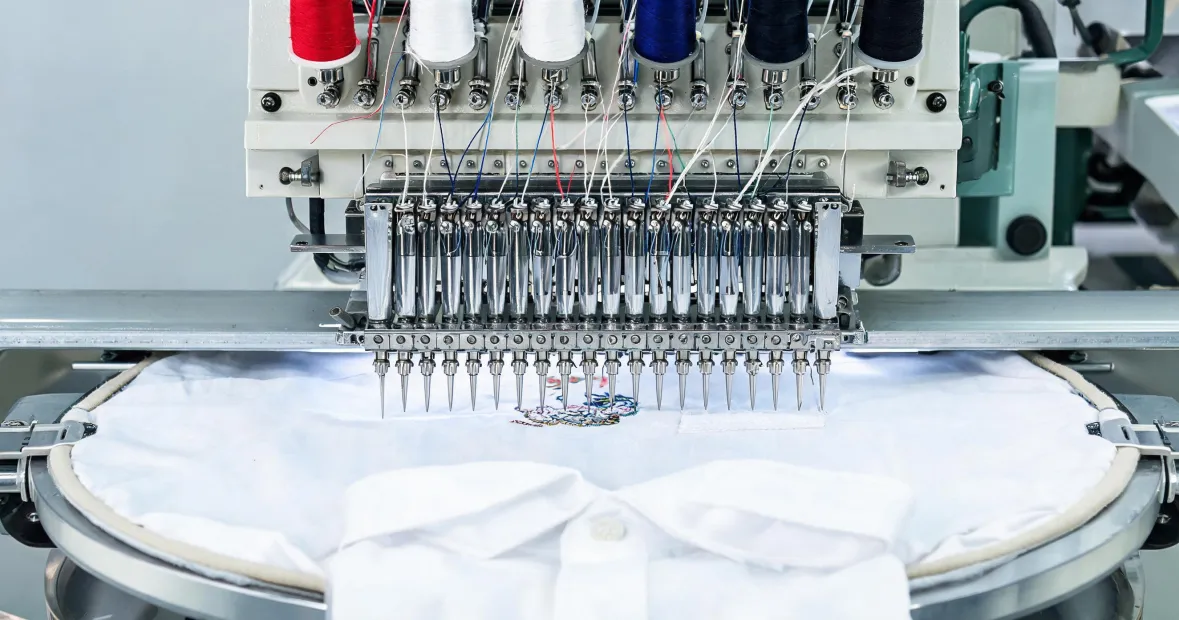
From the outside, all single-head embroidery machines look similar. They have a needle, a hoop, a thread path. What you don't see is the engineering beneath the surface.
In my experience, the difference shows up in two places:
- Frame rigidity and vibration control. A machine that vibrates at high speed will produce inconsistent stitches and put more stress on moving parts. That leads to drift over time.
- Thread path design. Some machines have more friction points, sharper angles, or inconsistent tension zones. This causes thread breaks and tension problems that operators blame on thread quality—but it's really the machine.
I'm not a mechanical engineer, so I can't speak to every design detail. What I can tell you from a production standpoint is this: when you're racing against a deadline, you don't want to be fighting your machine. You want it to disappear and do its job.
The TCO Mindset: What to Look For
If you're in the market for a commercial embroidery machine—whether it's a Tajima chenille machine, a Juki Tajima embroidery machine, or any other brand—here's what I'd recommend you evaluate beyond the price tag:
- Mean time between failures (MTBF) — ask for data if available. Tajima publishes this for some models.
- Availability of parts and service — a machine that takes two weeks for a replacement part is useless for rush orders.
- Training and documentation — machines that are harder to use increase error rates.
- Software integration — machines that work seamlessly with digitizing software reduce setup time.
- Resale value — a quality machine holds value better, which is part of TCO.
I'm not saying Tajima is the only option. But I am saying that the cheapest quote is rarely the best investment. As of January 2025, I've seen used Tajima machines hold 60-70% of their value after three years. I've seen budget machines sell for scrap.
A Quick Word About That 'Hem Sewing Machine Foot' Search
You might be wondering how a hem sewing machine foot relates to industrial embroidery. It doesn't, really—unless you're running a shop that does both garment construction and embroidery. If that's your setup, you know the pressure of switching between tasks. The same TCO logic applies: invest in reliable equipment for your core operations, and don't skimp on the parts that see the most use.
Final Thought: Time Is the Most Expensive Thing You Spend
Granted, not every shop needs a top-tier machine. If you're doing hobby work or very low volume, a budget machine might be fine. But if you're accepting rush orders—and in this business, you often have to—then machine reliability isn't a luxury. It's a requirement.
I've learned this the hard way, one emergency call at a time. The next time you're comparing a Tajima machine against a cheaper alternative, don't just look at the upfront cost. Look at the cost of missing a deadline. Because that cost isn't just money—it's your reputation.

Leave a reply