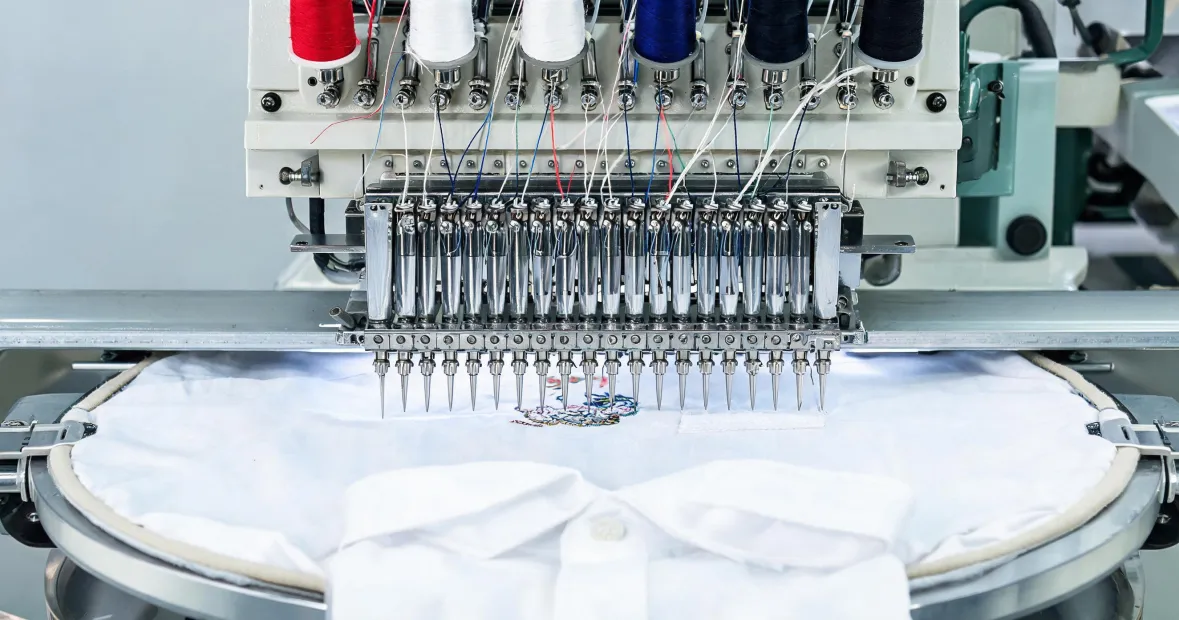
Buying an embroidery machine is a little like buying a car for a taxi fleet. The spec sheet matters, but the decision only makes sense when you know the route, the shifts, and the maintenance setup.
I'm the office administrator at a 45-person apparel decorating company. I manage purchasing for the embroidery side of the business—roughly $450,000 a year across about ten vendors. I report to operations, and I spend a good chunk of my time on one question: what actually makes sense to buy?
When people ask about Tajima, the two questions I hear most are "Where are Tajima embroidery machines made?" and "Should we get a Celeste or a Capella?" There is no single universal answer. There are three common situations, and in my experience, two of them lead to different recommendations than most people expect.
Where Are Tajima Embroidery Machines Made?
Tajima is not a mysterious brand. According to Tajima's official corporate site (tajima.com), Tajima is headquartered in Kasugai, Aichi, Japan, and its industrial embroidery machines are made in Japan. That made-in-Japan label is a big part of the Tajima brand, and it's a legitimate reason many shops start their search here. I understand the appeal—the company has been around a long time and its machines have a reputation for holding up in production environments.
But here's where I sound like a finance person: made in Japan does not automatically mean "makes money for your shop." A machine that's technically excellent but poorly supported in your region will cost you more than a slightly less famous machine with a local service tech. I'm not saying that to push you away from Tajima. I'm saying that because the "where" question is about quality confidence, not about total cost of ownership.
How I Think About Total Cost
I use total cost of ownership, or TCO, for every major purchase. The simple formula I put in front of our finance team is:
Machine price + installation + training + consumables + maintenance + downtime − resale value = total cost
That looks obvious, but it's amazing how often it doesn't happen. In 2024, I watched a purchase process where the final approval was based on two quotes for the machine price alone. The more expensive quote included installation, a first-year service plan, and two days of operator training. The cheaper quote didn't. Finance picked the cheaper one because the spreadsheet said the machine cost less. The next year, we paid roughly the same amount for the installation and training separately, and we had zero leverage when we needed service quickly.
Here's something vendors won't tell you: the first quote is rarely the full cost of getting productive. Ask for a year-one cost estimate that includes installation, air and power setup, initial needles and bobbins, and a service buffer. That's not a negotiating trick. It's a way to compare apples to apples.
Honestly, I learned this the hard way. In 2024, I had two hours to decide before our capital budget closed. Normally I'd spend days comparing quotes; that day I went with our usual dealer and added a service agreement. In hindsight, I should have asked for the maintenance schedule before the PO, not after.
This is also where my opinion on industrial sewing machine maintenance comes from. Our shop has flatlock and bartack machines, and we've learned that skipping scheduled maintenance to save a few hours always ends in an expensive repair. Embroidery machines are more complex than standard industrial sewing machines, but the discipline is the same: if you don't schedule maintenance, the machine schedules it for you—usually during a rush order.
Celeste or Capella? Three Realistic Scenarios
Once you've accepted the TCO view, the model choice gets easier. I'm not going to recite a spec table, because the specs change by configuration and region. Instead, here are three situations I see over and over.
Scenario one: You're moving from a single-head to a multi-head machine
If you've been doing custom embroidery on a single-head and just signed your first wholesale order, I'd recommend the Celeste embroidery machine. It's a real commercial machine, not a hobby-grade toy, and it gives you the multi-head production capability you need without asking you to pay for speed you can't use yet.
Why not the Capella? Because your bottleneck in year one is not stitches per minute. It's your hooping, your tension adjustment, your digitizing workflow, and your operator's muscle memory. A faster machine at this stage means you can create mistakes faster. The money you save by choosing Celeste is better spent on training, a second hoop set, and a spare bobbin case.
The counterintuitive part is that the Celeste is often the better investment even for a growing shop. In 2023, we sold our first multi-head machine to a startup, and the resale value was strong because it had low hours and we kept service records. That sale funded a big chunk of our next purchase. Machines like the Celeste tend to hold value well when they're maintained and not over-driven.
Scenario two: You have consistent production volume and a dedicated operator
If you're running regular jobs and your production schedule is measured in days, not weeks, the Capella embroidery machine deserves a serious look. The Capella is positioned for higher-speed, more flexible production—especially if your work includes heavy cap orders, tight deadlines, or a need for more needle colors without rethreading.
But it only makes sense if you have someone on the floor who can keep it running. Let me say that differently: the Capella's speed advantage disappears when the person using it can't set up new runs quickly. If you have an experienced production lead, the Capella can lower your cost per piece. If you don't, the same machine will just raise your repair bill.
The assumption is that a faster machine means more output. The reality is that most embroidery jobs are limited by setup time, not by stitch speed. So before you pick Capella for speed, measure your current setup time. If a job change takes 45 minutes, a machine that's 15% faster won't save your day. A better hooping process and a clear scheduling system will.
Scenario three: Your work is mixed, small-batch, and unpredictable
This is the situation where I stop asking "Celeste or Capella?" and start asking "Who is your dealer?" If you're doing samples, small runs, caps, flat garments, and the occasional unusual product, the machine model matters less than the support behind it. Tajima is reliable, but it's a mechanical machine. It will need a technician. The question is whether that technician will show up in two days or two weeks.
Ask for a written maintenance plan. Ask how parts are shipped and how long they take. Ask whether the dealer has a mechanic who can visit your shop or whether they only offer video setup support. I used to skip those questions because I didn't want to seem difficult. I don't do that anymore.
How To Know Which Situation You're In
Here's the practical way I walk a buyer through this:
- If you don't know your weekly stitch volume, you're scenario one. The Celeste is your best starting point, and the saved money should go into training and setup improvements.
- If you know your volume and it's been growing for two or more quarters, you're scenario two. Look at the Capella, but only if you have an operator who can justify the extra speed with smooth changeovers.
- If your jobs are mostly under 50 pieces and you quote setup time more often than stitching time, you're scenario three. Pick a dealer first, then pick the machine that dealer can support well.
This isn't a scientific test. It's a rough guide, and I think it's better than "buy the best machine you can afford." I've watched a lot of buyers stretch for a premium model because they thought it would fix workflow problems. It doesn't. Workflow is a training and process issue; the machine is only a tool.
One More Thing About Color and Expectations
I'll leave you with a small point that has burned us more than once. If a client gives you a Pantone print color, don't assume the embroidery thread will match. Embroidery is dimensional, and thread colors don't behave like ink on paper. Use a thread conversion chart, stitch out a sample, and let the client approve the physical sample. This is not a machine question—it's a communication habit that saves a massive amount of rework.
And one last finance thought: whether you choose the Celeste, the Capella, or any Tajima configuration, write down the maintenance schedule before you write the PO. Include it in your budget. Treat it like the oil change you don't think about until the engine light comes on. The machine is an investment. The maintenance is what protects it.

Leave a reply