My conclusion up front
Buy the machine that matches your bottleneck, not the machine with the best demo. For most shops moving from one head to production, a Tajima 4 head embroidery machine is the safer first commercial asset. If your bottleneck is samples, small runs, or hat personalization, a Tajima SAI makes more sense. If you are pricing a Brother Innov-Is M330E embroidery machine, you are shopping a different category. And if the phrase xTool embroidery machine brought you here, pause: xTool is mostly laser equipment, not a commercial embroidery head. Different tool, different job.
I am a quality and brand compliance manager at a contract embroidery company. I review every machine, sample, and spec sheet before it reaches a client—roughly 180 jobs a year. In 2024, I rejected 22% of first deliveries due to registration, tension, or trim issues. That is why I do not buy embroidery machines on sticker price alone.
Why I trust stitch-out tests more than spec sheets
According to Tajima product documentation (tajima.com), the SAI is a single-head compact embroidery machine. According to Brother USA (brother-usa.com), the Innov-Is M330E is an embroidery-only machine with a small hoop field. According to xTool product pages (xtool.com), its core machines are laser cutters and engravers. Those facts matter, but they do not tell you how a machine behaves on a 10,000-stitch run at production speed.
In our Q1 2024 quality audit, we tested three used and new machines with the same left-chest logo. The cheapest machine produced acceptable first stitches. By stitch 8,000, registration had drifted 1.5 mm. On a 48-piece order, that is not a minor issue. That is 48 rejected garments. We now require a stitch-out sample before any deposit.
5 minutes of verification beats 5 days of correction.
What each machine actually solves
Tajima 4 head embroidery machine
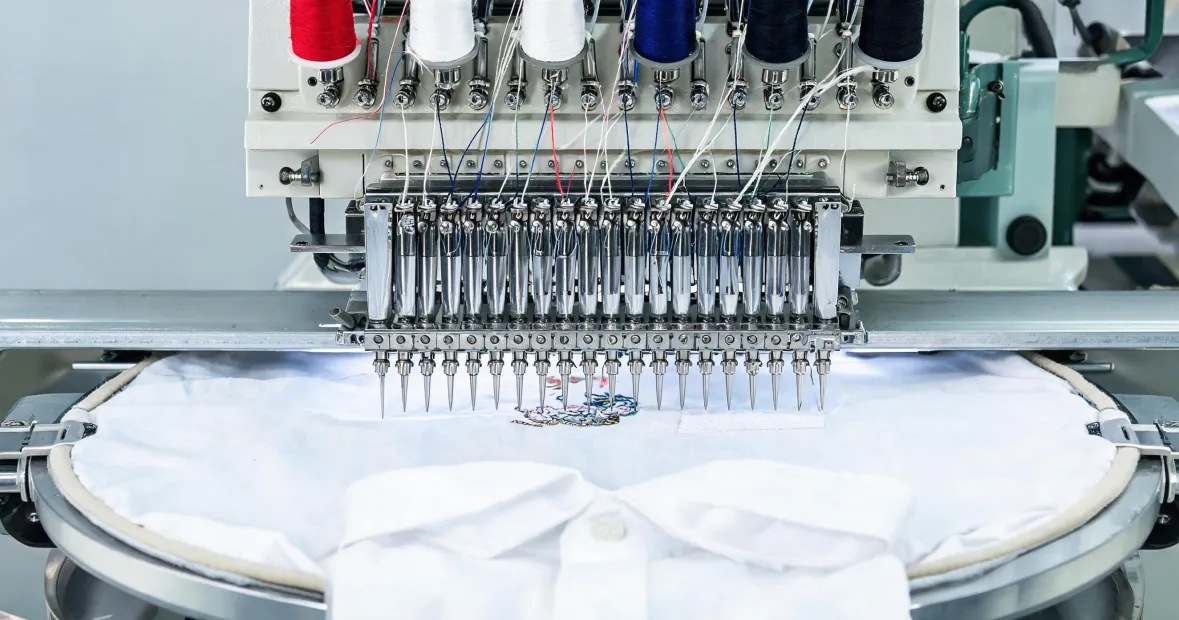
A four-head machine is a production multiplier. One operator can run four garments at once. That is the upside. The downside is that one mistake also multiplies by four. If tension is off on head three, you may ruin four pieces before you notice. So the real value is not just head count. It is consistency across heads.
For a shop running 24 to 100 piece orders, a Tajima 4 head embroidery machine is often the first machine that makes commercial sense. It can handle flat goods, caps with the right driver, and larger back designs. It also demands more floor space, more power, and more training. I would not buy one without a local technician and a clear spare-parts list.
People sometimes search for an industriel sewing machine and land on embroidery equipment. Be careful with vocabulary. A commercial embroidery machine is not a sewing machine in the garment-sewing sense. It is a CNC stitching system. If you need seaming, hemming, or construction sewing, buy a sewing machine. If you need logos, buy an embroidery machine.
Tajima SAI embroidery machine price and real cost
The Tajima SAI is a single-head compact machine. It is slower than a 4-head, but it is easier to place, easier to train on, and better for samples, small batches, and personalized orders. Based on dealer quotes I collected in January 2025, a new SAI typically lands in the $12,000 to $18,000 range depending on configuration. Verify current pricing with an authorized dealer. Prices move.
Do not stop at the machine price. First-year cost includes hoops, backing, thread, needles, software, training, and maintenance. A $14,000 machine can become a $20,000 first-year investment. I have seen shops blow their budget on the head and then use cheap backing. That is false economy. The backing affects stitch quality as much as the machine does.
Brother Innov-Is M330E embroidery machine
The Brother Innov-Is M330E is a different category. It is not a replacement for a four-head production machine. It can be useful for one-off names, small samples, or a side service. But if your business plan says 50 hats a day, it will not fit. That is not a criticism of Brother. It is a mismatch of tool and job.
If you are comparing a Brother Innov-Is M330E embroidery machine to a Tajima 4 head embroidery machine, compare output per hour, hoop size, service network, and total cost per 1,000 stitches. The sticker difference is the least important number.
xTool embroidery machine searches
If you are searching for an xTool embroidery machine, clarify what you actually need. xTool makes laser cutters and engravers. Lasers can cut applique shapes, engrave leather patches, or mark blanks. They do not stitch thread into fabric. If your product is embroidered logos, a laser is not an embroidery machine. If you need both laser finishing and embroidery, budget for both. One does not replace the other.
The decision that taught me to slow down
I went back and forth between a used Tajima 4 head and a new SAI for two weeks. The spreadsheet said SAI. Lower entry price. Less floor space. Easier training. My gut said the 4-head because our orders were shifting to 24 to 48 piece runs. We chose the 4-head. First month, we ran a 36-piece order with six color changes. The SAI would have taken days. The 4-head ran it in one shift. Not romantic. Just throughput.
Later we bought an SAI for samples. Both machines earn their space. That is the part people miss. It is not always either-or.
In my first year, I made the classic rookie mistake: I assumed all 4-head machines had the same embroidery field. We quoted a 14-inch wide left-chest design. The actual sewing field was smaller than the brochure implied. Cost us a $1,200 redo and a late delivery. Now every quote includes field size, hoop size, and max stitch count. No exceptions.
My 12-point pre-purchase checklist
This is the checklist I use before signing any machine contract. It has saved us more than once.
- Stitch out the same file on the actual machine before deposit.
- Verify field size with the real hoop, not a brochure diagram.
- Check cap driver performance if hats are more than 20% of revenue.
- Ask the dealer for local technician response time in writing.
- Confirm software compatibility with your existing files: DST, EMB, and whatever your designers use.
- Price first-year consumables: backing, thread, needles, oil, and blades.
- Test trim and tension at production speed, not demo speed.
- Run a 10,000-stitch design and inspect registration at the end.
- Verify training hours and safety video access for every operator.
- Ask for a spare-parts list with lead times.
- Get total cost of ownership in writing, including service travel.
- Do not skip the sample. Ever.
The 12-point checklist I created after my third mistake has saved us an estimated $8,000 in potential rework. That number is not theoretical. It is two rejected deliveries that looked fine on paper and failed on the floor.
When this advice does not apply
If you are a hobbyist making five items a month, a Tajima 4 head embroidery machine is overkill. Start smaller. If you have no local service and cannot travel for training, a complex commercial machine may sit idle. If your only work is small left-chest logos under four inches, a Brother Innov-Is M330E or a Tajima SAI may be enough. If you need laser cutting and engraving, xTool can be useful, but it is not an embroidery machine. And if you need an industriel sewing machine for seaming, buy a sewing machine, not an embroidery machine.
Prices change. Dealer quotes vary by region, configuration, and timing. Verify current Tajima SAI embroidery machine price, Brother M330E availability, and xTool specs with official sources before you sign. I still check every contract against our spec sheet. Old habit. Cheap insurance.
Leave a reply