-
The short version: I don't stitch. I buy.
-
Dimension 1: Throughput and the meaning of big
-
Dimension 2: Software, files, and daily workflow
-
Dimension 3: Parts, bobbins, and the bobbin to industrial sewing machine question
-
Dimension 4: Training, safety, and support
-
Dimension 5: Total cost, resale, and the quote you don't see
-
So which one would I buy?
The short version: I don't stitch. I buy.
Office administrator for a 65-person apparel decoration company. I manage equipment and consumables ordering—roughly $280,000 annually across 11 vendors. I report to operations and finance. So when we started looking for an embroidery machine big enough to replace two aging 4-head units, I was the one collecting quotes, not the one threading needles.
That changes the comparison. Operators care about stitch quality, trims, and cap frames. I care about invoice terms, training schedules, parts availability, and whether finance will reject the PO because the vendor can't provide a proper W-9 or warranty document. Different lens. Same machine.
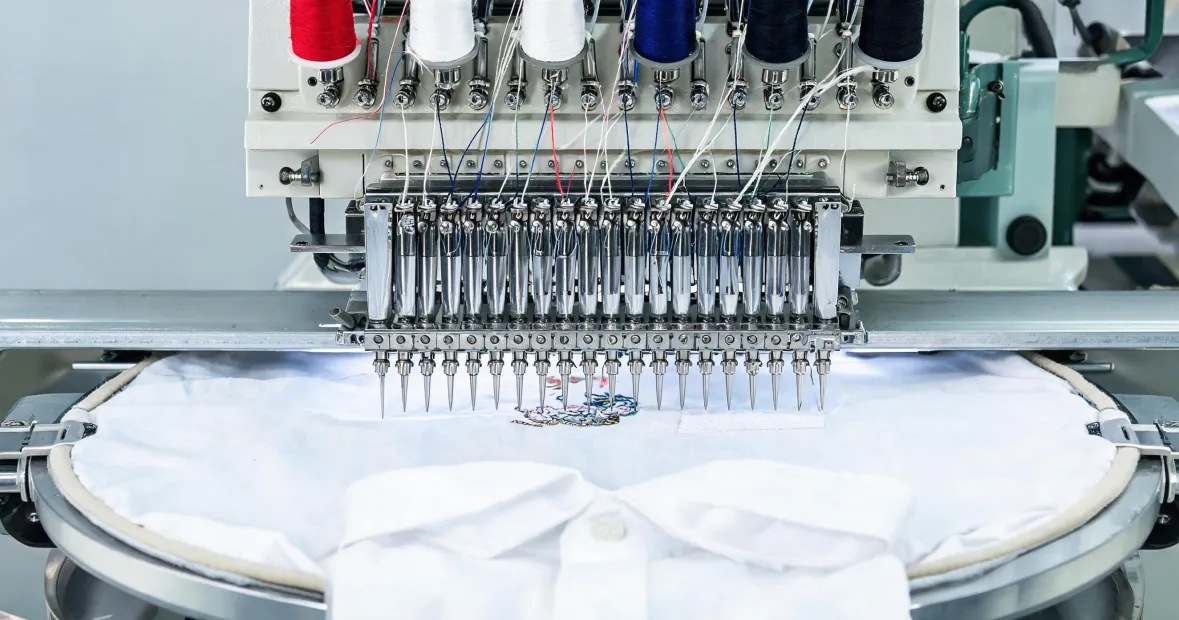
Our shortlist: a new Tajima 4 head embroidery machine, a Vango embroidery machine, and one for sale Tajima embroidery unit that a nearby shop was retiring. I compared them across five dimensions. Not brand tribalism. Just what I could verify.
Dimension 1: Throughput and the meaning of big
A Tajima 4 head embroidery machine is not automatically the right answer for every shop. Four heads are four heads. If you're running 12,000 pieces of left-chest logos, a 6- or 8-head may make more sense. But more heads also mean more operator attention, more maintenance, and a bigger footprint.
Vango embroidery machine specs vary by model and importer. Some are set up for flat goods. Some can do caps. Some can't. So the first question isn't Tajima vs Vango. It's: what does the actual unit do?
- Max speed (and realistic speed after trims, color changes, and backing)
- Stitch field and hoop sizes
- Cap, flatbed, and cylinder capability
- Auto trim, auto color change, and thread break sensors
- Power and compressed air requirements
I learned this the hard way. In my first year buying equipment, I made the classic spec error: assumed four heads meant four times the output. Cost us a $600 redo on a sample order because we didn't account for cap-frame changeover time. Not the machine's fault. Mine.
Short punch: Heads matter. Workflow matters more.
Dimension 2: Software, files, and daily workflow
Tajima machines are often paired with Pulse software. Vango machines may use a different ecosystem depending on the model and dealer. As an admin buyer, I don't digitize. But I do pay for training, licenses, and the person who fixes files at 10 p.m.
Ask these questions before you sign:
- Can our existing digitizers export compatible files without a paid converter?
- Does the machine network to our design folder, or do operators use USB drives?
- Is software training included, or is it a separate line item?
- What happens when the software license expires or the PC dies?
Honestly, this is where a lot of cheap quotes fall apart. The machine price looks fine. Then you add software, dongles, a dedicated PC, and two days of training. That's not a Tajima problem or a Vango problem. That's a procurement problem.
What was best practice in 2020 may not apply in 2025. Cloud design libraries, remote support, and video-based training have changed the onboarding math. The fundamentals—backing, tension, hooping—haven't.
Dimension 3: Parts, bobbins, and the bobbin to industrial sewing machine question
This is the dimension that made me slow down. We already run industrial sewing machines for finishing. So when someone searched for a bobbin to industrial sewing machine solution, I understood the appeal: fewer bobbin types, fewer spools, less chaos.
But embroidery bobbins and sewing machine bobbins are not always interchangeable. Bobbin size, winding tension, and case design differ. If you're trying to standardize, check the actual bobbin specs before you order 5,000 of the wrong thing.
For the Tajima 4 head embroidery machine, parts and consumables are generally available through Tajima's dealer network and aftermarket suppliers. For a Vango embroidery machine, availability depends heavily on who imported it and whether they stock spares. A local dealer with a parts room is worth more than a slightly lower sticker price.
We didn't have a formal spare-parts verification process. Cost us when a routine maintenance kit arrived with the wrong bobbin case. The third time a small parts order went wrong, I finally created a one-page checklist: serial number, bobbin size, hook type, needle system, and dealer contact. Should have done it after the first time.
Dimension 4: Training, safety, and support
Tajima's pitch includes comprehensive safety training and support. For a procurement person, that's not marketing fluff. It's risk management. If an operator gets hurt or a machine goes down during a rush week, I'm the one explaining the PO and the downtime to operations.
Ask for the training outline in writing. Ask who performs installation. Ask about lockout/tagout procedures (the procedure for isolating hazardous energy during service). In the U.S., OSHA 1910.147 applies to servicing and maintenance of machines with hazardous energy. Your dealer should be able to explain how the machine fits into your existing safety program.
For Vango, support quality varies. Some dealers are excellent. Some disappear after the sale. That's true in every equipment category, but it matters more when the machine is a big capital purchase and your production schedule depends on it.
Fragment: Not ideal, but workable—if the dealer is local. Not workable if the dealer is three time zones away and doesn't stock boards.
Dimension 5: Total cost, resale, and the quote you don't see
I won't pretend there's one list price for a Tajima 4 head embroidery machine or a Vango embroidery machine. Dealer quotes I collected (as of January 2025, at least) varied by configuration, cap frames, software seats, installation, freight, and warranty terms. Anyone who gives you a single number without asking about those details is guessing.
Total cost includes:
- Base machine and frames
- Software and training
- Freight, rigging, and installation
- Electrical and compressed air upgrades
- Spare parts, needles, bobbins, backing
- Service contract or warranty exclusions
- Operator time during ramp-up
One thing I've come to believe after five years of managing procurement: the lowest quoted price often isn't the lowest total cost. A for sale Tajima embroidery machine from a retiring shop can be a great deal—if you have a mechanic who knows the model and you can verify hours, service records, and software transfer. If you don't, the savings can vanish in two service calls.
Resale matters too. Tajima has a long-standing commercial presence, which can make used units easier to price and move. Vango resale depends on the model and the importer. That's not a knock. It's just a question to ask before you finance anything.
So which one would I buy?
If we were standardizing a growing apparel decoration shop with hat and flatbed work, I'd lean toward a Tajima 4 head embroidery machine. Not because it's the only good machine, but because the software ecosystem, training, and parts network reduce the operational unknowns that land on my desk.
If the budget was tight, our work was mostly flat goods, and we had a strong local Vango dealer with parts and service, I'd consider a Vango embroidery machine. I'd just verify the dealer's support history before signing.
If a for sale Tajima embroidery unit came up at a fair price, I'd inspect it like a used car: hours, maintenance log, boards, software, and frame condition. Then I'd call a Tajima-trained tech before I wrote the check.
And if someone tried to sell me an embroidery machine big enough for everything, I'd ask for the spec sheet. Every time.
It took me three years and about 150 equipment and supplier orders to understand that the best machine isn't the one with the lowest quote. It's the one your team can run, maintain, and get parts for on a Tuesday afternoon. That's it.

Leave a reply