-
The order that changed how I buy embroidery machines
-
The machine we had, and why it failed
-
The rushed decision that cost us
-
The DST file disaster
-
What I actually lost
-
What I changed — and the checklist I wish I'd had
-
What I'd tell someone asking "what embroidery machine is best for hats"
-
A note on DST files (because this confused me for weeks)
The order that changed how I buy embroidery machines
I'm a production manager. Seven years handling commercial embroidery orders. I've made — and documented — 12 significant machine-buying mistakes, totaling roughly $18,000 in wasted budget. This is the one that stings the most. And the one that finally made me build a checklist.
January 2021. A local baseball league called. 500 embroidered hats. Six weeks to deliver. I said yes before I hung up the phone.
That was mistake number one.
I'd been running commercial embroidery for about three years at that point. T-shirts, flat goods, the occasional jacket back. Hats were new. I figured — and I cringe writing this — that any embroidery machine could do hats if you just put a cap frame on it.
Wrong. Painfully wrong.
The machine we had, and why it failed
Our shop ran two machines at the time. A used 4-needle single-head for samples, and a 6-head flatbed we'd picked up from a shop that was closing. Good enough for shirts. Useless for structured caps.
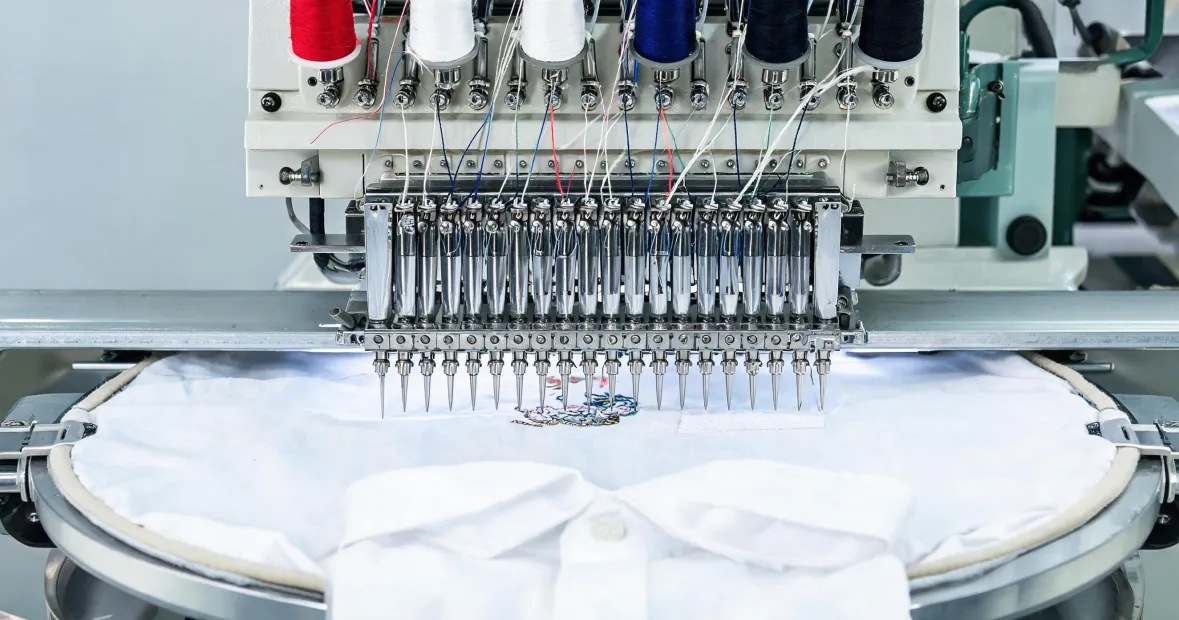
Here's what I didn't understand: hat embroidery isn't just "embroidery on a hat." The cap driver — the physical mechanism that moves the hat under the needle — is different from a flat frame. On a flat machine, the fabric lies flat. On a cap, the curved surface means the needle has to travel in a specific arc, and the cap driver has to rotate the cap precisely so the stitch lands where the digitizer intended.
Our flatbed had no cap driver mount. We tried a third-party cap frame anyway. It wobbled. Stitches drifted. The first 12 hats went in the trash.
That's $147.60 in blank caps and backing, gone in about 90 minutes.
The rushed decision that cost us
I had five weeks left. I did what a lot of people do when they're panicking: I started shopping for a "cheap" machine that could do hats.
Bad idea.
I looked at everything. Used Happy Japan embroidery machines from overseas sellers. A local listing for a used Tajima SE700 single-head. A refurbished Melco. I spent four nights reading forums and watching YouTube reviews, trying to figure out what embroidery machine is best for hats.
My budget was $9,000. That was the number I'd pitched to my business partner.
What I should have done: figured out the actual requirements first, then matched the machine to them. Instead, I matched the machine to my budget and hoped the requirements would work themselves out.
I found a Tajima 8 needle embroidery machine — a used single-head — for $7,800. It had a cap driver, a decent reputation, and it fit the budget with $1,200 left over for accessories. I bought it.
This was a good machine. It was also the wrong machine for what I actually needed. But I didn't know that yet.
The DST file disaster
The machine arrived on a Tuesday. I had the client's artwork, already digitized. They sent it as a .DST file — the "industry standard" format, or so I'd read.
I loaded it. The machine started stitching. And immediately, things went sideways.
The color sequence was wrong. The outline stitched first, then the fill covered it. The machine stopped four times to "change colors" that were already loaded. Half the design came out mirrored.
I spent two full days troubleshooting. That's when I actually learned what DST files are — and aren't.
DST is a stitch-only format. It was developed by Tajima for their commercial machines, and it's become the de facto standard across the industry. But a DST file contains no color information. It's a sequence of needle penetrations — moves, stitches, trims, color changes. Nothing else.
I'd assumed — again with the assumptions — that the file would just "work." It didn't. The design had 11 distinct color segments. My 8-needle machine could only load 8 threads at a time. So the remaining 3 colors required manual thread changes, mid-run, which meant re-sequencing the entire design and babysitting the machine for every hat.
500 hats. 11 colors each. On an 8-needle machine.
I did the math. It worked out to roughly 14 minutes of extra handling per hat. That's 116 hours of extra labor. At $18/hour, that's $2,088 in labor that I hadn't budgeted.
What I actually lost
I'll do the full accounting, because I want this to be useful, not just a story.
- Ruined blanks and backing on the first attempt: $147.60
- Second-order expedited shipping on replacement caps: $420
- Extra labor for manual thread changes over the run: $2,088
- Two days of lost production time on other orders: $310
- Discount I had to offer the client for delivering 4 days late: $500
Total: $3,465.60. On a job where my original profit estimate was $2,800.
I turned a profitable order into a net loss of $665. And that doesn't count the gray hairs.
What I changed — and the checklist I wish I'd had
The next time we quoted a hat order, I did things differently. I built a checklist. It's still on our shop wall in a laminated sleeve.
Before buying any machine, for any job, we now verify:
- Cap driver compatibility. Does the machine include or support the specific cap driver for the hat styles we run? Not "hat frame" — the actual driver mechanism. (Our current Tajima machine has a dedicated cap driver that we specified at purchase.)
- Realistic color count. How many colors does the average design in this category use? If it's more than our needle count, we either accept manual changes or buy a machine with more heads.
- DST file workflow. We now open every client-submitted DST in our editing software before it hits the machine. We check color sequence, verify the start point, and confirm that the design's segment count matches our needle capacity.
- Timeline buffer. Every hat order now includes a 7-day buffer for file troubleshooting and setup. It sounds excessive. It has saved us twice since 2021.
What I'd tell someone asking "what embroidery machine is best for hats"
The answer isn't a brand. It's a configuration.
There are good machines from Tajima, from Happy Japan, from Melco, from Barudan. They all make commercial embroidery machines that can do hats well. But the machine alone doesn't get you there. You need:
- A proper cap driver, ideally one matched to your hat style
- Enough needle positions for your typical design's color count (if most of your designs use 10+ colors, an 8-needle machine will frustrate you daily)
- Software that handles DST files cleanly — and the knowledge to use it
- A support network that can answer questions in hours, not days
In my experience, the Tajima 8 needle embroidery machine I eventually bought was a great piece of equipment. It wasn't the right tool for that first 500-hat order. But the lessons from that order shaped how I evaluate every machine since.
There's something satisfying about finishing a run of hats and knowing the setup was right. After the DST mess, after the manual thread changes, after the client call I still remember — seeing 500 finished caps boxed and ready, on time, with no rework… that was worth the learning curve.
But I'd rather you skip the $3,465 learning fee.
A note on DST files (because this confused me for weeks)
If you're new to commercial embroidery: DST is not an image file. It's a stitch file. It tells the machine where to put the needle, when to trim, and when to change colors. It does not tell the machine what color to use (that's your thread). It does not tell the machine the design's original dimensions (scale it wrong and it stitches wrong).
The dst embroidery file format tajima developed became the industry standard for a reason — it's compact, reliable, and almost every machine reads it. But "reads it" is not the same as "reads it correctly without human interpretation." Check every file before it hits production.
Prices and timelines in this article reflect my 2021 experience. Machine pricing has shifted since then; verify current rates with your dealer.
Leave a reply