-
Who this checklist is for
-
The 7-Step Checklist
-
Step 1: Define your production reality, not your dream machine
-
Step 2: Compare the same configuration
-
Step 3: Calculate total cost, not sticker price
-
Step 4: Budget for digitizing and software
-
Step 5: Count hoops and frames
-
Step 6: Put a dollar value on installation, training, and safety
-
Step 7: Ask about parts and service lead times
-
Step 1: Define your production reality, not your dream machine
-
Notes and common mistakes
Seven figures? No—not that. If you're looking for Tajima embroidery machine prices, the first thing to know is that the number on a dealer's first quote is a starting point, not a budget.
I'm the office administrator for a 40-person contract embroidery company. I manage equipment and supply purchasing—roughly $1.2 million annually across 12 vendors. I report to operations and finance, so I've learned to compare capital quotes the hard way. This is the checklist I use before I send a PO.
Who this checklist is for
Use this if you're buying your first multi-head machine, adding a hat setup, or replacing a worn-out single-head. It also works if you're pricing a digitizing embroidery machine package or a specialized lettering machine. If someone in your shop just told you to "get a Tajima price," start here before you email anyone.
Here's the 7-step checklist.
The 7-Step Checklist
Step 1: Define your production reality, not your dream machine
Before you search "Tajima embroidery machine prices," write down what you actually make: flat garments, caps, sleeves, chenille? What fabrics? How many colors per design? What's your daily order volume?
That determines the right machine. A 6-needle flatbed won't do hats. A 20-needle multi-head is overkill if most jobs use four colors. I once spec'd a 20-needle because I heard "higher is better" — then our average job used 4 colors. The machine was underutilized for a year. That's not a machine problem; it's a needs problem.
For lettering-heavy shops, the phrase embroidery letters machine often shows up in searches. But lettering capability is more about software and field size than a different machine. A standard flatbed with auto-digitizing text can handle most lettering jobs.
Also ask for vector artwork from customers. A 300 DPI print file is fine for paper, but embroidery digitizing works best with clean vector shapes or high-contrast scans.
Step 2: Compare the same configuration
If you're specifically searching for Tajima 8 head embroidery machine price, the first quote you see is not the number to budget. An 8-head Tajima can look remarkably different across dealers—because they're quoting different configurations.
From the outside, an 8-head Tajima looks like one machine. The reality is the price can change by tens of thousands of dollars depending on options.
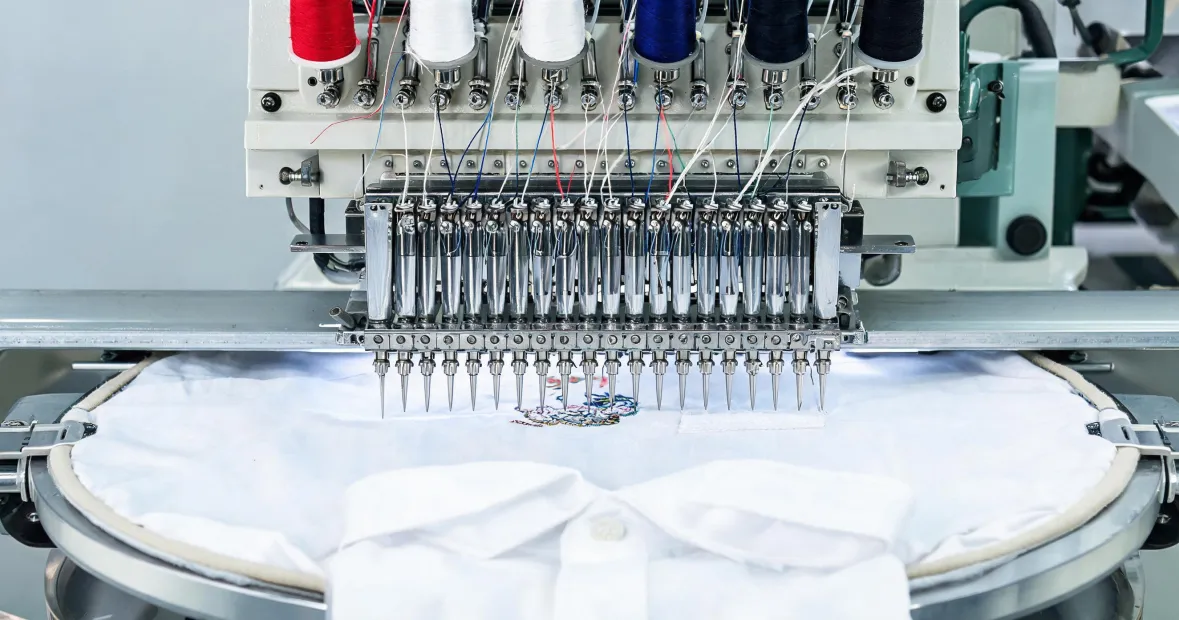
One quote might include only the sewing heads. Another includes a cap driver, extra cylinder bed, Pulse software dongle, a set of hoops, and a spare parts kit. So when I compared a bare 8-head and a fully equipped quote side by side, I finally understood why line items matter more than the total.
Make every dealer quote the same base model and the same option list. If they won't itemize, that's a red flag.
Step 3: Calculate total cost, not sticker price
Everything I'd read about equipment buying said compare base prices. In practice, the lowest base price machine turned out to be more expensive after I added the items the rep called "optional."
Total cost of ownership includes:
- Machine price
- Hoops, frames, cap drivers, spare hooks
- Digitizing software and updates
- Installation, leveling, training
- Freight, customs, rigging
- Service calls and parts lead time
- Lost production hours during downtime
One quote I saw was about $185,000—or rather, $212,000 once the "required" accessories were listed. The $185,000 figure wasn't a lie. It just wasn't true.
That's the total cost way of thinking. It doesn't mean buy the most expensive machine. It means know what you're signing up for.
Step 4: Budget for digitizing and software
A Tajima will stitch exactly what you feed it. If you feed it poor digitizing, you'll get poor embroidery. So when you price a digitizing embroidery machine workflow, include the software.
Some quotes include Pulse or similar design software. Others don't. Ask:
- Does the price include a software license or just a demo?
- Is there a maintenance or upgrade fee after year one?
- Does it have automatic lettering for names and numbers?
- Can it import vector files without guessing?
- Is training for the digitizer included?
If your orders are mostly corporate logos and lettering, this software matters more than extra needles. And don't forget thread colors: if a client gives you a Pantone color, order a thread conversion card from your thread supplier. That alone saves you from "close enough" surprises on large runs.
Step 5: Count hoops and frames
The machine price never includes every hoop you'll need. Cap frames are expensive. Tubular frames for sleeves are separate. Magnetic hoops are nice but optional—until a job calls for them.
If you're doing hats, make sure the quote includes a cap driver and at least one cap frame. I've had dealers say a machine is "capable" and then find out the cap frame costs more than a used car. Maybe not that much, but you get the point.
This step is easy to ignore when you're staring at a six-figure number for the machine itself. But hoop packages can add tens of thousands, especially on multi-heads.
Step 6: Put a dollar value on installation, training, and safety
Installation isn't plugging it in. The machine needs leveling, tension calibration, thread path setup, and operator training. Some packages include a safety video or training session; some don't. If you're new to multi-heads, that training is worth real money.
I learned this in 2022 when we added our first 8-head. The dealer sent a technician for one day. We assumed operators would absorb it. They didn't. Then we paid for another visit—at a rate that made the first training package look cheap.
So ask: How many days of installation and training? What does an extra day cost? And don't skip the safety videos. A needle through a finger is expensive, painful, and avoidable.
Step 7: Ask about parts and service lead times
This is the step most people skip until something breaks. Ask for:
- Which parts are stocked locally?
- Typical lead time for a main board or a hook assembly?
- How many technicians are within 200 miles?
- What's the hourly service rate?
- Does the warranty cover travel time?
Honestly, I'm not sure why parts sourcing feels so opaque until after the sale. My best guess is dealers don't want to scare you before you sign. But the dealer with a slightly higher price and a parts shelf in your region can actually be the cheaper option over ten years.
Notes and common mistakes
Don't cross-shop an embroidery machine with an overlocker. If someone in your facility asks for an industrial overlock sewing machine price while you're budgeting a Tajima, run two separate budgets. An overlocker is a simpler, more mechanical machine; a multi-head embroidery machine is a computer-controlled system with sensors, axes, and software. Different TCO, different service needs, different training.
Don't let the base price set your expectations. The $185,000 quote that became $212,000 is not unusual. It's normal. Plan for it.
Verify current pricing. This was accurate as of Q1 2025. The market changes fast, so confirm current quotes and included packages before you put together a budget. That said, the TCO framework doesn't change.
Bottom line: Tajima machines are serious investments. The right price isn't the lowest one. It's the one that gives you a machine that runs, a team that can use it, and a dealer who shows up when you need them.

Leave a reply