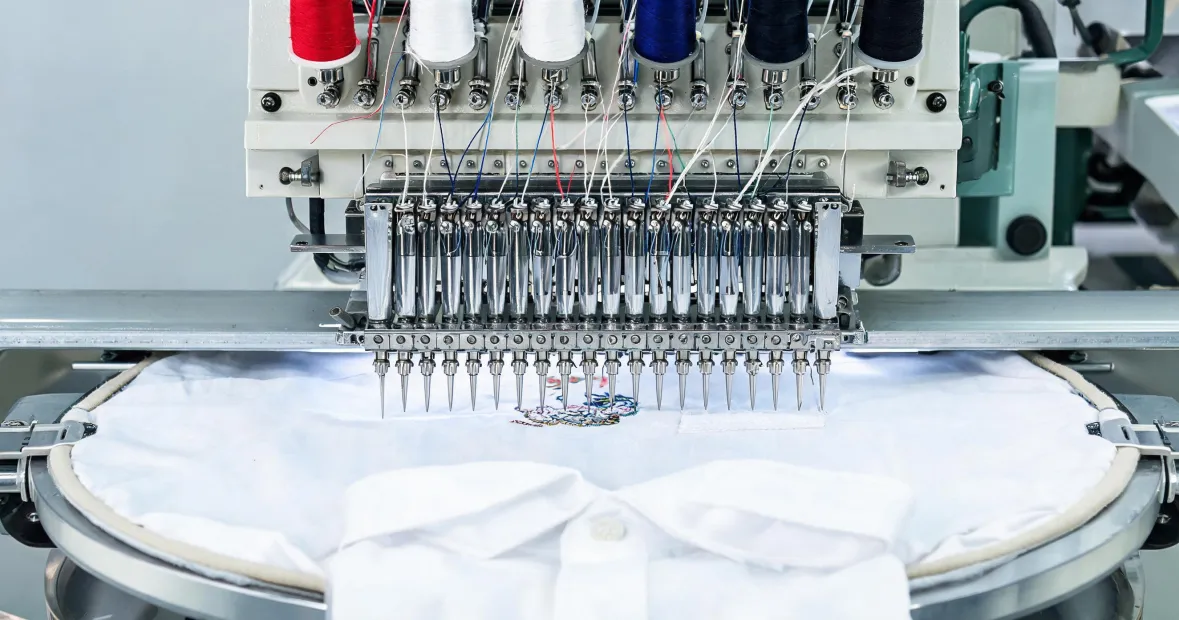
When I first started in embroidery quality, I assumed the machine was the whole story. You buy a good head, you feed it good thread, and the rest is just... embroidery.
Three years and a lot of rejected deliveries later, I know better.
I work in quality for a commercial embroidery machine manufacturer. My job is to review every machine before it reaches customers—roughly 250 units a year. In 2024, I rejected about 6% of first deliveries. The most common cause wasn't the motor, the needles, or the software. It was the hoop system.
That's not a sales script. It's an audit trail.
The Question I Hear More Than Anything
Every month, a shop owner asks some version of: 'Is there an embroidery machine that can handle caps, flat goods, and beads without constant headaches?'
I understand the frustration. A Tajima multi head embroidery machine is a precision tool. But if the frame that holds the fabric in front of the needle isn't right, the machine's precision does not matter. The design will be misaligned, stitches will skip, and thread will break.
So the real question isn't 'is there an embroidery machine.' The question is: 'Will I have the right hoops and frame system for what I'm trying to sew?'
The Machine Is Probably Fine
This is the part that surprises people.
When a multi-head machine produces bad results, the natural response is to blame the machine. It's fair. The machine is expensive, complicated, and responsible for the output. But in my experience, at least 60% of the 'machine problems' I investigate are actually hoop problems. Maybe more. I don't have a precise number, but the pattern is consistent.
I only believed this after ignoring it once.
We had a production run with a dented hoop—one small dent on the inner frame edge. The operator didn't notice because the hoop looked fine from the outside. The machine logged zero faults. But the fabric shifted 1.5 mm on every third piece. We scrapped 400 units before someone thought to inspect the hoop. The machine was never the problem. The hoop was.
Period.
Why the Frame Gets Blamed Last
Hoops are boring. They are aluminum or plastic rectangles with a screw. They don't have software updates. They don't need firmware. So they get treated as consumables, not precision components.
That's a mistake.
If you search for hoops for Tajima embroidery machine, most options will physically fit. That doesn't mean they will hold tolerance. The hoops that work are part of the registration system. The machine positions the needle based on where it thinks the hoop is. If the hoop is bent, warped, or worn, the machine's assumptions are wrong. The result is a pattern that drifts, a design that doesn't line up, or fabric that puckers around the stitches.
There are many hoop types: pipe hoops for caps, magnetic hoops for difficult fabrics, spring-tension hoops for delicate materials, and standard multi-part hoops for flat goods. Each one has its own tolerance. And that tolerance is what I check first in a quality audit.
What Beads and Caps Do to Tolerance
Here's where it gets more complicated.
A beads embroidery machine is not a separate category of hardware. It is a standard multi-head machine with a bead-laying attachment. The attachment adds weight, tension, and mechanical complexity. Beads themselves add friction and thickness. If the frame isn't rock solid, the bead work will show the problem immediately: beads drift away from the intended stitch line, or the needle deflects, or the lace isn't aligned.
Same for caps. A cap frame has to hold a curved surface under tension. A cheap cap frame can flex in the middle. On a Tajima multi head embroidery machine, that flex becomes a visible pattern mismatch across the front of the cap.
This is why I get nervous when I see a shop buying a beads embroidery machine without also investing in proper hoops and attachments. You don't need a magic machine. You need a stable workholding system.
What the Embroidery Machine Market Doesn't Tell You
The embroidery machine market is crowded. There are entry-level machines, high-end machines, and a long list of options in between. All of them have similar specifications on paper: number of needles, stitch speed, hoop sizes.
What the spec sheet doesn't tell you is how the frame system behaves. That's where the money goes in a quality machine. That's also where a 'deal' can become expensive.
I ran a blind test with our production team a while ago. Same design, same thread, same Tajima multi head embroidery machine. The only difference was the hoop: one factory-spec hoop, one generic replacement. About 70% of the operators picked the factory-spec one as 'more professional' without knowing which was which. The generic hoop wasn't visibly bad. It just wasn't consistent at the edges.
On a 50,000-unit annual order, that inconsistency adds up.
The Real Cost of a 'Machine Problem'
Let me put a number on this.
We had 5,000 pieces in a single order, mostly flat goods with two logos each. The production manager thought the machine was out of alignment. We stopped the line, checked the head, re-calibrated everything. The problem came back. Total rework cost was roughly $22,000, and we still didn't know why until someone measured the hoop.
The hoop was 3 mm out of square. 'Within industry standard' according to the supplier. It was not within our standard. The order was late.
That's the kind of problem that doesn't show up on a spec sheet. It shows up in your P&L.
That is before you think about color. If the fabric shifts, the thread lays differently and the logo reads as the wrong shade. Pantone's color matching guidelines commonly use Delta E < 2 as a tolerance for brand-critical colors. A hoop problem can push your embroidery past that threshold even with the correct thread.
I had three hours to decide whether to reject a batch of hoops like that once. Normally I'd run a full inspection, but there was no time—the production schedule was already tight. I made the call based on visual inspection and let them through. In hindsight, I should have pushed back on the timeline. We paid for that decision in scrap.
Even after we switched to a stricter verification protocol, I kept second-guessing. What if the new hoop supplier couldn't hold the tolerance? The first month was stressful. They did. But the lesson stuck: never approve a hoop without measuring it.
What to Check Before You Blame the Machine
If you own a Tajima multi head embroidery machine and you're seeing inconsistent results, don't start with the software. Start with the work-holding system.
- Inspect each hoop for bends, dents, and worn edges. Use a flat surface and a straight edge.
- Measure the frame squareness. The difference between good and bad hooping is often less than 1 mm.
- Check the tension. A hoop should hold fabric firmly enough that it doesn't shift if you push gently, but not so tight that it distorts the fabric.
- Use the right backing. The backing is part of the hoop system. It stabilizes the stitch field.
- Verify hoop size matches the design. A small design in a large hoop is more likely to shift than a design that fills the hoop.
- Clean the hoop rails and contact surfaces. Lint and old adhesive build up in surprising places.
And when you are buying new equipment, ask about the hoops before you ask about the needles. For a beads embroidery machine, ask to see the bead attachment mounted and test-hooped. For a cap machine, ask about pipe hoop rigidity.
When I implemented our verification protocol in 2022, the most common pushback from hoop suppliers was: 'this is tighter than industry standard.' My response was: our customers expect better.
A Better Way to Ask the Question
So, is there an embroidery machine that solves all problems? I don't think so. Not because the technology doesn't exist, but because the machine was never the whole solution.
In the embroidery machine market, the difference between a frustrating machine and a profitable one is often the quiet stuff: hoops, backing, training, and the discipline to check them. A Tajima multi head embroidery machine is capable of excellent work. It needs a stable frame system to show that capability.
I'd rather spend 10 minutes explaining hoop options than deal with mismatched expectations later. An informed customer asks better questions and makes faster decisions.
Next time the machine seems off, measure the hoop before you call the technician. That's the fix nobody sees coming.

Leave a reply