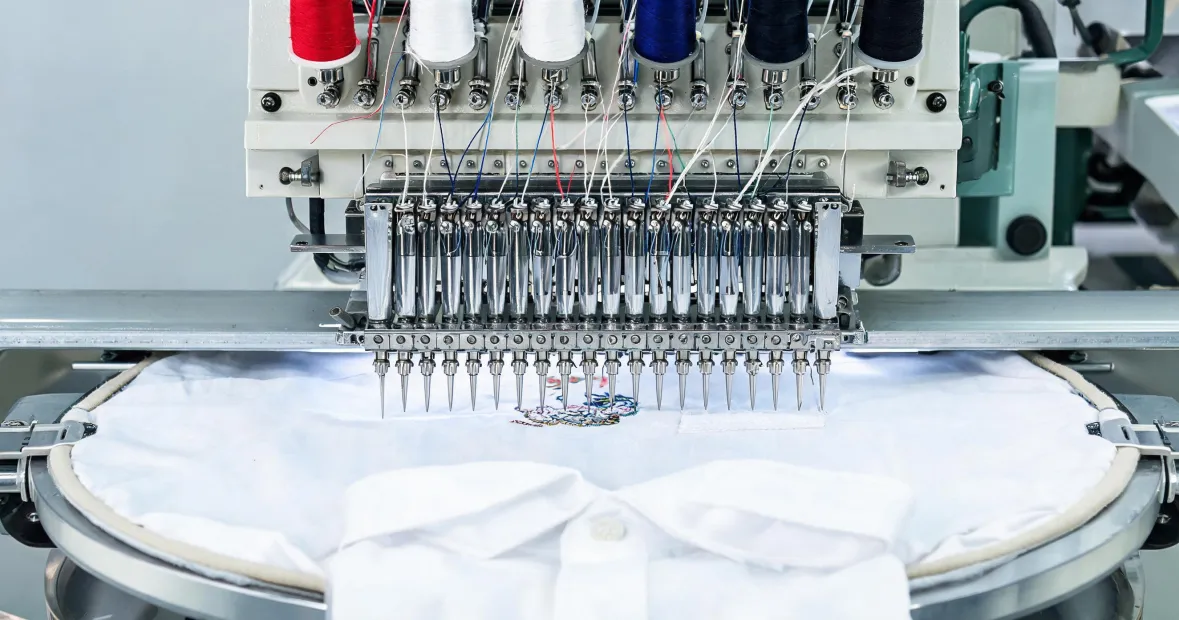
In April 2021, I stood in our loading bay and watched the delivery driver lower a used Tajima multi-head onto the pallet jack. It was the moment I'd been waiting for. The sticker said $15,800, and compared to the price of a new multi-head, that felt like a steal. The seller had a clean shop and a smooth pitch. The Tajima embroidery machine reviews I'd read all pointed the same direction: Tajima is the industry workhorse.
Six weeks later, that “steal” had cost us a little over $28,000 before we stitched a single paid order. I'm not blaming the machine. I'm blaming my buying process.
How I Backed Into a $28,000 Tajima Purchase
I should back up. I've run production at a small apparel decoration shop since 2017. We have 14 employees and handle contract embroidery for company polos, caps, and small retail runs. I'm not a dealer, and I'm not a technician. I'm the person on the purchasing side who found out the hard way why total cost matters.
Before this purchase, I did not have a formal equipment-buying checklist. I had a quote, a test video, and a gut feeling. That's not a process.
For two months I searched “tajima embroidery machine reviews,” read forum threads, and watched YouTube machine demos. The reviews talked about stitch quality, speed, and maintenance intervals. Almost none mentioned the infrastructure that the machine needs before it can even fire one stitch. That gap is what turned a “discount” into a $12,000 surprise.
Here's the breakdown I wish someone had put in front of me:
- Purchase price: $15,800. No service records, no software, no spare parts.
- Electrician and power line: $1,900. The machine needed a dedicated supply with the right amperage. I'm not an industrial electrician, so I won't pretend to explain wiring specs. The invoice was real.
- Compressed air setup: $1,200. The machine's pneumatic components need clean, consistent air. We had none. Compressor, filter, hose, fittings.
- Software licensing and training: $3,250. Tajima's production software isn't free. Neither is learning how to use it. We paid for dongles, a basic software package, and a day of remote training. If you're looking for a “Sai Tajima embroidery machine,” keep reading: Sai is Tajima's digitizing software, not a machine model.
- Pre-production service visit and parts: $2,050. The machine had sat for months before we bought it. A Tajima tech found worn tension assemblies and a few sticky solenoids. The parts were cheap; the hourly rate was not.
- Lost production while waiting for all of the above: $4,700. The machine was here, the orders were waiting, and we couldn't run it.
Why the Sticker Price Is the Wrong Starting Point
I know these numbers are specific to our shop. If you're setting up a 30-head production floor or a small one-machine studio, your costs will shift. My point isn't the exact price; it's that the price of the machine was less than half the story.
The “total cost of ownership” idea gets thrown around in B2B sales like it's a buzzword. From my side, it means adding up the machine, the building changes, the training, the downtime, and the phone calls before comparing two quotes. The lowest sticker price can be the most expensive machine in the room.
The Twist: Once Set Up, It Ran Like a Workhorse
Here's the twist, and it's still a little embarrassing. Once all those bills were paid, the Tajima ran like a workhorse. Registration was clean. The colors matched. The trimmers worked exactly as designed. The machine was never the problem. My total-cost math was.
I still kick myself for not asking the old owner why the machine had been sitting idle. We found out later that it had been stored for eight months. That single missing question led to the $2,050 service visit and, honestly, it should have changed our bid.
My Used Tajima Buying Checklist
If I were writing this as a checklist for another buyer, it would look like this:
- Get a certified technician to inspect the machine before money changes hands. I don't care how good the photos look. This gets into mechanical territory, and that's outside my lane. A tech's pre-sale inspection is cheaper than a surprise service call.
- Ask for service records and software licenses in writing. Per FTC advertising guidelines, a seller claiming “re-certified” or “factory maintained” has to be able to substantiate that claim. Don't ask them to substantiate it to the FTC—ask them to substantiate it to you.
- Check your building before the truck arrives. Know your electrical service, floor space, compressed air, and ventilation. An electrician can quote this before you sign the invoice.
- Budget for training, even if you already know embroidery. Tajima's controls and software are not the same as the cheaper machines. And no, reading the forum is not training.
- Ask “why is this being sold?” If the answer is “new machine, outgrew it,” that's a different risk level from “we need the floor space.”
I have mixed feelings about buying used embroidery machines. On one hand, the used market is the only way many small shops get into Tajima quality. On the other hand, it pushes every hidden risk onto the buyer. I would do it again, but only with a pre-purchase inspection and a realistic TCO spreadsheet.
Keyword Traps: Sai, Midi, Yarn, and Brother Parts
Let me clear up a few keyword rabbits while I'm here, because they show up in our traffic and they might explain why you ended up on this article.
If you searched “sai tajima embroidery machine,” note that Tajima Sai is digitizing software, not a hardware model. You can buy a used machine and still need Sai to create and edit the stitch files. A machine without compatible software is just a very expensive paperweight.
If you need a “yarn embroidery machine,” that's usually shorthand for a chenille or high-yarn machine. Not every Tajima flat machine can handle yarn. Chenille requires a specialized machine with a looper and different feed system. Ask your dealer for a chenille-capable Tajima demo; don't assume.
And if your search was “midi sewing machine,” I'll be honest: that phrase isn't standard in commercial embroidery. You might mean a mid-size single-head machine, or you might have come from the MIDI music world by mistake. Either way, when you call a dealer, describe “single head” or “flat 1-head embroidery machine.” You'll get a more useful answer.
Finally, if you're here because you need “industrial brother sewing machine parts,” this article probably isn't the one for you. Industrial Brother sewing machines and Tajima commercial embroidery machines are different equipment categories, and their parts are not interchangeable. I'm not a Brother parts expert, so I won't pretend to be one. A local industrial sewing machine dealer or a Brother-authorized technician is the right place to start.
These search tangents are also a reminder of my own limitations. I know Tajima embroidery from the production floor, not from every model or every software version. My experience covers one multi-head and one single-head machine in our shop. If you're doing something outside that scope, talk to someone with direct experience in that exact setup.
The Honest Tajima Review After All That
So what's my honest Tajima embroidery machine review after all of this? The machines are solid. The ecosystem around them—software, training, compressed air, spare parts, service—is where the budget disappears if you don't plan for it.
Bottom line: if you're shopping for a commercial Tajima, don't just compare sticker prices. Multiply your target machine price by at least 1.5 to 1.7 for the first-year reality check. That's not a scientific formula; it's a rule of thumb from my own $13,000 misunderstanding. Is the machine worth it? Yes, in the right setup. Would I buy used again? Yes, but with a checklist and a technician on my side.
That's it. That's the honest review. The machine can handle the work. The buyer has to handle the math.

Leave a reply