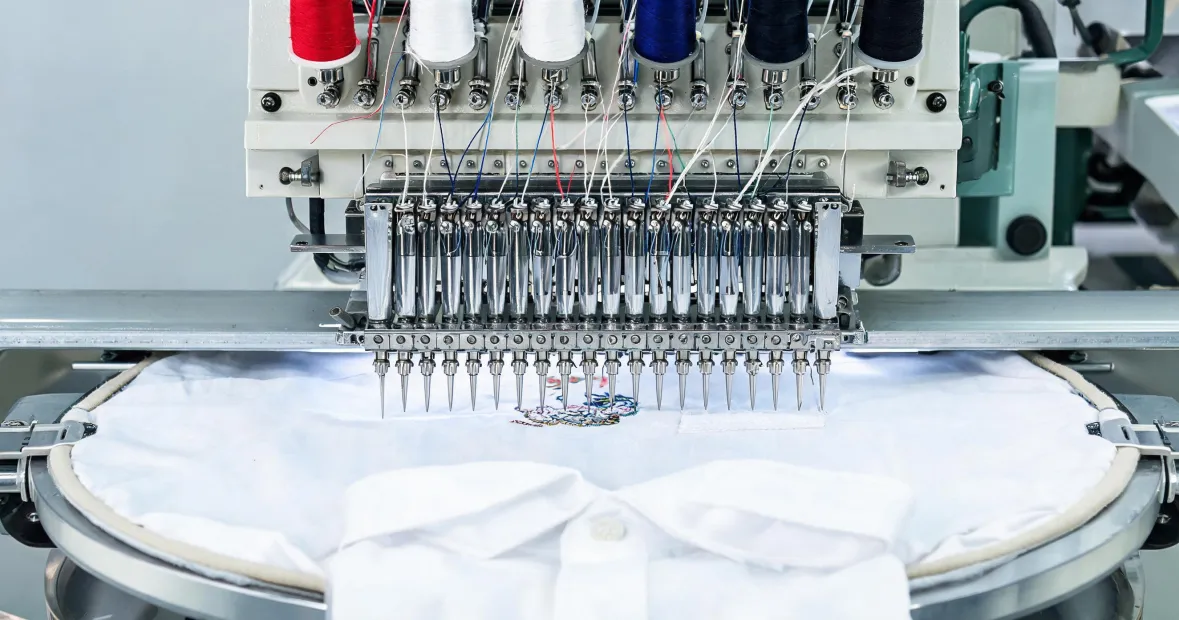
You finally pulled the trigger on a Tajima 4-head embroidery machine. The price was right, the delivery was fast, and the first week of production was smooth. Then the bobbin case started misbehaving. Then the needle bar began to chatter. Then the technician told you the rotary hook needs to be replaced—$400 for the part, plus $90 for the service call, and a 10-day wait for shipping.
That's when the numbers start to hurt. And honestly, this scenario is more common than you'd think—not because the machines are unreliable, but because most buyers never plan for the full cycle of parts, labor, and downtime.
I've been handling embroidery orders for eight years, and I've personally made—and documented—13 significant mistakes in that time, totaling roughly $40,000 in wasted budget. The most expensive lesson? Buying commercial embroidery machines, including Tajima embroidery machines, without understanding every single part that can fail. Now I maintain our team's buying checklist, and I want to share what I wish I'd known before we bought our first Tajima Radiance.
The Problem Isn't the Machine—It's the Way We Buy Machines
When a shop decides to invest in a new 4-head machine, the natural instinct is to compare sticker prices. Does it fit the budget? What's the financing like? What's the trade-in value? Those are important questions, but they're not the ones that matter most.
What I've learned the hard way is that the price on the quote is just the entry fee. The real cost—the one that eats your margins—is hiding in three places you don't think to ask about. Here's something vendors won't tell you: for a multi-head machine, the “standard” support package usually covers breakdowns, but it does not cover wear parts like rotary hooks, tension springs, and looper needles. Those are considered consumables. And they're not cheap.
1. The “Consumable” Blind Spot
Every machine has parts that wear out. Needle bars, presser feet, bobbin cases, rotary hooks—these are the moving pieces that keep production going. On a Tajima 4-head machine, that's four heads' worth of parts, each doing hundreds of stitches per minute. When one goes, you typically replace it, not repair it. And if you haven't budgeted for that, it hits your P&L like a surprise expense.
I remember asking a dealer once whether the machine came with a spare parts kit. He said, “There's a small kit included.” Guess what that kit contained? A couple of needles and a screwdriver. Useful, but not enough to handle a broken rotary hook or a worn thread tension assembly.
2. The Cost of Downtime (Not the Cost of Repair)
The repair bill itself is manageable. It's the downtime that kills. When our 4-head machine went down in September 2022, the repair cost $1,100. But we lost an entire 2,400-piece order. That order was supposed to ship in five days. Instead, it shipped a week late. The late fee was $2,100. Our biggest customer switched to another decorator for the next order.
Let's do the math: $1,100 for the repair, $2,100 in late fees, plus lost future orders from that customer. The machine's sticker price suddenly became less relevant than the cost of one unplanned breakdown. Since then, I calculate the “downtime cost” of every machine we consider—simply estimate your profit per hour and multiply by the typical repair time.
3. The Training Gap
When we bought our second Tajima—a Radiance model—I figured we'd figure it out. We had manuals, we had YouTube tutorials, we had common sense. What I didn't budget for was the time it would take to learn the machine's individual quirks. A proper training program for staff isn't a nice-to-have. It's a risk-management tool.
Here's the thing that took me five years to understand: the dealer's ongoing support and training are as important as the machine itself. We bought our first ProEmb at a steep discount and saved $3,000 upfront. Then we spent 11 months trying to troubleshoot tension issues that could have been solved with a two-day training session. If I'd paid for training, I would have saved about four times the cost.
What This Really Costs You Over Time
Let me be blunt: if you skip the deep-dive on spare parts, training, and backup support, you're gambling. When you gamble on a busy production floor, the house always wins.
I had another wake-up call in July 2023. We accepted a rush order that had to ship in 48 hours. Our 4-head machine started throwing thread breaks on one head. We had 2 hours to decide whether to order a new tension assembly or try to adjust the existing one. Normally, I'd have a technician come out, but there was no time. We ordered the part, paid for overnight shipping, and hired an outside technician to install it. Total cost: $780. We made the deadline, but that rush repair was $780 we hadn't budgeted.
When I compared our shop's two similar 4-head machines over 12 months—one with a prepaid maintenance plan, one without—the difference was obvious. The machine with the prepaid plan cost us $600 in service calls. The other cost us $4,200 in repairs and downtime. That contrast finally convinced me: the system around the machine matters more than the machine itself.
The Checklist That Finally Fixed Our Process
After the third expensive mistake in Q1 2024, I sat down and wrote a pre-purchase checklist. It's saved us more than I care to admit. Here's the short version:
- Ask for the "not included" list. Demand a written breakdown of what's in the base package: which parts are covered under warranty, which parts are consumables, and what the typical hourly labor rate is.
- Get a spare parts price list. If a dealer won't provide one, walk away. You want to see the cost of rotary hooks, needle bars, tension springs, and bobbin cases for the specific model you're considering.
- Calculate your downtime cost. Multiply your expected profit per hour by the average repair time for the machine (ask the dealer for a realistic estimate). Add that number to the purchase price in your evaluation.
- Check the training options. Is operation training included? What about advanced maintenance training? How much does it cost if you want a technician on-site for a day?
- Ask for a total cost of ownership projection. Some reputable dealers will give you a five-year cost projection that includes service, parts, and expected downtime. If they don't have one, that's a red flag.
The same logic applies whether you're looking at a Tajima 4-head embroidery machine, a single-head unit, or any of the parts of an industrial sewing machine you'll eventually need to replace. The cheapest quote is rarely the cheapest machine once you factor in the true cost of ownership.
The vendor who lists all fees upfront—even if the total looks higher—usually costs less in the end.
My bottom line: the transparency of the dealer is the strongest signal you'll get about how the equipment will behave over time. A vendor who shows you every possible cost is a vendor you can trust. We've caught 47 potential missteps using this checklist in the past 18 months. That's 47 problems we never had to face.
So before you sign that quote, ask the uncomfortable questions now. It's a lot cheaper than asking them later on a production floor that's stopped.

Leave a reply