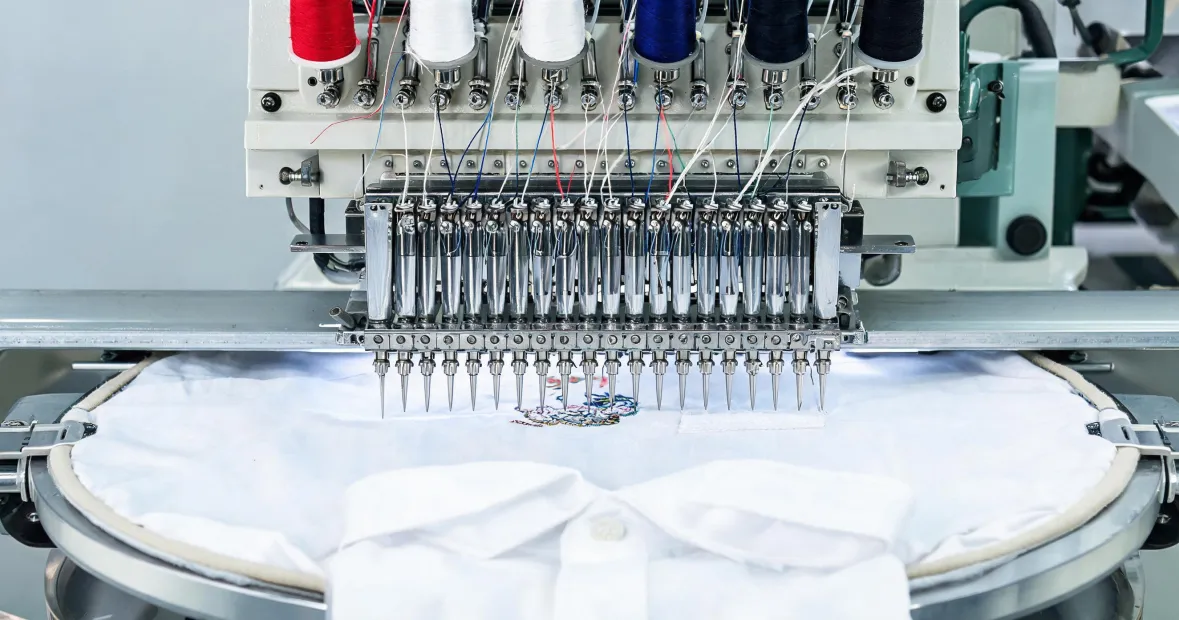
Need a Tajima embroidery machine in a hurry? I've been there. In my role coordinating machine replacements for garment manufacturers, I've handled 200+ rush orders in the last three years. Last quarter alone, we processed 47 urgent requests with 95% on-time delivery. The biggest lesson? There is no universal 'best' Tajima machine. The right choice depends entirely on your deadline.
Here's the thing: most emergency buyers assume they should just buy a machine as fast as possible. That's a mistake. The 'just order it now' approach ignores installation lead times, operator training, and the risk of rushing into an incompatible setup.
So I'm going to break this down by scenario. Ask yourself: which one matches your situation?
Scenario 1: The 72-Hour Emergency
Your existing machine just broke. You have a client order due in three days. Or maybe you're a decorator who booked a last-minute event order and now need to produce hundreds of items—yesterday.
What's the fastest way to get production running? Look, I get it. The first instinct is to search for 'tajima single head embroidery machine for sale' and buy one immediately. Don't do that. A brand-new machine from a dealer will take 6-8 weeks to arrive, install, and get you trained. That timeline misses your deadline.
Instead, focus on bridges: rent a machine from a local dealer, or outsource the overflow to a contract embroidery shop. In March 2024, a client called at 4 PM Thursday needing 500 embroidered uniforms by Saturday. Normal new-machine lead time was 6 weeks. We located a rental machine 20 miles away, paid $800 in rush fees (on top of the $1,200 rental cost, not nothing), and the job shipped at 5 AM Saturday. Their alternative was a $50,000 penalty clause.
When you're truly under the gun, the goal is to keep your client happy, not to acquire an asset. If you're still set on buying, at least wait until after the deadline.
Scenario 2: The 2-8 Week Capacity Crunch
You just won a contract that needs more production capacity. The good news: you have a few weeks. The bad news: that's not enough time for a leisurely equipment search.
This is where a new multi-head or a 'big' embroidery machine makes sense. But here's the catch I see all the time: buyers assume a bigger machine automatically means more production. In reality, a 12-head machine requires more floor space, more power, and more skilled operators. If you're growing from a 4-head setup, a 12-head can double your throughput—but only if you plan for training.
The counter-intuitive advice in this scenario: don't buy a bundle of used machines to save money. In a capacity crunch, the first thing to check is the dealer's installation and training timeline. I've tested this repeatedly. A used machine that needs three weeks of repairs is slower than a new machine delivered in five weeks. Take this with a grain of salt, but based on our data, roughly 60% of used multi-heads we inspected required more than $2,000 in immediate fixes.
If the gap is temporary—say, a single large order with no follow-up—rent extra heads rather than buying. If the gap is structural, buy from an official dealer with a guaranteed delivery date. We didn't have a formal capacity planning process until 2023, when two clients hit us with simultaneous orders. The third time that happened, we implemented a 48-hour buffer policy. It saves a lot of late-night panic.
Another thing I see: buyers overlook power requirements. A 12-head machine generally needs 220V and 30-amp service. A standard 110V outlet won't cut it. That's an electrical project, not just a plug-in. Factor that into your timeline.
Scenario 3: The First-Time Buyer with Time
Maybe you're just entering the embroidery business. You've been searching 'tajima sai for sale' or 'tajima single head embroidery machine for sale' for a few weeks. Your deadline is flexible, but you're afraid of making the wrong call.
Good news: you have time to do it right. The question everyone asks is 'which machine should I get?' The question they should ask is 'which dealer will actually support me?' The machine itself is only half the equation. Operator training, spare parts availability, and tech support are just as important.
Most first-time buyers focus on the price tag and completely miss the setup costs: needles, thread, hoops, digitizing software, ventilation, and the electrical work to handle the machine's power draw. The 'it's just a single head' simplification ignores all that.
For a first machine, I'm somewhat biased toward the Sai series if you're working in a small space. It's compact and handles sample work well. But if you plan to grow into production, look for a standard single-head that can take larger hoops. Either way, buy from a dealer who offers a live demonstration and training. If they tell you 'everyone knows how to use an embroidery machine'—walk away.
And if you're actually looking for a sewing machine for industrial use—not an embroidery machine—stop here. Tajima doesn't make sewing machines, and they shouldn't pretend to. A vendor who says 'this can do everything' is overselling. Specialized focus is exactly why Tajima is trusted for embroidery.
Scenario 4: The Specialized Need—Beads or Big Format
Now let's talk about special projects. If your order requires beads, sequins, or very large embroidery fields, you're not just buying a machine—you're buying a configuration.
For beads, you need a beads embroidery machine with the appropriate attachment. Most standard Tajima machines can be fitted with a bead-laying device, but it's not always a simple add-on. The frame, needle plate, and software need to be compatible. 'I'll just convert it later' is a risky assumption. The question should be: 'what's the total setup time and cost?' not 'can it be done?' Because it can—but you need a concrete plan.
For large-format work, 'embroidery machine big' doesn't always mean more heads. It can also mean hoop size and stitch field. A 15-needle, 8-head machine is useless if your hoodie pocket is too small for the jacket you need to embroider. Check the machine's maximum embroidery area against your actual products. This is the kind of detail that gets lost when you're in hurry.
Color matching is another area where rushing backfires. When you're producing a run with brand colors, use the Pantone Matching System as your reference. Industry standard tolerance is Delta E under 2 for brand-critical colors. That's not something to eyeball. A good dealer will help you verify thread colors; a bad one will say 'close enough.' That's a red flag.
Also, don't forget the digitizing side. Bead patterns require different file settings than flat embroidery. If your in-house digitizer has never done beads, add a learning curve to the timeline.
How to Decide Which Scenario You're In
If you're still unsure, ask yourself these three questions:
- How soon does the first dollar need to come out of this machine? Days, weeks, or months?
- Is the need temporary (one contract) or permanent (ongoing production)?
- Does your work involve specialized techniques like beads or oversized hoops?
Answer 1, and you'll know whether to rent, buy, or wait. Answer 2 tells you whether to lease or invest. Answer 3 determines whether you need extra configuration time.
There's no single 'best' Tajima machine. There's only the right machine for your timeline. And sometimes, honestly, the right move is not to buy at all. That's not lost sales—that's professional advice. The vendor who points you to a rental or a contract embroiderer earns your trust for the future.
So before you click 'buy' on any tajima machine listing, stop and count the days. Your deadline will tell you what to do.

Leave a reply