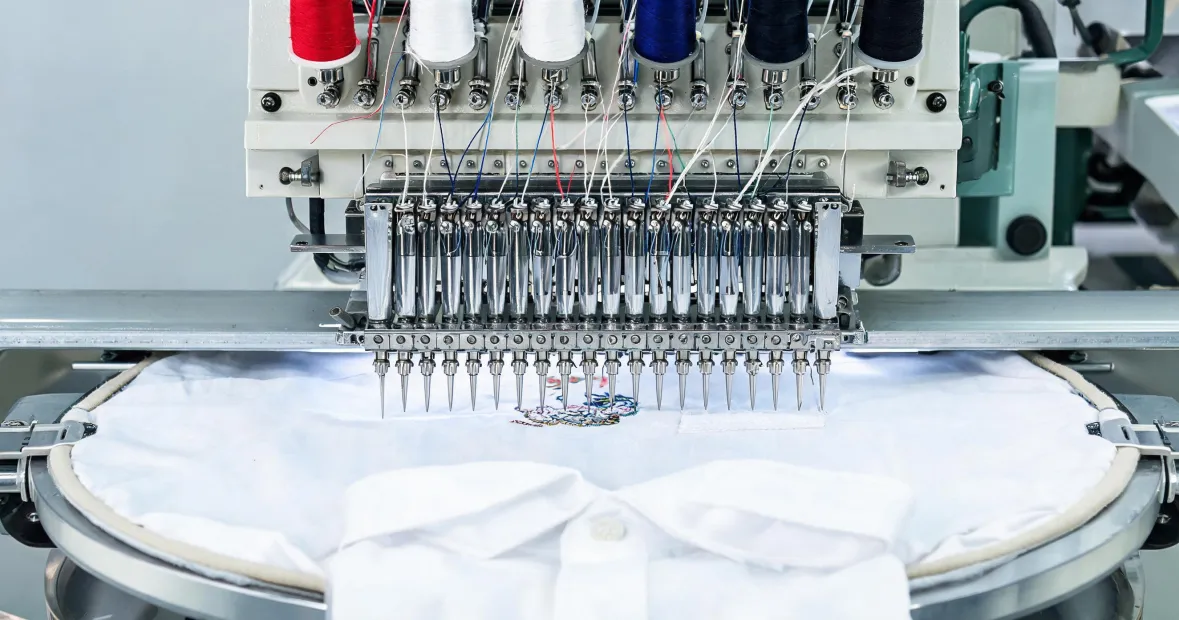
Search for tajima 8 head embroidery machine price and you usually end up at a request-a-quote form. That is not simply a sales trick. Tajima sells through dealers, and the configuration list is long: field size, number of needles, flatbed or cylinder bed, cap driver, frame set, software, installation, training, warranty. The honest answer is not a number. It is another question: what are you really trying to produce?
I am a production manager at a contract embroidery shop. I have been the person who signs off on equipment decisions for eleven years. I have also made and documented seven expensive mistakes. They cost roughly $26,000 in wasted budget, missed deadlines, and one refund conversation that I still remember too clearly. Now I keep a purchase checklist. The pattern was almost always the same: I chose the machine before I chose the problem it had to solve.
Start Here: Find Your Branch
There is no universal Tajima recommendation. The machine that makes sense for an established flat-goods shop looks nothing like the machine for a cap shop, and neither looks like the answer for someone comparing a Tajima to a budget machine. So find your branch first:
- Branch 1 - You already run production and need more output. You have steady orders, and the question is whether a bigger multi-head is actually justified.
- Branch 2 - Caps and hats are the goal. You searched for a Tajima hat embroidery machine because cap work will be a regular part of your mix, not an occasional favor.
- Branch 3 - You are new or price-sensitive. You have seen the Poolin EOC06 computerized embroidery machine in a comparison list and wonder whether a premium brand is just a label.
Branch 1: Expand Capacity Only When Sewing Is Your Bottleneck
If your shop is already loaded with orders, a larger Tajima can lower your cost per stitch. But verify that sewing time is the bottleneck first. If the bottleneck is hooping, digitizing, or fixing customer artwork, another four heads only gives you a bigger pile of waiting work.
I have learned this the expensive way. In 2018, I compared two quotes for what looked like a standard 8-head upgrade. The model names matched, so I assumed the delivered setups matched too. They did not. One quote included the cap driver, frame set, table, and installation. The other had a lower base price but none of those extras. By the time the cheaper-looking quote caught up, it was about $1,600 more than the transparent quote. That is when I changed my buying rule:
Ask what is NOT included before you ask the price. A vendor who lists every fee upfront, even when the total looks higher, usually costs less in the end.
That rule has saved me more than any trade-in discount. It also explains why two Tajima 8-head quotes can look completely different. One dealer may assume you will buy your own hoops, cap frames, and table; another includes them. The gap is real money, not dealer greed.
Before you sign in Branch 1
- Run one of your real production designs on the exact machine model and frame style the dealer is quoting. Do not rely on a sample design the dealer picked.
- Get a written list of frames, hoops, cap driver, needles, table parts, and training days included in the price.
- Ask which accessories are NOT included. Put that list in writing too.
- Plan for a second operator who can load, adjust tension, and troubleshoot common problems. An 8-head machine with one hooper can spend too much time waiting to be loaded.
Branch 2: Buy a Hat Configuration, Not a Vague Hat Story
A Tajima hat embroidery machine is not a single product line. It is usually a multi-head machine configured with a cylinder bed or cap driver, plus the correct cap frames. Too many buyers ask how many heads it has before asking whether the design will stay straight on a curved or structured cap. That is backwards.
In September 2022, I approved a flatbed multi-head deal because the listing said it included a cap frame attachment. It included the frames. It did not include the driver that guides a curved cap under the needle. We ran 120 structured caps, and every single cap had the same center-front issue. That order destroyed $3,200 of margin plus a full weekend. The real cause was my assumption. Never assume the frame set is the cap system.
The vendor will say hats are fine. Make the vendor prove it. Ask for test stitching on the exact styles you plan to sell: structured, low-profile, and if possible a curved-front cap. One test cap is worth fifty memorized spec sheets.
Yarn embroidery is a different question
If your product mix includes thick yarn or chenille lettering, search for yarn embroidery machine with real production examples. Yarn has different tension and guide requirements than regular rayon or polyester thread. A standard 8-head can often be built with yarn or chenille capability, but it needs to be part of the original quote. Adding it later is usually more expensive and may require factory reconfiguration.
Branch 3: Compare the Machine Class First, Then the Price
I understand why the Poolin EOC06 computerized embroidery machine shows up near Tajima in an online search. The first number looks like relief.
But the first question is not which machine is cheaper. It is whether they are in the same class. If the lower-priced machine is a compact single-head unit and your plan requires producing hundreds of hats or garments per day, the correct answer is not buy the cheaper machine. It is either buy a machine that can hit that production number or revise the revenue plan.
I am not going to tell you that every low-cost machine fails. Some shops use them successfully for small runs and private-label work. But the real cost per good stitch includes spare part lead time, training, operator frustration, and lost production when a machine sits down for days. Price without a service plan is an incomplete number.
Ask the low-price supplier the same four questions you would ask Tajima: what is excluded from the quote, what training is included, which hoops and frames are included, and what happens when a control board fails? If the supplier refuses to answer in writing, that refusal is your answer.
Downtime is part of the purchase price. A machine that is down for three weeks is not a cheap machine. It is a production stop plus an aggravation fee.
Still Not Sure? Do This Before You Request Another Quote
If you cannot choose a branch yet, you are not ready for a machine quote. Do this first:
- Track every hour of machine idle time for two weeks. If the machine is waiting for hooping or artwork, do not buy more heads. Fix the preparation step first.
- Forecast hats as a percentage of revenue. If hats are more than 30 percent of your plan, make the cap driver the first line of the quote, not the last.
- Name the worst case downtime you can survive. If it is five days, buy from a supplier that can prove parts are available. That is not a luxury; it is a specification.
There is always embroidery machine news about a faster head, a better sensor, or a smarter software update. Use that news as context, not as the reason to buy. A machine is the right purchase when it removes the specific bottleneck you have measured, and when the price is transparent from the first quote to the day it lands on your floor.

Leave a reply