-
What’s the deal with Tajima’s safety video—do I really need to watch it?
-
Why is the Tajima 8‑head embroidery machine so popular for mid‑size shops?
-
How does the Tajima compare to the XTool embroidery machine?
-
What about the Brother Innovis VE2200—could it replace a Tajima in a commercial setting?
-
Do I need separate cooling systems for each Tajima machine?
-
What sewing accessories does a Tajima 8‑head require that I might not think about?
-
Is the Tajima Pulse software really necessary, or can I use free alternatives?
-
When should I NOT buy a Tajima embroidery machine?
What’s the deal with Tajima’s safety video—do I really need to watch it?
When I first took over equipment purchasing in 2022, I figured safety videos were just compliance checkboxes—something you fast‑forward through. That assumption cost us a minor accident (thread got wrapped around a spindle because an operator skipped the needle‑guard adjustment module). Now I make sure every new operator watches the Tajima embroidery safety video series. Seriously, it’s not your typical boring training. There are 20‑plus modules covering needle safety, thread tension lockout, and cooling system checks. The whole series takes about 40 minutes. Our insurance carrier actually asked for proof of completion after we added a third 8‑head machine.
Why is the Tajima 8‑head embroidery machine so popular for mid‑size shops?
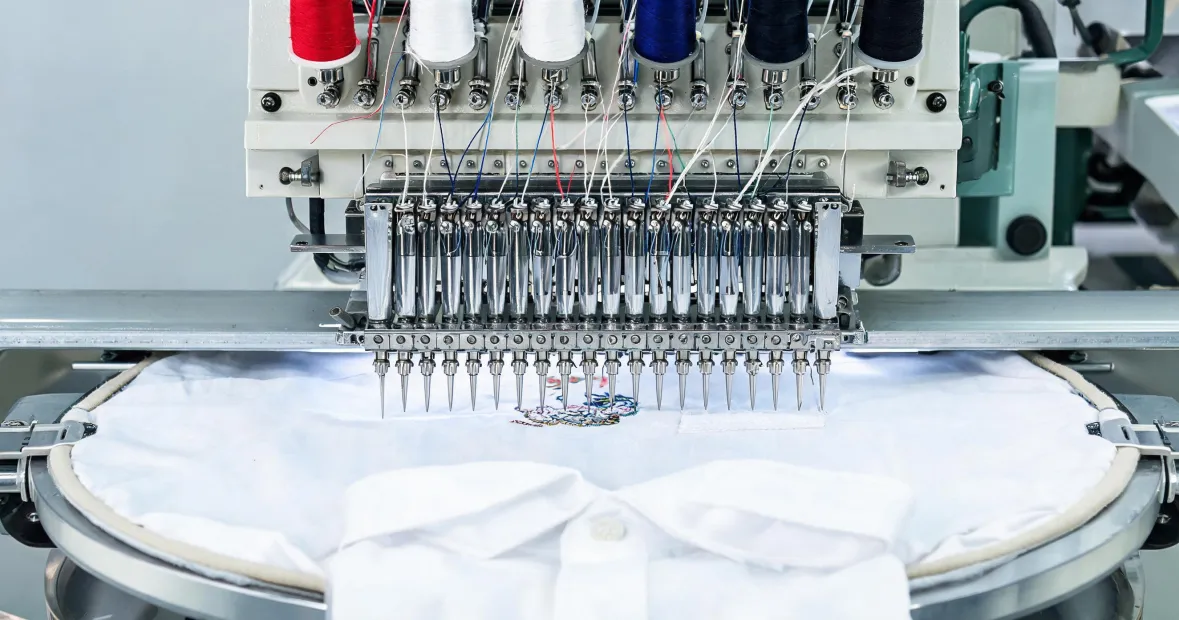
We run two Tajima 8‑head machines now. Bottom line: they hit the sweet spot between throughput and floor space. A single 8‑head can produce roughly 12–15 standard cap pieces per hour at 1,200 stitches per minute. For a shop doing 500–1,000 pieces a week, one machine is enough. The cooling system is super reliable—I’ve only had to flush coolant once in 18 months. But here’s the honest limitation: if you’re doing fewer than 200 pieces a week, the machine sits idle too much. You’d be better off with a single‑head unit or even a Brother Innovis VE2200 (more on that later).
How does the Tajima compare to the XTool embroidery machine?
I get this question a lot from colleagues who see XTool ads. XTool makes great laser engravers and their embroidery machines (like the XTool D1?) are more hobby‑grade. Tajima is built for 8‑hour shifts, day after day. The frame construction, the thread break detection, the pulse software that syncs design files—all industrial. I’m not saying XTool is bad; it’s just not in the same category. If you’re a startup doing 50 hats a month, XTool might be fine. For production runs over 500 units, Tajima is the no‑brainer. (I should add: I’ve never personally used an XTool embroidery machine—my info comes from trade shows and reviews.)
What about the Brother Innovis VE2200—could it replace a Tajima in a commercial setting?
My boss asked me this when we were expanding. The VE2200 is a fantastic single‑head machine for small orders, samples, and personalization. It’s way cheaper—around $4,000 vs. $25,000+ for a used Tajima 8‑head. But here’s the catch: the VE2200 tops out at around 650 stitches per minute and has a smaller embroidery field (about 14" x 10"). For our production runs of 300–500 pieces per order, the speed difference alone would kill us. Plus the Tajima’s multi‑head capability means one operator can run four heads simultaneously. The VE2200 is great for a boutique or a teacher; for a manufacturer, it’s not a replacement. I’d recommend the Brother only if your volume is under 100 pieces per design.
Do I need separate cooling systems for each Tajima machine?
Sort of—maybe not, I’d have to double‑check our setup. We have two 8‑head machines and one 6‑head. Each machine has its own coolant loop, but we bought the optional Tajima central chiller system that connects all three. It cost maybe $2,800 extra—no, $3,200, I’m mixing it up with the installation fee. The point is: if you’re running multiple machines in a warm climate (we’re in Georgia), invest in proper cooling. Our old setup without it caused frequent needle breakage during summer. The Tajima safety video actually has a module on coolant maintenance. Worth watching.
What sewing accessories does a Tajima 8‑head require that I might not think about?
When I ordered our first machine, I assumed everything was included. Nope. You’ll need:
- Extra bobbins and bobbin cases – at least 10 per head (we use Tajima branded for best tension)
- Thread stands with tension disks – the factory ones are fine, but the aftermarket ones with ceramic guides reduce friction
- Cap frames for hat embroidery – around $150 each, and you’ll want at least 4
- Coolant and cleaning kits – don’t use generic coolant, it voids the warranty
Our total accessory bill for the first machine was about $1,200—way more than I budgeted. Lesson learned: always ask your sales rep for a list of required accessories before quoting.
Is the Tajima Pulse software really necessary, or can I use free alternatives?
I wish I had tracked how many hours I wasted trying to use free digitizing software. Pulse is not cheap (around $500–800 for a basic license), but it’s the only one I’ve found that handles multi‑head setups without glitches. I tried a free open‑source tool for a small run of 20 bags—it exported the wrong stitch order and crashed the machine. The Tajima dealer warned me; I didn’t listen. That mistake cost us $400 in re‑runs and a pissed‑off customer. Now I tell everyone: use Pulse or equivalent professional software. It’s a non‑negotiable expense for commercial work.
When should I NOT buy a Tajima embroidery machine?
This is the most honest part. Tajima is excellent for medium‑to‑high volume commercial production. But if any of these apply, look elsewhere:
- You’re a home‑based hobbyist – a $300 Brother or XTool will do 90% of what you need
- You only make samples for clients – a single‑head Barudan or Melco might be more cost‑effective
- Your shop is tiny (under 200 sq ft) – an 8‑head machine takes up roughly 6 ft x 4 ft plus clearance
- Your budget is under $15,000 – even a used Tajima 4‑head runs $12–18k
I believe in being straightforward. Tajima is my go‑to for production, but it’s not the answer for everyone. If you’re on the fence, rent one for a month before buying.

Leave a reply