The $47,000 quote that actually cost $63,200
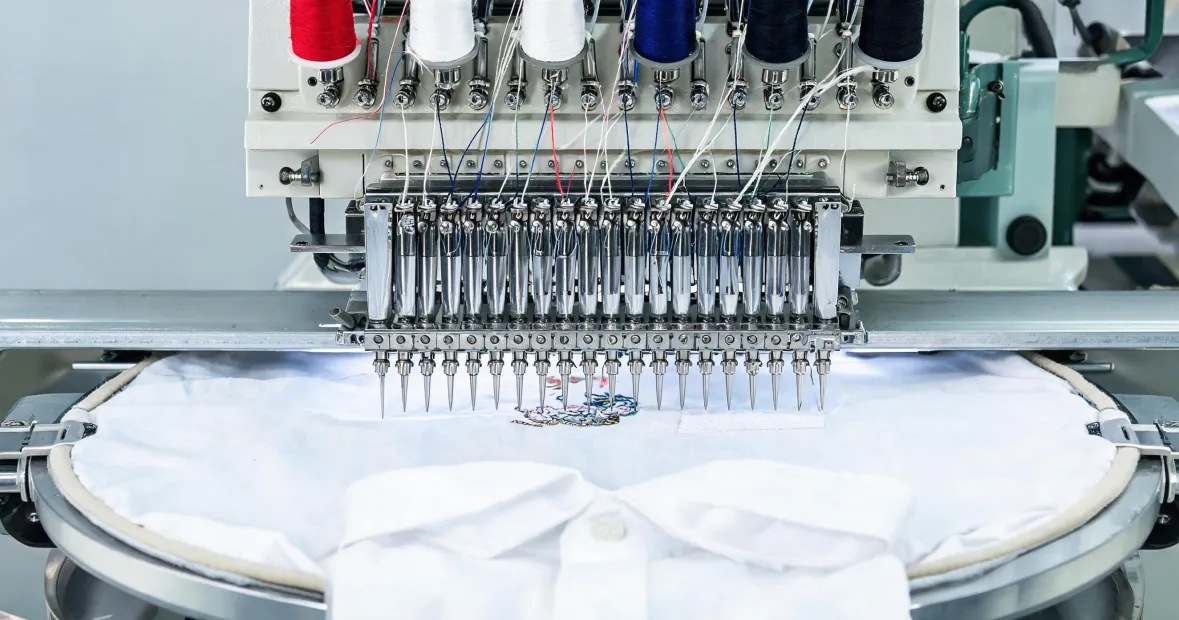
In Q2 2023, we signed off on a Tajima industrial embroidery machine. The quote was $47,000. Clean number. Our controller approved it in a week.
Eighteen months later, I pulled our actual spend from the procurement system. Total cost of ownership: $63,200. That's a 34% gap between the quote and reality.
If you've ever signed a capital equipment PO and then watched the "miscellaneous" line items pile up, you know exactly what I'm talking about. That sinking feeling when you realize the number you defended in the budget meeting wasn't even close.
Here's the thing nobody tells you upfront: the machine is maybe 60-70% of what you'll actually spend in year one. The rest hides in places that don't show up on the initial quote.
What people assume vs. what actually happens
People assume buying an embroidery machine is like buying any other production equipment — you pay for the unit, you plug it in, you run it. What they don't see is the ecosystem of compatible parts, software licenses, training hours, and workflow adjustments that come after delivery.
I made this exact assumption. Didn't verify the accessory ecosystem. Turned out the magnetic embroidery hoops we already owned from our older single-head machine weren't compatible with the new multi-head setup without adapter brackets — $1,100 we hadn't budgeted.
That's a small example. The bigger ones were worse.
The hidden cost categories nobody quotes you
1. The hooping and fixturing trap
When you're running a Tajima embroidery machine at production volume, hoops aren't accessories — they're a consumable category. Magnetic embroidery hoops for Tajima machines run $85-$220 each depending on size and whether you're buying OEM or aftermarket. For a 6-head machine running hats, flats, and specialty work, you might need 12-18 hoops in rotation.
Do the math: that's $1,500 to $4,000 just in hooping hardware. And if you switch between cap frames and flat frames mid-shift, you need duplicates so you're not re-hooping constantly.
My first year, I ordered hoops reactively — one or two at a time as we discovered gaps. We paid expedited shipping four times. That's roughly $600 in freight charges alone that wouldn't have existed with a proper initial assessment.
2. Software and training are not "included"
The quote said "Pulse software included." What it didn't say: the training to actually use it effectively was a separate $2,800 line item. The basic 2-day session covered file import and stitch-out. It did not cover the digitizing workflow optimization that makes multi-head production actually efficient.
We spent another $1,200 on advanced training six months later. Money well spent — but unplanned.
3. The makerspace comparison problem
I've talked to operators who came from a makerspace embroidery machine background. The Melco EMT16X or similar units at makerspaces are great for learning. But the operational assumptions don't transfer. A makerspace machine runs maybe 4 hours a day with constant operator attention. A Tajima industrial embroidery machine in a production environment runs 8-10 hours with one operator managing 4-6 heads.
The skills gap between those two environments is real. If you're hiring operators from that background, budget 40-60 hours of ramp-up time per person before they hit production efficiency. At a loaded labor rate of $22/hour, that's $880-$1,320 per operator in training time.
4. The "xtool embroidery machine" confusion
I need to address this directly because it wastes people's time. XTool makes laser cutters and engravers. They do not make embroidery machines. If someone in your organization is comparing an "xtool embroidery machine" to a Tajima industrial unit, they're either confused about the product category or they're looking at a completely different type of equipment.
I've seen procurement requests get delayed two weeks because someone had to "evaluate an xtool embroidery machine option." That evaluation never should have started. Knowing what's actually in each vendor's product line saves real time.
5. Cooling, air supply, and floor prep
Nobody quotes this. A multi-head Tajima needs:
- Dedicated cooling system ($800-$1,500 depending on head count)
- Compressed air supply (if you don't already have it, $1,200-$2,500 for a proper setup)
- Floor reinforcement or leveling (varies wildly, but budget $500 minimum)
- Dedicated electrical circuit (electrician costs: $400-$900)
Our total in this category: $3,100. Not in the quote. Not mentioned in the sales walkthrough.
The long-arm sewing machine overlap
Here's something that took me too long to understand: industrial sewing machine long arm capabilities overlap with what an embroidery machine can do in some applications. Not all, but some.
If you're doing appliqué work or certain finishing operations, a long-arm industrial sewing machine at $3,500 can handle tasks that would otherwise need embroidery machine time at $45/hour in opportunity cost. We didn't buy a long-arm machine for the first two years. When we finally did the analysis, we realized we'd been using $80,000 in embroidery capacity for work a $4,000 machine could handle.
That's not a Tajima problem. That's a workflow design problem. But it affects the cost equation.
What this actually costs you if you don't plan for it
Let me put real numbers on this. Our $47,000 machine:
- Initial quote: $47,000
- Actual first-year spend: $63,200
- Budget variance: $16,200 (34.5% over)
- Unplanned accessories and fixturing: $4,200
- Training (basic + advanced): $4,000
- Infrastructure (cooling, air, electrical, floor): $3,100
- Operator ramp-up time: $2,600
- Expedited shipping and rush orders: $1,400
- Software upgrades and additional seats: $900
I've tracked every invoice since 2019 across three equipment purchases. The pattern is consistent: first-year actual spend runs 28-36% above the machine quote. Always. Across brands. Across machine sizes.
The variance isn't random. It's predictable. It's documented. It's just not in the sales process.
What I changed in our procurement process
After the third machine purchase where we blew the budget, I stopped treating equipment quotes as complete. Now our policy requires:
- A line-item estimate for all accessories and consumables needed in months 1-6
- A training plan with hours and costs specified before PO approval
- Infrastructure requirements documented by our facilities team, not the sales rep
- A 15% contingency on all capital equipment POs over $25,000
Our last machine purchase came in 3% under budget. Not because the quote was more accurate — because we finally accounted for the stuff that was always there.
The industry has evolved. Sales processes have not. What was true in 2018 — when a quote was mostly the machine and maybe a starter kit — is not true in 2025. The accessory ecosystems, software licensing models, training requirements, and infrastructure demands have all gotten more complex.
The fundamentals haven't changed: you need the right machine for your production volume. But the execution — what it actually takes to get that machine running and profitable — looks completely different than it did five years ago.
Budget for the whole picture. The quote is just the beginning.
Cost figures based on documented procurements from Q3 2019 through Q4 2024. Pricing varies by region, dealer, and configuration. Verify current pricing and accessory availability with your authorized dealer.

Leave a reply