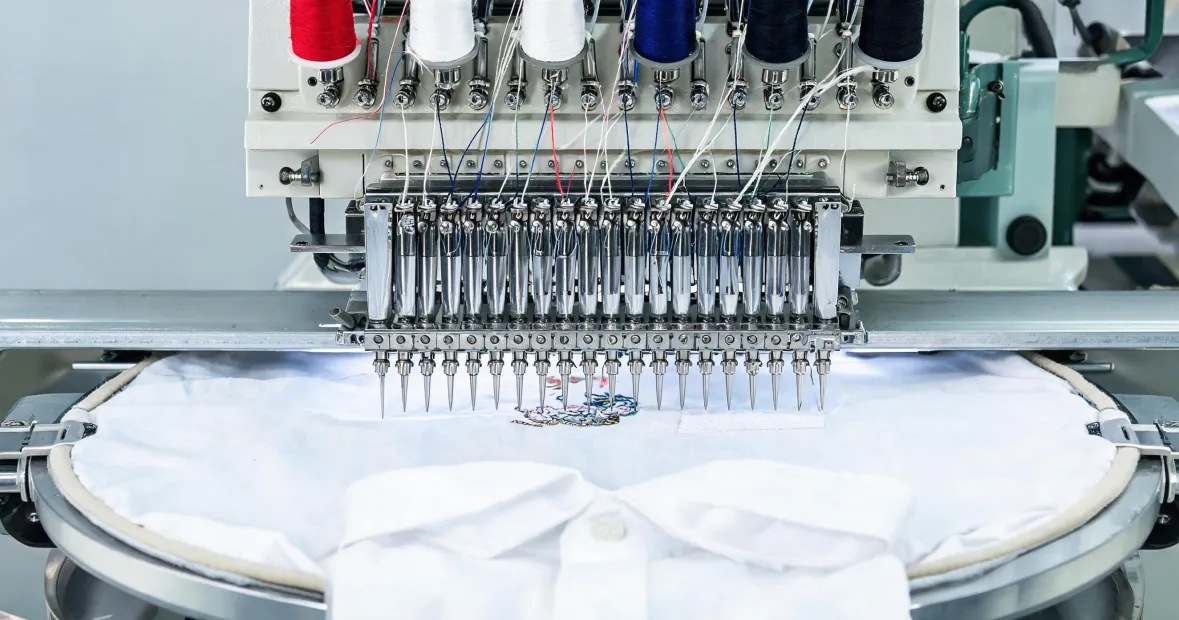
You're staring at the price. The price is lying to you.
In early 2022, we compared quotes from three suppliers for a second multi-head embroidery machine. The quotes looked similar — base model, head count, embroidery field, lead time. We went with the lowest total. Saved about $2,300 compared to the highest bid.
Nothing wrong with that decision. The problem was the next twelve months. We spent another $4,700 on that machine, all of it on things that never showed up on the original quote.
Parts. Training. One sewing machine synchronizer that we ordered with the wrong spec. A batch of "compatible" bobbin cases that started failing after four months. And a tech support package we assumed was included — it wasn't.
No single line item was catastrophic. Together, they added up.
Here's what I figured out: the invoice price isn't the machine's price. It's an entry fee.
Why this keeps happening
You might think we were sloppy. Maybe. But I've been in embroidery production for seven years, and I've watched sharp purchasing managers walk into the exact same trap. Every single time, they trip in the same spot.
Three structural reasons why embroidery machines always end up costing more than what's on the paper.
You're not buying a machine. You're buying an ecosystem.
Every commercial embroidery machine sits inside a web of parts, software, and service agreements that have to work together. Bobbins, needle plates, rotary hooks, thread trimmers, synchronizers, plus the software that drives the designs and the firmware updates that keep it current. None of that shows up in a lump-sum figure on the quote.
Here's something vendors won't tell you: most of those parts are locked to the brand. You buy a Tajima machine, you're in the Tajima parts ecosystem. Third-party "compatible" parts can save you money — until they don't.
Let me give you the math. That sewing machine synchronizer I mentioned? Labeled "OEM compatible." Worked fine for about three months. Then it started causing skipped stitches. Not every stitch — just occasionally. Which is worse, because you don't catch it right away. By the time the customer complained, we had 300+ finished pieces with bad embroidery that all had to be scrapped.
The synchronizer saved us $60. Redoing that batch cost $480. Net loss: $420. Not counting the three-day delay or the look on the client's face.
And here's the thing nobody tells you at purchase: you can't gamble a $60 part against a 300-piece run. The math doesn't work. But the quote doesn't explain that. The quote only cares about when you pay — not how you survive afterward.
What most people don't realize is that "compatible" is a legal term, not a quality term. It means the part fits. It doesn't mean it performs the same. There's a mile of difference between those two things.
That Tajima logo means less than you think.
If you've ever searched "tajima sai for sale" or spent twenty minutes squinting at a tajima logo to confirm it's legit — you know the instinct. I just want to see the name. If the name's right, the machine's right.
It doesn't work that way.
That tajima logo shows up on new machines, used machines, refurbished machines, rebuilt machines, and machines where only the outer casing is original. The logo tells you what the machine used to be. It doesn't tell you what it still is.
Our second machine came from a used equipment dealer. Seller kept emphasizing — "See this tajima logo? 100% genuine." And it was genuine. We checked the serial plate, took photos, compared against the manufacturer's database. Real machine. Real logo.
But nobody mentioned that the machine's total operating hours were closing in on its service ceiling. Nobody mentioned that the firmware hadn't been updated in five years and wouldn't support any current embroidery software.
We found out after delivery. Our options: spend $2,100 upgrading the control system, or accept that this machine would only ever run legacy design files. And by then, returning it wasn't realistic. The shipping costs and restocking fees alone would've eaten the savings.
Not all used machines are bad buys. Ours just came with hidden problems the seller didn't mention — and we didn't know enough to ask.
Training isn't a cost. It's insurance.
This is the one that gets skipped the most, because it doesn't feel like a purchase. It feels like something that happens after.
You buy a good machine. It's installed. Power it on. Everything works. You hand it to an operator and let them run.
First month — fine. Second month — little things start slipping. More thread breaks than usual. Stitches drifting slightly off-center. Colors not matching the sample on certain fabrics.
You think it's the machine. You call tech support. They come out, look at two settings, adjust, leave. You check the manual — those settings are on the "advanced" page that nobody covered in the initial handoff.
Our worst training-gap story happened in September 2022. New operator, fast learner, zero problems in the first two weeks. Week three, we took a hat order — 400+ caps. Halfway through production, the brims started warping, stitches misaligned. The whole run was wasted.
Turned out the issue was a specific tension setting for hat embroidery. Our senior operator knew it instinctively — because he'd made that exact mistake years ago and had it burned into memory. The new guy didn't have that scar tissue. And nobody told him in advance.
That batch cost us $3,200 in materials and labor. Plus expedited replacement shipping and a partial refund to the client. Call it $4,000 total.
Not the machine's fault. Not even really the operator's fault. It was our fault for treating training as something that happens informally instead of something you budget for upfront.
Here's my rule now: when I look at any supplier's quote, I look first at training hours and post-purchase support duration. Those two numbers determine how much money I'm going to lose later.
The costs nobody budgets for
You could argue this is all predictable — just do your homework. Fair. But doing your homework assumes you already know where to look. Most first-time buyers of commercial embroidery machines focus on brand, price, and specs. Because that's what goes into the search bar.
The "brother m370 sewing & embroidery machine" search term is a good example. A lot of small studios start with entry-level combo machines like that one — sensible enough. Then orders grow. You start taking more hat work, more multi-layer embroidery, or you need continuous daily output. That's when you find out the machine's throughput and stability weren't built for that pace. Upgrading, replacing it, or keeping it as a backup — all hidden costs that nobody mentioned in the beginning.
Not saying entry-level machines are bad. Every machine has a defined envelope. The problem is nobody draws that envelope clearly for you at the point of sale.
Same goes for "servis sewing machine" — when that term shows up in your search history, something's probably already wrong. It usually means you're hunting for service, repair, or parts. All three at once. That's not a shopping mode. That's emergency mode.
If someone had told me at the beginning — "You're not buying a machine, you're signing up to manage a system" — a lot of this wouldn't have happened.
What actually works
I'm not smart. I just paid enough tuition.
Now, every time we add equipment, I do three things:
One — I make them itemize the quote. Machine price, parts list, software licenses, training hours, first-year support, warranty coverage, out-of-warranty service rates. All of it, line by line. If a vendor won't list it, they're out. The ones who do list it — even if the total looks higher — end up costing less because there's nothing left to argue about later.
Two — I put the small stuff on the acceptance checklist. Not just "does it turn on." I mean: does it have an OEM part number, a batch code, a traceable supply chain. A $60 part can ruin a $4,000 order. I know because it happened. Once is enough.
Three — I lock training into the contract. X hours of on-site training after delivery. Operator must pass a basic competency check before we sign off. Not "should include training." Include it, or we don't pay the final invoice.
None of this is high-tech. The common thread is turning fuzzy into exact. List the price transparently. Define the scope clearly. Put the expected costs in writing before anyone signs.
There's something satisfying about running a machine for two years without a single surprise invoice. That's the payoff from getting the checklist right.
The cheapest supplier is almost never the lowest total cost. That lesson took me about $5,000 to learn. Hopefully it costs you less.

Leave a reply