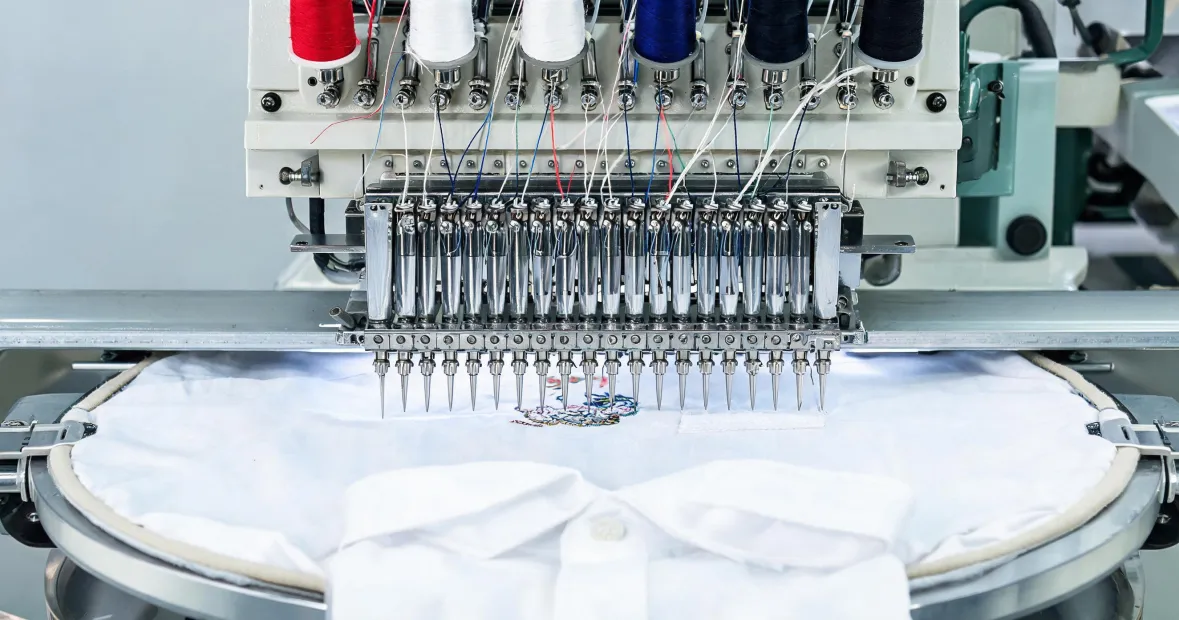
The Machine That Almost Broke Our Production Line
When I took over equipment purchasing in 2022, the first big request landed on my desk: "We need a Tajima single head embroidery machine for sale — a reliable one." Our production team had been outsourcing small-run sampling to a local shop, paying $150-$300 per sample depending on complexity. The math was obvious.
I started searching. Found a listing for a used Tajima single head at $3,800 — about $2,200 under what other vendors were asking. The seller had photos, a description that sounded credible, and promised the machine was "fully operational."
I almost clicked "buy."
Something held me back. (Note to self: always trust that hesitation.)
The Real Cost of a 'Good Deal'
Let me back up. I've been managing procurement for about 5 years now — roughly $180k annually across 8 different vendors for our apparel line. I've learned the hard way that price is rarely the real cost. At my previous company — a 400-employee operation across 3 locations — I once consolidated orders and saved $4,000 on paper supplies. The vendor couldn't provide proper invoicing. Finance rejected the expense report. I ate $2,400 out of department budget.
That experience taught me something: a vendor who can't deliver certainty is a vendor who costs more than the discount saves you.
With that Tajima single head machine, the risk felt similar. The seller couldn't guarantee delivery date. Couldn't provide a service history. Couldn't confirm which software version was installed. Every unanswered question was a potential production delay.
(I really should have documented that vendor vetting process. Would save me time now.)
Why 'Probably Works' Is Dangerous in Embroidery
Here's what most people don't realize about industrial embroidery machines: the downtime cost isn't the repair fee. It's the missed deadline.
Our sample room runs on tight schedules. A single head machine is used for prototype development, short-run custom orders, and testing new designs before moving to multi-head production. If that machine goes down for a week, we're looking at:
- 3-5 delayed sampling requests (each worth $150-$300 in lost billable time)
- 2-3 late customer approvals for bulk production (risk of losing $5,000-$15,000 orders)
- Rushed re-outsourcing at premium rates (easily $400-$600 extra per job)
One week of downtime could cost us $2,000-$4,000 in direct losses. That cheap machine suddenly isn't cheap anymore.
The A/B Moment That Changed My Mind
When I compared the Q1 and Q2 results side by side — same production targets, different machine sourcing strategies — I finally understood something important.
In Q1, we went with a budget option for a different piece of equipment. The vendor was 20% cheaper. The machine arrived late, had compatibility issues with our Pulse software, and required two service calls at $350 each. Total "savings" evaporated.
In Q2, I sourced a Tajima single head machine from an authorized dealer at $6,000. Price was higher. But the machine arrived on time, with a 90-day warranty, pre-loaded with compatible software, and included a training session for our operators (thankfully).
Seeing those two quarters side by side made me realize: $2,200 cheaper is only cheaper if everything goes right. If anything goes wrong — delivery delay, software incompatibility, service needed — the gap closes fast.
When 'Expensive' Is Actually Cheap
The $6,000 Tajima single head machine? It's been running for 14 months without a single unscheduled service call. Our operators learned the interface in two days. We've processed 80+ sample orders on it, and it's paid for itself in billable sampling time alone.
The alternative scenario — the $3,800 machine with unknown history — could have set us back weeks. (Ugh, I still shiver thinking about it.)
Calculated the risk: worst case, we lose $2,000 in downtime plus $800 in repair costs. Best case, it works fine and saves $2,200. The numbers said the risk was worth it, but I've learned that worst cases happen more often than spreadsheets predict. (Circa 2023, at least — maybe things have changed with better vetting tools, but I'm not gambling on it.)
The Rule I Now Follow
After that experience, I adopted a simple rule: for production-critical equipment, pay for certainty. That means:
- Verified dealer or authorized distributor (not just an online listing)
- Service history or warranty included
- Software compatibility confirmed (especially with Tajima's Pulse suite)
- Delivery date guaranteed in writing
Does this mean I never look for a deal? No. But I've learned that the 'deal' isn't the purchase price — it's the total cost of ownership including risk, downtime, and headaches. When a Tajima single head embroidery machine for sale shows up at suspiciously low price, I now know: that's not a deal. That's a negotiation for future problems.
Q3 2024 — we sourced two more machines. Authorized dealer. $6,200 each. No regrets.
Sometimes the right call is just the boring one.

Leave a reply