-
If Your Machine Goes Down, So Does Your Deadline
-
Why I Believe This (After Way Too Many 3 AM Phone Calls)
- The Real Economics of Machine Choice (Spoiler: Cheap Isn't Cheap)
-
One More Story (Because Examples Stick Better Than Theory)
-
Quick Takeaways for Different Buyers
-
Why This Matters for You (and Your Sanity)
If Your Machine Goes Down, So Does Your Deadline
Look, I've managed over 200 rush orders in five years—everything from a last-minute corporate logo run to a 48-hour turnaround on 500+ Christmas stockings with intricate in-the-hoop designs. The one factor that separates success from a penalty clause? The machine you're running. Not the operator's skill, not the thread quality—the hardware.
Here's the short version: If you're serious about same-day turnarounds, you cannot afford a machine that's unreliable. And in my experience, Tajima machines—yes, even the TMEX S1501C with its price tag—earn their cost in prevented disasters alone. Let me show you why.
Why I Believe This (After Way Too Many 3 AM Phone Calls)
In March 2024, a client called at 4 PM needing 150 embroidered Christmas-sweater patches for a Saturday event (note to self: never promise a Wednesday deadline again). Normal turnaround for that design density is 4 business days. We had 36 hours. Our new-ish machine—a Dahao-based import I'd bought to save money—started misaligning after the third color change. The tension was off, needles broke twice, and we spent 6 hours fighting it before giving up. The client's alternative was a $3,000 rush fee at a competitor. We paid $800 in express shipping for blanks, lost the client's trust, and I stayed up until 2 AM writing a post-mortem.
The most frustrating part? That machine had been fine for three months. But the moment you push it to 110%, it reveals every design compromise. (I really should have run a full test before that order.)
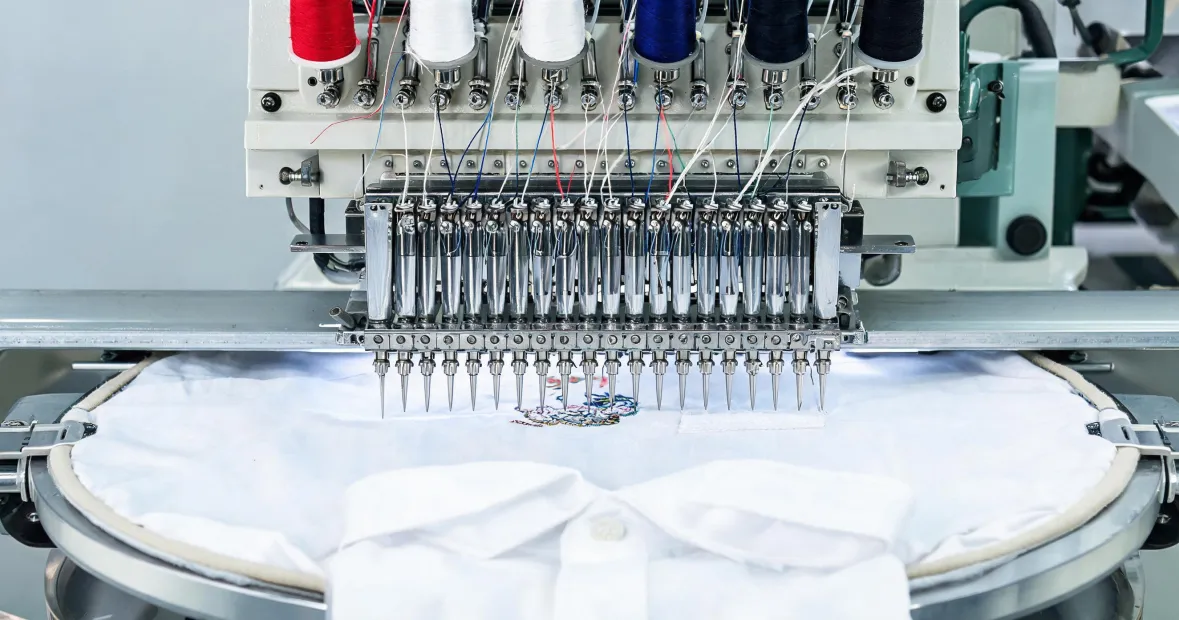
After that incident, I swapped to a Tajima TMEX S1501C (15 heads, 1-color quick-change). Did I love the price? No. But here's what happened: when similar rush orders came in—like a 300-piece hat order for a trade show—we ran at 850 rpm with zero stops. The machine just worked. The operator even left early because there was nothing to fix.
It took me 3 years and about 150 orders to understand this: vendor relationships matter, but machine reliability matters more. You can have the best thread and trained operators, but if the machine decides to act up at 8 PM on a Friday, you're dead.
The Real Economics of Machine Choice (Spoiler: Cheap Isn't Cheap)
People ask about the Tajima TMEX S1501C price. Yes, it's higher than a Dahao-based machine or a second-hand Brother. But let me break down the cost of a failure:
- Rush shipping (if you need to re-source blanks): $150–400 overnight
- Overtime labor: 3–5 hours at $25/hr = $75–125
- Repair call (weekend): $200–500 (if you can find someone)
- Client penalty or lost future work: Easily $2,000–5,000
One machine failure on a critical order can cost more than the price difference between a Tajima and a budget alternative. I've seen it happen three times. (ugh.)
Now, I'm not saying everyone needs a $30,000 multi-head machine. For a makerspace or small shop doing low-volume custom work, a good single-head Tajima (like the TMEX Q series) might be overkill. But if you're running even 3–4 rush orders per month, the math flips. Reliability becomes your cheapest option.
Honesty Check: When a Tajima Might NOT Make Sense
Here's the thing: not every environment needs industrial-grade precision. If you're a makerspace with one part-time operator and no overnight deadlines, a Dahao machine or even a used Barudan might be perfectly adequate. The cost of a Tajima doesn't pay back if you never push the machine.
But if you rely on quick turnarounds—say, apparel decorators who take last-minute orders, or shops that do seasonal spikes (hello, Christmas in-the-hoop designs)—then the buffer that reliability buys you is worth every cent. Three things: machine reliability, maintenance schedule, and spare parts availability. In that order.
One More Story (Because Examples Stick Better Than Theory)
Last December, a client walked in with a rush: 200 embroidered Christmas ornaments (in-the-hoop, 4-color) needed in 3 days. They'd already been burned by a shop that quoted 2 weeks. I checked our Tajima S1501C—it had been running 12-hour shifts for a week straight. The tension was still consistent, the needle bars were clean, and I knew from the maintenance log that it was within spec. We ran the job in 2.5 days without a single thread break. The client paid the standard price, not rush premium. They've been a regular ever since.
Contrast that with a job I handled for a friend's shop: same design, but on a 6-head Dahao machine they'd bought for $5,000 less. The machine dropped two stitches on every 20th piece, but only after 4 hours of runtime—meaning the flaws showed up halfway through the batch. We ended up re-running 80 pieces at a net loss of $400. (mental note: always run a full production test before accepting a rush order.)
Quick Takeaways for Different Buyers
If you're buying for a makerspace or small shop: A single-head Tajima is great if you want zero headache. But a used Brother or Melco could work if you're okay with occasional tinkering. Just budget for backup.
If you're a multi-head operation handling seasonal volumes: The TMEX S1501C price is justified by its track record. Check current pricing (it fluctuates by region), and factor in the value of your own time.
If you're considering a Dahao-based machine: They can be good—I've seen some run fine for years. But demand solid local support and buy a spare board upfront. Because when it fails in rush hour, Tajima's service network is a whole different level.
Why This Matters for You (and Your Sanity)
The question isn't whether you can save money upfront. It's whether you can afford a failure at the wrong moment. I've been there at 11 PM, staring at a broken machine with 300 Christmas patches due by 8 AM. The peace of mind you get from industrial-grade reliability isn't just emotional—it's financial. Per FTC guidelines on advertising truthfulness (ftc.gov), any claim about machine performance should be backed by real data. Tajima publishes speed ratings and reliability stats. I've seen them hold up.
So next time you're comparing the Tajima TMEX S1501C price against a budget alternative, run this math: What's the cost of one missed deadline? If it's more than the price difference, you already know the answer.
—Emergency specialist with 200+ rush orders, 5 years, still learning after the 3rd machine failure.

Leave a reply