Why I'm Comparing These Three Options
I spent seven years handling equipment procurement for a mid-size garment decoration shop. During that time, I made enough mistakes to fill a binder — roughly $11,200 in wasted budget across bad machine purchases, missing safety training, and one spectacular stabilizer mismatch that ruined a 340-piece order.
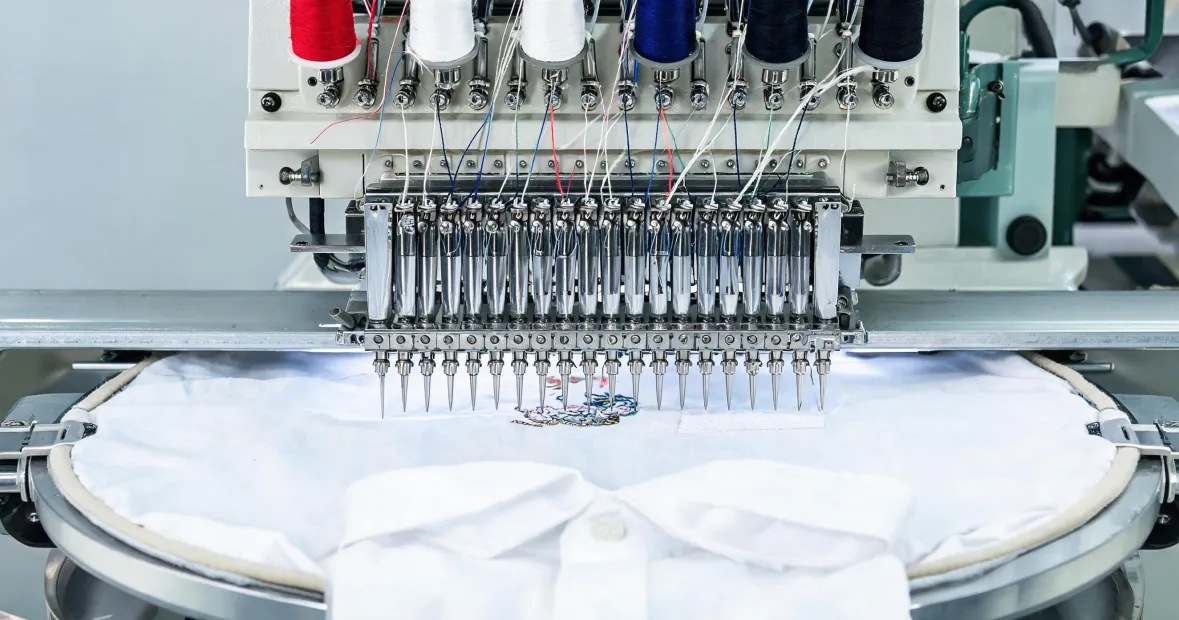
This comparison covers the three options I see small and mid-size embroidery businesses actually agonize over: a new Tajima commercial machine, a used Tajima, and a Janome combination sewing and embroidery machine.
I'm evaluating them on four dimensions that matter after the honeymoon phase ends: total cost of ownership, safety training access, stabilizer and embroidery capability, and long-term support.
I am not a certified machine technician, so I can't speak to motor specs or board-level diagnostics. What I can tell you is what these machines actually cost you over time.
Dimension 1: Total Cost of Ownership
Here's where most buyers get burned. The sticker price tells you almost nothing.
New Tajima
A new single-head Tajima commercial embroidery machine runs roughly $14,000–$22,000 depending on configuration (based on U.S. dealer quotes I collected in late 2024; verify current pricing). That sounds steep. But that number includes: factory warranty, installation and setup, initial operator training, safety training videos, and direct access to Tajima's support network.
We bought one in 2021. Total cost to operational status: $16,800. No surprises.
Used Tajima
A used Tajima sounds like the smart play — $4,000–$10,000 for a machine that originally sold for three times that. I thought so too.
In 2019 I bought a used Tajima for $6,500. Here's what I didn't budget for:
- Replacement of worn rotary hook assembly: $680
- Servo motor re-calibration (the seller said it was "recently serviced" — it wasn't): $420
- Missing safety guards that I had to source separately: $310
- Safety training — I ended up paying a retired Tajima tech $1,200 for two days of on-site instruction because I couldn't find the original training videos
- Lost production during the first month of troubleshooting: roughly $2,100 in delayed orders
Final tally: $11,210. For a machine that cost $6,500 upfront.
The $500 quote turned into $800 after shipping, setup, and revision fees. The $650 all-inclusive quote was actually cheaper. I now calculate TCO before comparing any vendor quotes.
To be fair, some used machines are genuinely well-maintained. But the ones I've encountered rarely came with complete documentation or safety training materials.
Janome Combination Machine
A Janome combination sewing and embroidery machine costs $1,800–$4,500. That's not a typo. For a fraction of the price, you get both sewing and embroidery in one unit.
But here's the catch: it's not built for commercial volume. One Janome unit I tested in 2020 maxed out at roughly 650 stitches per minute. A Tajima runs at 800–1,000 spm without breaking a sweat. On a 10,000-stitch logo, that difference adds up to real time — and real money.
Why does this matter? Because at commercial volume, speed isn't a luxury. It's your margin.
TCO Verdict
If you're running fewer than 15 jobs per week, a Janome combination machine might genuinely be enough. The moment you cross into daily production, the math flips hard toward a commercial machine — and the question becomes new vs used.
Dimension 2: Safety Training and Documentation
This dimension barely gets discussed, and it's the one that bit me hardest.
New Tajima: Complete Safety Package
When you buy new, Tajima provides structured safety training videos, on-site setup training, and a documented operator certification process. This isn't just nice to have — it's a liability shield. If an operator gets injured, you want documentation showing proper training was provided.
According to OSHA's machine guarding standard (29 CFR 1910.212), employers must provide machine guarding and ensure operators are protected from hazards. A new machine comes with that compliance framework built in.
Used Tajima: Where Safety Training Falls Apart
I still kick myself for not asking the seller whether original safety training materials were included. They weren't. If I'd pushed harder, I could have negotiated the price down or walked away.
Used machines sometimes come with a printed manual — and that's it. No safety videos, no operator certification guidance, no lockout/tagout documentation. You're on your own.
What I eventually did: contacted Tajima's regional office and asked whether standalone safety training videos were available for purchase. They were (circa 2019, roughly $400 for the set). But I didn't know that option existed for the first six weeks.
Janome: Consumer-Level Documentation
Janome provides user manuals and basic safety warnings. That's appropriate for a home or light-commercial setting. But the documentation doesn't address industrial safety protocols the way a commercial machine's training package does.
Granted, if you're operating a Janome in a home studio, this distinction doesn't matter. But the moment you put it in a commercial shop with employees, you're in a different regulatory territory.
Safety Verdict
New Tajima wins this category outright. Used machines require you to proactively source training. Janome serves a different risk profile entirely.
Dimension 3: Stabilizer Compatibility and Embroidery Quality
This is where the Janome vs Tajima comparison gets interesting — and where I made my most expensive mistake.
Tajima: Industrial Stabilizer Handling
Tajima commercial machines are designed to handle the full range of stabilizers: cut-away, tear-away, wash-away, adhesive-backed, and specialty stabilizers for stretch fabrics. The tension systems and hoop designs accommodate different stabilizer thicknesses without constant re-calibration.
In 2022, we ran a 340-piece order on a stretch fabric that required adhesive-backed stabilizer. The Tajima handled it at full speed with consistent registration. That order shipped on time and became a repeat client.
Janome: Narrower Stabilizer Range
Janome combination machines handle standard stabilizers well — cut-away and tear-away for most home and light-commercial projects. But dense embroidery on heavy fabrics or specialty stabilizer combinations push the machine's limits.
I tried running the same stretch-fabric job on a Janome in early 2020. The result: puckering on roughly 30% of the pieces. Not ideal. We lost $450 in materials and a full day of rework.
That's not a knock against Janome — it's a machine designed for a different workload. But if your production involves varied fabrics and dense designs, this limitation matters.
Quality Verdict
For flat, standard fabrics at moderate density, both machines produce good results. For production runs involving specialty stabilizers or stretch materials, the commercial machine is the right tool. No contest.
Dimension 4: Long-Term Support and Resale Value
New Tajima
Factory warranty covers the first year. Authorized dealers provide parts and service. Resale value holds relatively well — a well-maintained Tajima at five years old still commands 40–50% of its original price.
Used Tajima
Parts are available but you're paying out of pocket. Service depends on whether there's an authorized technician in your region. In my case, the nearest Tajima-certified tech was 140 miles away, which meant scheduling maintenance around his availability, not ours.
After the third late delivery from the same vendor, I was ready to give up on them entirely. What finally helped was building in buffer time rather than trusting their estimates.
Janome
Janome has a solid consumer support network, but commercial-level field service doesn't exist for their combination machines. If a Janome breaks in a commercial setting, you ship it to a service center or replace it. Resale value on used combination machines is low.
How to Decide
According to FTC advertising guidelines (ftc.gov), claims about equipment performance should be truthful and substantiated. I've tried to apply that same standard here: real numbers, real timelines, real outcomes.
- Buy new Tajima if you're running daily commercial production and need documented safety training, reliable support, and a machine that holds value. The upfront cost is real, but so is the peace of mind.
- Buy used Tajima if you have a technician you trust, can verify service history, and are willing to spend the first month sourcing safety training and replacement parts. Budget 40–60% above the sale price for deferred costs.
- Buy Janome combination if this is a side business, a home studio, or you're testing whether embroidery is even a service you want to offer. It's a solid machine for what it is — just don't mistake it for a commercial unit.
This pricing was accurate as of Q4 2024. The market changes fast, so verify current rates before budgeting. I learned these evaluation criteria over seven years, most of them the hard way. Things may have evolved — especially with newer machine models hitting the market.
One more thing: I maintain a 14-point pre-purchase checklist for used embroidery machines. It's saved my team from at least three bad deals. If you take nothing else from this article, take this — always verify safety training availability before you hand over money. Simple. But it cost me $1,200 to learn.

Leave a reply