-
Core conclusion: calculate downtime cost before machine price
-
My credibility: seven years, $320,000 annual budget, 20+ vendors
-
Total cost breakdown: Tajima vs. Chinese spare parts vs. mixed fleets
-
Counterintuitive: People think Tajima costs more because it's better. Actually, it can charge more because downtime costs more.
-
A rookie mistake I made: assuming 'standard' spare parts are universal
-
Time certainty premium: when paying more for guaranteed delivery is rational
-
Boundary conditions: when I don't recommend paying the Tajima premium
-
My credibility: seven years, $320,000 annual budget, 20+ vendors
Core conclusion: calculate downtime cost before machine price
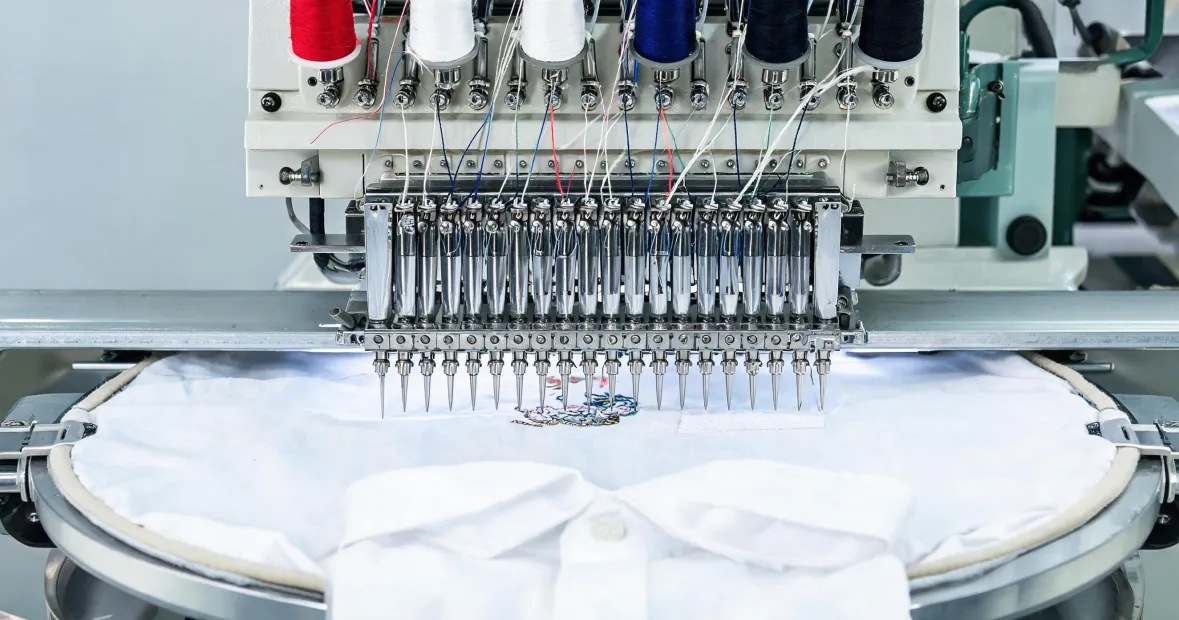
If you're evaluating a commercial embroidery machine purchase in 2025, the lowest sticker price is usually the most expensive decision. A Tajima single-head machine might quote at $21,000-$26,000 depending on configuration, while some imported multi-heads quote $18,000-$22,000. On paper, the imported option wins. In practice, I've watched a $4,000 'savings' turn into $7,800 in missed deadlines, expedited spare parts, and rework over 18 months.
My answer: for most apparel decorators running hats, letters, and small-batch orders, a Tajima embroidery machine single head is the safer starting point-if you can keep it running. The machine is only half the equation. The other half is spare parts lead time, technician access, and color consistency.
Why does this matter? Because embroidery revenue is perishable. A missed corporate order deadline doesn't just lose the job. It loses the next three jobs that customer would've sent.
My credibility: seven years, $320,000 annual budget, 20+ vendors
I'm a procurement manager at a 45-person apparel decoration company. I've managed our equipment and consumables budget ($320,000 annually) for seven years. I've negotiated with 20+ vendors, documented every order in our cost tracking system, and rebuilt our spare parts strategy after getting burned in 2023.
When I audited our 2023 spending, I found that 34% of our unplanned equipment costs came from one thing: waiting for spare parts. Not machine failure itself. The waiting. A $180 part became a $2,400 problem because it sat in customs for 11 days while a 5,000-piece order missed its ship date.
That audit changed how I buy. I don't ask 'what's the machine price?' anymore. I ask 'what's the guaranteed uptime cost?'
Total cost breakdown: Tajima vs. Chinese spare parts vs. mixed fleets
The keyword phrase tajima and chinese embroidery machine spare parts gets searched a lot because buyers are trying to mix low-cost machines with high-reliability parts. I understand the logic. I've done it. But the compatibility risk is real.
Here's what I track for every machine in our fleet:
- Spare parts lead time: Tajima OEM parts from authorized distributors: 2-5 business days in the US as of January 2025. Generic Chinese parts: 10-25 days, sometimes longer if customs holds the shipment.
- Compatibility risk: A 'Tajima-compatible' Chinese hook assembly might fit, but tolerance variance can cause thread breaks. We tested three generic rotary hooks in Q2 2024. Two ran fine. One cost us 47 thread breaks in a single 8-hour shift.
- Color consistency: This is where cheap parts hurt most. A worn or out-of-spec tension assembly changes stitch density. That changes how thread catches light. For brand-critical colors, the industry standard is Delta E < 2. Delta E of 2-4 is noticeable to trained observers; above 4 is visible to most people. Reference: Pantone Color Matching System guidelines. If your machine drifts outside that tolerance, you're not saving money. You're creating rework.
For an embroidery letters machine-especially one running small lettering on polos or caps-tension consistency matters more than top speed. Letters magnify flaws. A 0.5 mm drift in a logo is invisible. A 0.5 mm drift in a 6 mm letter looks like a mistake.
When we compared quotes for a $4,200 annual spare parts contract in Q4 2024, the lowest bidder promised 'OEM-equivalent' parts. We asked for the tolerance spec. They didn't have one. We paid 18% more for the authorized distributor. That 18% bought us a paper trail and a 48-hour replacement guarantee. Worth it.
Counterintuitive: People think Tajima costs more because it's better. Actually, it can charge more because downtime costs more.
This is the causation reversal most buyers miss. They assume high price causes high quality. In commercial embroidery, high reliability causes higher resale value, lower downtime, and the ability to charge premium prices. The causation runs the other way.
A Tajima machine doesn't command a higher price simply because of the name. It commands a higher price because embroidery businesses can earn more with it. If a machine runs 98% uptime versus 91% uptime, the difference over 250 working days is 17.5 production days. At our average revenue per machine day, that's roughly $8,750 in incremental capacity. That's why the premium exists. It's not magic. It's math.
But here's the catch: that math only works if you actually use the uptime. If you're running one shift, three days a week, the premium may not pay back. I'll cover that in the boundary conditions.
A rookie mistake I made: assuming 'standard' spare parts are universal
In my first year managing embroidery equipment, I made the classic specification error: I assumed 'standard' meant the same thing to every vendor. It doesn't.
We ordered a 'standard' bobbin case for a Chinese-made machine. The vendor confirmed it would fit. It didn't. The case seated, but the tension spring sat 0.3 mm too high. We ran 600 pieces before catching it. The thread frayed on 112 pieces. Cost me a $600 redo and a very uncomfortable call with our production manager.
Now I require three things before any spare part order: the OEM part number, a tolerance print, and a return authorization. If a vendor can't provide all three, I don't care how cheap it is. I won't put it on our floor.
Time certainty premium: when paying more for guaranteed delivery is rational
In March 2024, we paid $400 extra for rush delivery on a Tajima tension assembly. The alternative was missing a $15,000 event order. That's a 37.5x return on the rush fee. Easy decision.
But the rush fee wasn't just buying speed. It was buying certainty. The vendor guaranteed delivery by Thursday 10 a.m. If they missed it, they'd overnight a replacement from their backup warehouse at their cost. That guarantee is what we paid for. Not the shipping label.
After getting burned twice by 'probably on time' promises, we now budget for guaranteed delivery on any part that touches a deadline order. The rule is simple: an uncertain cheap part is more expensive than a certain expensive part when a customer deadline is on the line.
I use a risk-weighing formula now. The upside was $2,000 in savings by using a generic part. The risk was missing the deadline. I kept asking myself: is $2,000 worth potentially losing the client? The worst case was a complete redo at $3,500 plus a lost account worth $40,000 annually. The best case was saving $800 net after extra labor. The expected value said maybe. The downside felt catastrophic. We paid for the OEM part.
Boundary conditions: when I don't recommend paying the Tajima premium
If you're running a hobby or side business doing less than 50,000 stitches per week, the math changes. A used single-head machine or a lower-cost import may be the right call. You don't need 98% uptime when you have flexible deadlines. You need low entry cost and the ability to learn.
I also don't recommend a Tajima single-head if your primary work is large flat goods with long runs and no lettering. In that case, a multi-head machine-regardless of brand-will crush a single-head on cost per 1,000 stitches. Single-head machines are for sampling, hats, letters, and small batches. They're not production volume machines.
And if you're watching brother embroidery machine news because Brother is pushing into your price range, pay attention to the whole ecosystem, not just the machine. Brother's entry-level machines have a different parts network and training curve. That's not a knock on Brother. It's a reminder that every brand has its own downtime profile. I track Brother news because our floor has mixed brands, and mixed fleets require separate spare parts inventories. That's a real cost. Don't ignore it.
Finally, if you can't afford to stock even $1,500 in critical spares-needles, bobbin cases, tension springs, hook assemblies-do not buy a commercial machine. You're not buying a machine. You're buying a production asset. Production assets need insurance. Spare parts are that insurance.
As of January 2025, my advice is unchanged: buy the machine that keeps running, buy the parts that have a paper trail, and pay for delivery certainty when a deadline is on the line. The cheapest purchase is the one you only make once.

Leave a reply