It was 9:32 on a Wednesday night in March 2024 when the email landed. Subject line: URGENT - 400 beanies by Friday.
I've been doing commercial embroidery for 12 years, and in that time I've handled more rush orders than I can count - 200-plus, if I'm forced to put a number on it. This one still made me pause. 400 custom beanies for a corporate launch event. Normal turnaround for that job: five to seven days. We had 36 hours.
Here's the thing: the question wasn't whether we could sew a logo. It was whether we could do it without cutting the quality that got us the work in the first place.
The Setup
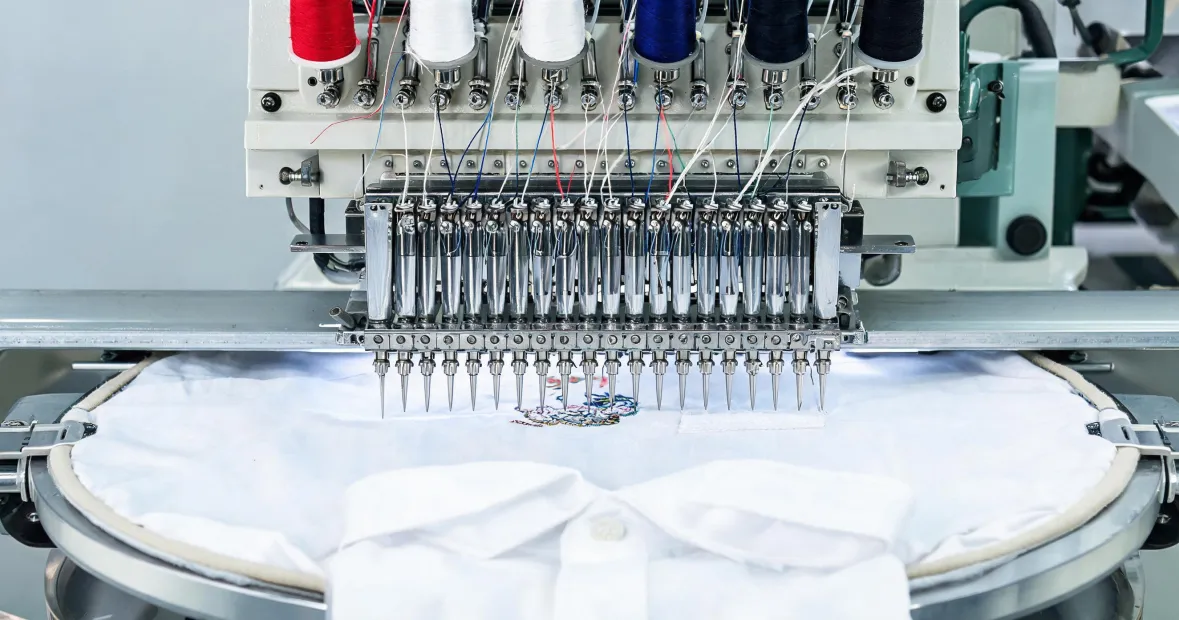
Our production floor runs mostly on Tajima multi-head machines. I won't pretend every machine is perfect - no piece of equipment is - but for a job like this, a 12-needle Tajima with automatic color change is the workhorse you want. The logo was a navy diamond with white text - Pantone 286 C, a color I know from too many corporate identity guides. According to the Pantone Color Bridge, that converts to roughly C100 M66 Y0 K2 in CMYK. Thread is another story. You get close, not exact. Which is exactly why a sample is non-negotiable.
If you've ever looked up 'tajima pulse software price', you know it's not a casual sidebar purchase. Pulse is the digitizing and production software we use. We'd been dragging our feet on an upgrade for months. That night, the old version cost us 40 minutes just formatting the file. Did it ruin the job? No. But it was the first sign that our tools were not moving as fast as our clients.
What I keep replaying: I assumed the stock logo file was production-ready. It wasn't. The small text was four-point at the size we needed, which in thread is unreadable. We caught it only because of a sample.
The 2 A.M. Breakdown
At 2:11 AM, the machine stopped. Head six had a tension assembly that sounded wrong, and then it split clean in half. No warning. No gradual decline. Just a small metal failure and a line of half-stitched beanies.
Searching for 'tajima embroidery machine parts' at 2 AM is not an experience I recommend. Our dealer didn't open until 8. I lay on the floor of the shop with a flashlight, trying to see if I could swap a part from another head. I couldn't. The tension assembly on head six isn't identical to the one on head five because of the thread path configuration. Learn that from me, not from a service call.
The worst part wasn't the machine. It was the uncertainty. I didn't know if the part was in stock, whether it would arrive by midday, or whether we'd have to tell the client we couldn't do it.
I called our dealer at 7:58 AM. They had the part. It was 45 minutes away. I drove.
Honestly, I'm not sure why the tension assembly failed. My best guess is that the previous run - a thick chenille-style thread - left the tensioner set more aggressively than the specs called for, and the smaller job used a lighter thread that couldn't handle it. I've never fully understood why some parts fail at 2 AM and not during a normal shift. I suspect it's pure malice, but that's not in the service manual.
Not ideal, but workable.
The Mini That Earned Its Keep
While I was waiting for the part, our digitizer was redoing the logo. The client had not approved a physical sample, and our own policy says no sample, no production. That policy exists because we lost a $15,000 contract in 2023 when we tried to save half a day by skipping the sample. The finished embroidery looked nothing like the screen preview. We paid for that lesson.
We couldn't pull the big Tajima off the production job to make a sample. But we had a mini embroidery machine in the sample room. This wasn't a toy. It's a single-head machine used for exactly this kind of thing: quick proofing, small runs, test stitches. When a customer says 'embroidery machine mini' to me, I know they're probably asking about a small desktop unit for home or sample work. Those have their place. Just don't confuse them with production machinery.
We stitched a 2-inch version of the logo onto a beanie at 10:15 AM. It looked good. Then we zoomed in on the text. Unreadable. Four-point text in thread is never going to work. We called the client, changed the text to a slightly larger size, and got approval by 11 AM.
Without the mini, we would have run 400 beanies with a logo the client would have rejected. It would have been a total loss. That's not hyperbole. It's the difference between a $4,900 order and a $4,900 disaster.
Parts, Software, and the Changing Industry
Here's where the 'industry in evolution' part comes in. In 2020, telling a client you could turn 400 custom beanies in 36 hours would have been a joke. In 2025, it's expected. Clients assume software and machines got faster. They did - but not by magic.
The real embroidery machine innovation over the years hasn't been flashy. It's structural: automatic color changes, thread break detection, better tension control, and more reliable parts. The fundamentals haven't changed - you still need good digitizing, good hooping, and good thread. But the execution has transformed. What was best practice in 2020 may not apply in 2025. That's true for software, parts, and even for the machines themselves.
I get asked about the Babylock single needle embroidery machine from time to time. To be clear: it's a solid machine for home sewists and small projects. I've used one for personal work, and I like it. But it would not be my first choice for a 400-piece production run in 36 hours. That's not because it's a bad machine. It's because it's built for a different job. You wouldn't use a sedan to deliver a sofa.
For commercial work, you need what Tajima builds: multi-needle, multi-head, built for continuous production. And about parts: we now keep a small inventory of critical tajima embroidery machine parts - tension assemblies, thread break sensors, and a few others. It's not everything. It can't be. But it's enough to handle the most common late-night failures. We didn't have a formal emergency parts process before that night. Now we do.
The Delivery
The driver left at 3:47 PM on Friday. The client got the beanies, the event happened, and nobody in the audience knew how close it came to falling apart. The client reordered 800 more pieces the following week.
Did we make money on the rush order? About 60% of our normal margin, because of the expedited overnight shipping on the part and the hours of overtime. Was it worth it? For the relationship, yes. For the production schedule, maybe not. But in our world, a client remembers who came through when the deadline mattered.
This worked for us, but our situation was specific: we had a local dealer, a sample machine, and a team that had worked together for years. If you're in a rural area or your dealer is days away, the calculus is different. The right answer for you might be to say no to rush orders more often.
Look, I'm not saying every rush order is a good idea. I'm saying that when you take one, the machine is only part of the equation. The software, the parts, the sample machine, and the processes you've built under less pressure - those are what actually save you.
The Tajima did its job. But the real work happened before the machine ever touched the thread.

Leave a reply