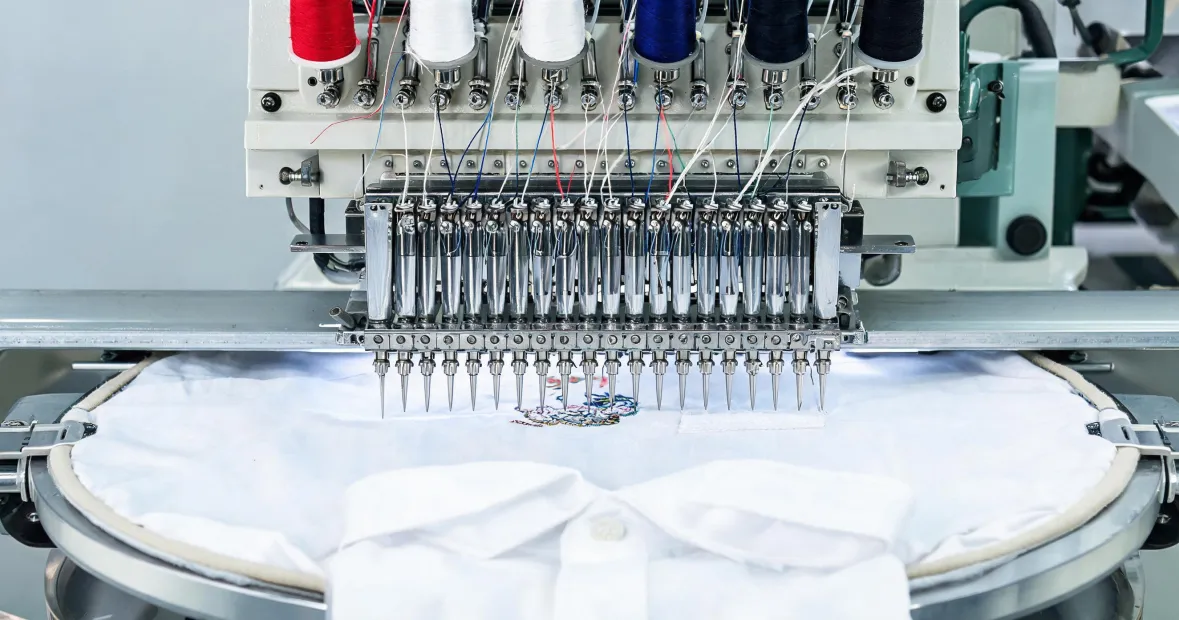
Last March, I sat across from my operations manager while she slid a photoshopped T-shirt mockup across the desk. “We’re going to start doing this in-house,” she said. I was the office administrator for a 25-person apparel decorating company, so the job landed on me: find an embroidery machine.
I manage about $180,000 a year in equipment and supply orders across a dozen vendors. My reports go to both operations and finance. I’m used to comparing price sheets and checking lead times. Embroidery, though? That was new. So I did what you do when you don’t know something: I searched.
The Search That Started with the Wrong Question
I typed “machine embroidery latest” into Google. Then “tajima.” Then “parts for machine Tajima” after a forum warned me about reliability. It became a rabbit hole.
The first mistake? I saw results for an “xtool embroidery machine” and a “pfaff select 4.2 sewing machine” and almost filed them under the same category. They were all machines in the search results, right? Not even close. The Pfaff is a capable home sewing machine. The Xtool listing I found was laser/engraving equipment, not commercial embroidery. Neither one belonged in a production shop that needs to run hundreds of pieces a week.
Assumption: any machine that makes a pretty design will do.
Reality: pretty demos don’t survive production.
I was wrong.
The Demo That Humiliated Me
We invited two suppliers in. The first brought a mid-range multi-needle machine from a different manufacturer. On their demo file, it looked perfect. Clean letters, crisp fills, no bird-nesting underneath. Then I asked if we could run one of our own logo files.
That’s where it fell apart.
The first sample had thread breaks. The second showed pull around the letters. The supplier’s own technician couldn’t fix it without slowing the machine to half speed. Worse than expected.
I’m not a technician. I can thread a machine and swap a needle, but stitch density isn’t my language. At first, I blamed our artwork. Then I realized the machine and the software around it weren’t suited to somebody at our skill level. The dealer had no training program, and parts seemed to come from a warehouse that answered emails every other day.
Not ideal, but workable? No. In production, “workable” isn’t good enough.
Why “Parts for Machine Tajima” Matter
After that demo, I started calling embroidery shops. Not to ask which machine had the best reputation. I asked: when something breaks, how do you handle it? The answers were surprisingly consistent. Shops running Tajima machines mentioned stocked dealers, online ordering, and routine parts like rotary hooks available from multiple suppliers. That’s exactly what I need as a buyer.
When I searched “parts for machine Tajima,” I found more than one source. That should not impress you, but it did me. In B2B purchasing, redundancy matters. If your distributor doesn’t stock the part, you need somewhere else to go. With a less common machine, you may not have that option.
This was the same lesson from our 2024 vendor consolidation project: cheap to buy is not the same as cheap to run. A machine that waits a week for a part is expensive.
A few weeks after we installed the Tajima, a needle broke and scratched the rotary hook. I ordered the replacement online and it arrived in three days. My VP didn’t hear about it because production wasn’t affected. That’s the outcome you want.
At least, that’s been my experience in a production shop where every hour of downtime shows up on a P&L.
Tajima DG16 by Pulse Price: The Line Item I Almost Rejected
Then came the Tajima DG16 by Pulse price.
I want to say the quote was high enough to make me re-read it twice, but don’t quote me on the exact figure. It depends on the dealer and the package. My initial reaction was: why does software cost this much?
My ops manager had run a large embroidery shop before. She looked at me the way you look at someone who just asked why thread comes in colors. “You’re not buying design software,” she said. “You’re buying the ability to fix a file before it touches fabric.”
Here’s the thing: you can buy cheaper software. You can even use free tools. But every hour spent drawing, testing, re-drawing, and testing again comes off your production calendar. The Tajima DG16 by Pulse software we bought let us control underlay, stitch order, and pull compensation. That’s what turned a possible week of trial-and-error into a manageable onboarding.
Was it worth it? Yes. That said, we run a pretty narrow product line. If your shop does experimental, one-off art pieces all day, your software needs might be different. Context matters.
What “Machine Embroidery Latest” Meant for Our Shop
While researching, I kept searching “machine embroidery latest” and found videos of home machines monogramming towels. Impressive on a hobby level, but not what we needed. The latest in commercial embroidery is about consistency at speed: laser-guided placement, larger embroidery areas, quick frame changes, and machines designed for hats and flatwork.
That was another reason Tajima made sense for us. The lineup covers single-head and multi-head machines, flatbed and hat configurations. We didn’t know we needed a hat machine until a potential sports client asked about caps. If I had bought based on the first pretty demo, we would have had to send that job out.
One more thing surprised me: the safety videos and training resources that come with setup. In a small shop, that’s not fluff. I’m the person responsible for making sure the team doesn’t skip basic precautions. A vendor that documents training is a vendor that understands how real businesses run.
When the Customer Noticed
About a month after production started, we sent a sample swatch to a prospect who had been buying from a bigger decorator. The owner called me directly—she almost never calls me directly.
“Who did your embroidery?” she asked.
“We did it in-house,” I said.
Silence. Then: “It looks cleaner than the samples I’ve been getting.”
That was the moment I got the point. Quality perception isn’t vanity. It’s brand image. Customers see the logo before they read the label. A small misalignment tells them you don’t care about the details. A clean finish tells them you’re professional.
Per FTC guidelines on advertising (ftc.gov), claims have to be truthful and substantiated. An embroidered logo is a claim made in thread. If it’s crooked, no wording will save it.
And according to USPS rates effective January 2025, a First-Class Mail large envelope costs $1.50 (usps.com/stamps). That’s a cheap way to ship a sample. But the impression the envelope creates depends entirely on what’s inside. A $1.50 envelope can carry either trust or doubt.
If You’re the Person in the Middle
If you’re in my chair—the buyer who has to choose an embroidery machine without a degree in textiles—here’s what I’d repeat:
- Start with parts availability, not machine price. Search “parts for machine Tajima” and see how many suppliers come up. Then try the same for any other brand.
- Budget for software and training as part of the machine. The Tajima DG16 by Pulse price is a real line item, and it earns its cost if you don’t have a digitizer on staff.
- Ask for a trial run with your own emblem, not the supplier’s demo file. That’s how you learn about tension, pull compensation, and stitch density.
- Ignore the “xtool embroidery machine” and “pfaff select 4.2 sewing machine” detours unless you’re shopping for home use. They’re different tools for different jobs.
- Look for a vendor that documents safety and training. It tells you more about long-term support than any brochure.
One of my biggest regrets is that I didn’t start by defining the job. If someone had asked me, “what has to happen for this machine to make money?” I would have landed on the same answer sooner: a commercial platform with dealer support, real parts channels, and software that doesn’t fight you.
Look, I’m not saying budget machines are bad. At home, they’re the right choice. For a business that wants to grow, you need more than a stitch. You need a system.
That’s the difference. Simple.
Do the boring research first. Check the part numbers. Call the distributors. Ask about training. And when you run your own logo on a two-shift schedule, you’ll know you made the right call.
I did.

Leave a reply