-
There Is No Single Best Tajima Machine
-
Four Scenarios, Four Different Recommendations
-
Scenario 1: The Startup or Sample Shop
-
Scenario 2: The Contract Embroiderer
-
Scenario 3: High-Volume Production
-
Scenario 4: Specialty Decoration
-
How to Tell Which Scenario You're In
-
Safety Videos: The Training Tool Shops Skip
-
Bottom Line
There Is No Single Best Tajima Machine
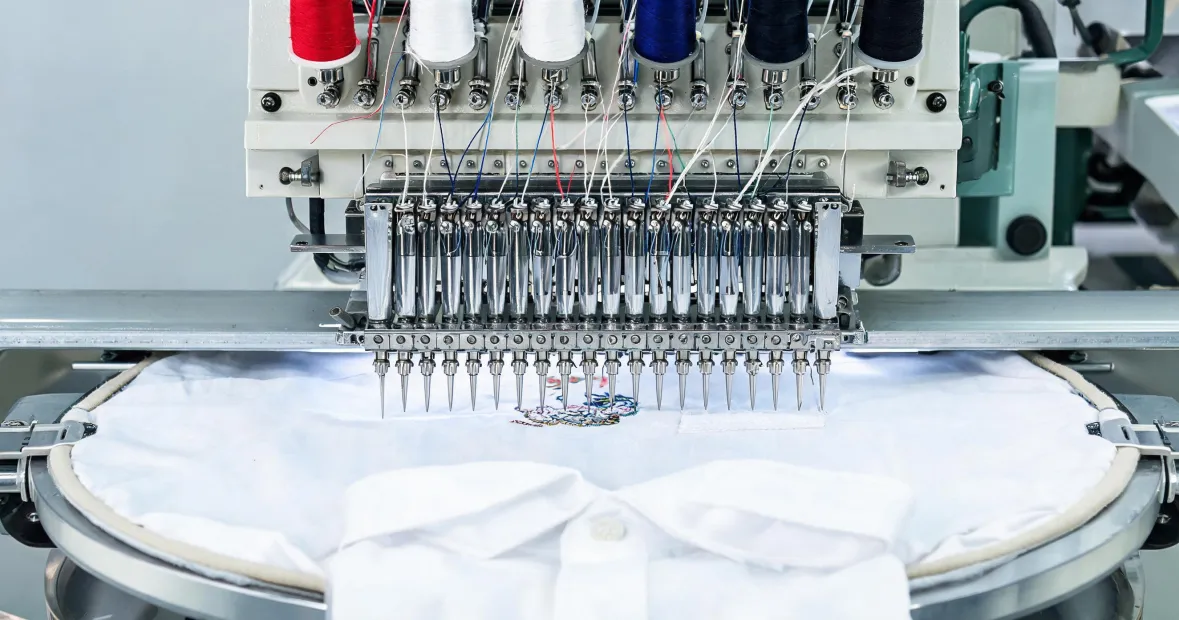
If you've been searching for a Tajima embroidery machine, you've probably noticed the lineup spans everything from a compact 1-head to 12-head production units—plus dedicated hat machines, chenille machines, and flatbed configurations. It's tempting to think you can compare spec sheets and pick the winner. But the "best" machine doesn't exist in the abstract. It depends on the orders you're running, your team's skill level, and where you want the shop to be in three years.
I'm an office administrator for a garment decorating company. I handle equipment purchases, and I've been through the "which machine do we buy" conversation more times than I count. Tajima has been manufacturing embroidery machines in Japan since 1944, and the current range covers serious ground. What was best practice in 2020 may not apply in 2025. The fundamentals—match capacity to demand—haven't changed. But the execution has transformed, with more models, better software, and a wider gap between the right machine and the wrong one.
Four Scenarios, Four Different Recommendations
Most shops fall into one of four categories. Each one has a different sweet spot in the Tajima product range:
- Startup or sample shop — low volume, small orders, learning the craft
- Contract embroiderer — steady orders in the 100–500 piece range
- High-volume production — thousands of pieces per design, tight deadlines
- Specialty decorator — hats, chenille, or other niche work
Scenario 1: The Startup or Sample Shop
If you're sewing samples or running small orders, a Tajima 1-head machine is the right scale. The 1501 embroidery machine—15 needles, single head—is the classic choice here. It's way more capable than a home machine, handles commercial thread and frames, and gives you real Tajima stitch quality without the floor space or the price tag of a multi-head.
Something most people don't realize: the 1-head isn't just a starter machine. Established production shops keep one running full-time for samples and quick-turn small orders. You don't tie up a 12-head on a single swatch. Plus, what you learn on a 1-head carries over directly—same software, same hooping system, same threading logic—which makes the later upgrade to a multi-head far less painful.
Pricing note: a new Tajima 1-head typically runs $25,000–$45,000 depending on configuration and options, based on publicly listed dealer quotes and equipment listings from January 2025. Verify current rates with a regional dealer before you budget.
Scenario 2: The Contract Embroiderer
Once you're consistently producing 100–500 pieces per design, a 2-head or 4-head Tajima becomes the practical workhorse. The throughput math is straightforward. A 300-piece order at 10,000 stitches per piece might take 50–70 hours of run time on a single head. A 4-head machine finishes the same order in under a day. That gap is the difference between meeting a deadline and losing a client.
Here's something vendors won't tell you: the first quote on a multi-head is almost never the final price. There's room to negotiate on bundles—machine, training days, spare parts kit, hooping system—once you've shown you're a serious buyer. The dealer knows you'll be back for needles, bobbins, and maintenance. That ongoing relationship is worth a sharper pencil on the initial sale.
You'll also want to think about the sewing accessories that run with the machine. Hoops, cap frames, needles, and bobbin cases are not afterthoughts—they affect stitch quality as much as the machine itself. Budget for a full set of accessories up front, not piecemeal.
Scenario 3: High-Volume Production
If you're running 500+ pieces per design on a routine basis, you need serious multi-head capacity: six heads, eight heads, up to twelve. At this scale, the cost per stitch drops, but the requirements climb—floor space, power, maintenance, and operator skill.
Three lessons from managing production equipment purchases:
- Don't skip the cooling system. Multi-head machines run hot under full load. Thread breaks climb when needle bars and tension assemblies heat up. Tajima offers integrated cooling on several current models—it's not an optional luxury if you run full shifts.
- Keep a 1-head for sampling. Once production scales, the 1501 or similar single-head becomes your sample and development machine. Loading a new design on a 12-head just to check a stitch-out wastes hours of production capacity.
- Buy the spare parts kit with the machine. A multi-head that's down is a multi-head that's losing money. The dealer's spares kit—tension discs, needles, thread guides, sensors—costs less than one day of downtime.
The 2025 industrial sewing machine news story is connectivity. Tajima's newer controllers and the pulse software ecosystem let you upload files, monitor production, and track thread breaks digitally. If you're buying production capacity, a machine that can't integrate with your workflow will feel outdated long before it wears out.
Scenario 4: Specialty Decoration
Hats have their own geometry. Fitted caps, structured crowns, visors—all of it behaves differently from flat goods. Tajima's dedicated hat embroidery machines are built to handle that specific shape and density. A flatbed can technically do hat work with an attachment. Granted, some shops do it that way—but the production speed and stitch quality on a dedicated hat machine are hard to argue with at volume. Chenille is its own world too: if varsity lettering and patches are your bread and butter, a Tajima chenille machine needs to be part of the conversation.
If specialty work is under 20% of your revenue, this probably isn't the scenario you should buy around. Send the hats to a contract shop until the volume justifies the equipment.
How to Tell Which Scenario You're In
If you're not sure, answer these four questions:
- How many embroidery orders do you run in a typical week? Fewer than 5–10, or mostly samples? Scenario 1.
- What's the average pieces per order? Consistently above 100? You're moving into Scenario 2.
- How many employees run machines daily? More than one means safety training and maintenance routines are non-negotiable priorities.
- Is more than 20% of revenue from hats, chenille, or similar niche products? Then specialty equipment should shape your purchase more than total volume.
This isn't the "depends on your situation" cop-out you get from vague buying guides. It's a practical capacity-match. I once had the numbers pointing toward a 6-head because the per-needle cost was better. Something felt off—the shop floor layout, the fact that we'd have one operator for all six heads. I trusted the gut and went with a 4-head instead. It was running at capacity within two months. The 6-head would have sat half-idle for a year. Every spreadsheet analysis said one thing; my gut detected something the numbers didn't capture.
Safety Videos: The Training Tool Shops Skip
Here's another thing I'd put in front of every shop: Tajima's embroidery safety videos. They're easy to overlook—like a manual, but longer. But they cover the exact mistakes that cost money: feeding needles, clearing thread wraps around take-up levers, hooping technique, lubrication schedules.
When I took over purchasing in 2020, I didn't think much of safety video training beyond handing over a login. Then a thread wrapped around a take-up lever on our 4-head, and nobody knew how to clear it safely. That shutdown cost us a client deadline. The fix? It was in one of those safety videos all along. Now, machine purchases include a training requirement: every operator watches the relevant Tajima safety videos and signs off before touching the machine. It's a small operational step that prevents the expensive kind of surprise.
Bottom Line
In 2025, the fundamentals of buying an embroidery machine haven't changed—match the equipment to the work. But the range of machines has widened, and the cost of getting it wrong has gone up.
Startup? Buy the Tajima 1-head and learn the craft properly.
Contract work? A 2–4 head machine gives you the throughput to hit deadlines.
Production house? Six heads or more, with cooling and connectivity.
Specialty work? Dedicated cap and chenille machines pay for themselves when the volume is there.
Prices change, models come and go. Treat any stated price with a date attached: as of January 2025, new Tajima 1-head machines benchmark around $25,000–$45,000 in most configurations, and multi-heads scale up from there. Verify the current numbers with your regional Tajima dealer.
And the decision framework above? That's the stable part.

Leave a reply