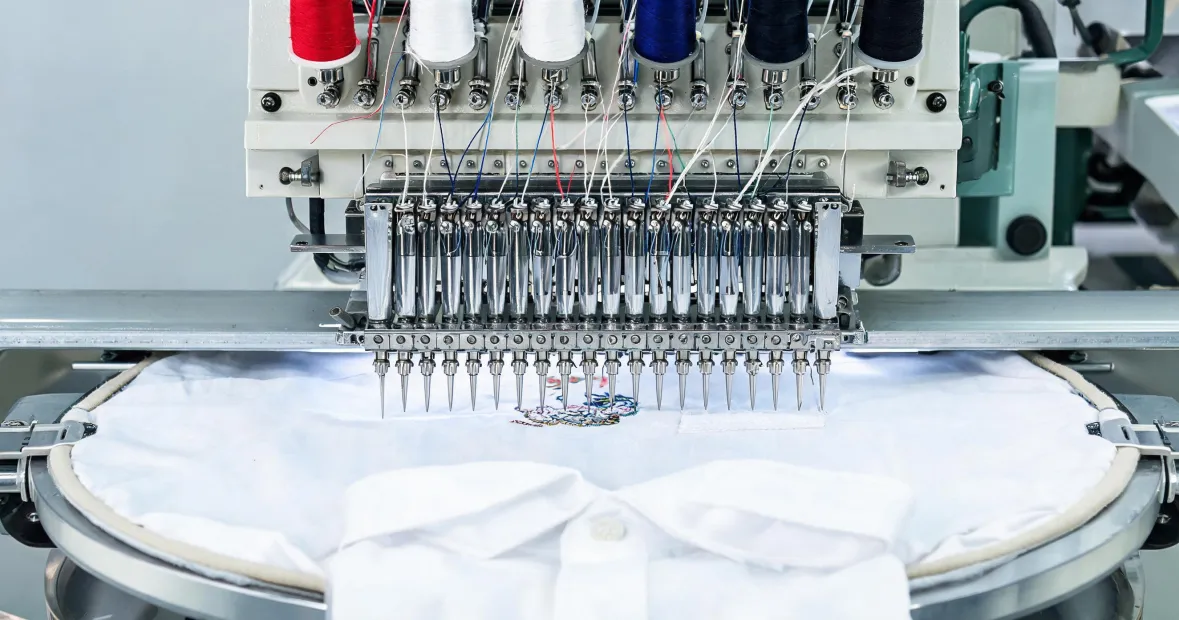
I think the embroidery machine industry has the buying conversation backwards. Every forum thread, every YouTube comment, every intro call starts with the same question.
“How much?”
Someone searches for the tajima dg17 price. Someone else asks whether a modern embroidery machine is worth the upgrade. A hobbyist compares the pe570 embroidery machine against something bigger. Everyone wants the number before they know anything else.
I understand that instinct. I had it myself, four years ago, before I understood what this industry actually costs.
I’m a quality compliance manager. I review production output before it reaches customers. Roughly 200 unique machine setups pass through my workflow every year. I’ve rejected more first-run batches than I can count, and I’ve seen what happens when a machine looks great on paper but can’t hold a consistent quality bar on the floor.
Here’s my opinion, after all of that: price is the last thing you should ask about when buying an embroidery machine. What matters first is whether you can hit a quality standard consistently. Until you define that standard, every price is just a number with no meaning.
What the “Tajima DG17 Price” Search Actually Misses
I get why people Google “tajima dg17 price.” A commercial machine is a serious investment. I did the same search myself before I understood how costs actually accumulate in this business.
Everything I’d read about machine buying said to compare prices and spec sheets side by side. In practice, I found something different: machines with nearly identical specs produce wildly different output.
Here’s what actually determines the total cost of an embroidery machine:
- The purchase price, sure
- Thread, needles, bobbins, and backing wasted on rejected pieces
- Operator hours spent adjusting tension and re-hooping
- Rework or scrap when a batch misses spec
- The cost of a late order to your customer
The sticker price is the entry fee. Not the total cost.
I’ve seen a $22,000 redo happen because a machine couldn’t hold consistent tension across an 8,000-unit run. Normal tolerance is tight. The supplier claimed their output was “within industry standard.” The defect rate said otherwise. We rejected the batch, and they redid it at their cost. But the time was gone.
Why does this matter? Because the same logic applies whether you’re buying a $10,000 machine or a $100,000 one. If it can’t hit your quality standard, it’s too expensive at any price.
Free Embroidery Software: Not Free If It Fails
The other search I see constantly is “tajima embroidery software free download.” I appreciate the instinct. Professional digitizing software is expensive. Free sounds smart.
But here’s the reality: the digitizing file determines stitch quality more than the machine does. A file with poor stitch angles, bad underlay, or wrong density will make a $50,000 machine produce $500 results.
This was genuinely true 10 years ago: free software was limited, buggy, and painful to learn. Today, free options have improved. The gap has closed somewhat. But it’s still there where it matters most—pull compensation, underlay structure, density calculations for different fabrics, and color change sequencing.
I’ve reviewed digitizing files from hobby users and from professional digitizers. The difference isn’t subtle. It’s the difference between a logo that looks sharp after 50 washes and one that looks distorted after the first one.
That’s not snobbery. That’s the cost of rework when a file simply wasn’t built for the fabric.
So by all means, start with free software while you’re learning. Just know its limits. And if you’re producing for paying customers, budget for professional digitizing before you budget for an extra machine head.
I ignored this advice once. Assumed the file would be “good enough.” It wasn’t. The rework cost me two days and one customer relationship. A lesson learned the hard way.
“Modern Embroidery Machine” Isn’t One Category
People search for “modern embroidery machine” like it’s a single type of product. It’s really a spectrum. Take the pe570 embroidery machine—a solid home machine, great for personal projects and learning. But it’s not in the same class as a commercial Tajima.
That’s not a dig at Brother. The pe570 was designed for light-duty, intermittent use. A commercial operation runs machines 8 to 16 hours a day. The duty cycle alone puts them in different categories. Both are embroidery machines. Not the same tool.
The same thinking applies to supplies. I’ve seen businesses buy the cheapest pre wound bobbins for brother embroidery machine setups to save a few dollars. I assumed once that bobbins are bobbins—that pre-wound meant consistent tension automatically. Didn’t verify. Turned out the winding density varied enough to affect tension on almost every test run.
The machine is only one part of a system. Needles, thread, bobbins, backing, hoops, software—they all determine whether the output meets spec.
But Wait, I Can’t Afford a Tajima
“Easy for you to say. A tajima dg17 price is way out of my budget. I can only afford a starter machine.”
That’s a legitimate constraint. I’m not saying everyone needs a commercial Tajima.
What I’m saying is: start with your quality target, not with a price tag. Ask yourself:
- What are you producing, and for whom?
- What’s the cost of a rejected piece—materials, time, relationship?
- How many pieces do you need per day or week?
- What’s your tolerance for downtime?
If you’re doing hobby projects, the pe570 embroidery machine is a great choice. If you’re trying to run a commercial business, you need a machine that can hold tension for hours, handle dense files, and survive the duty cycle. Buying a machine that can’t hit your quality standard isn’t saving money. It’s prepaying for rework.
And for what it’s worth, the printing industry has formal standards for color tolerance—Delta E under 2 for brand-critical colors, for example. Embroidery doesn’t have that kind of universal metric. So it’s on you, the buyer, to define your quality standard in advance. Most people never do. That’s where the real cost hides.
Bottom Line
Price matters. I won’t pretend otherwise. But the order of questions matters more.
Define your quality standard first. Then figure out which machine class can hit it. Then calculate the total cost of ownership—not just the purchase price. Then compare machines.
I’ve seen $20,000 machines outperform $60,000 machines in specific environments. I’ve also seen the opposite. The difference was never the machine itself. It was how well the buyer understood their quality target before they shopped.
An informed customer asks better questions and makes faster decisions. That’s good for you, good for the supplier, and good for the customer at the end of the line.
So before you search “tajima dg17 price” or download another free software trial, write down your quality standard. Define your tolerance. Know what failure costs you. Then look at prices.
Price is the last question, not the first one.

Leave a reply