-
Price is the wrong starting point, but I'll give you a number anyway
-
What this comparison is—and what it isn't
-
Dimension 1: Real purchase price vs. line-item price
-
Dimension 2: Needle capacity, thread colors, and the cost of stopping
-
Dimension 3: Setup, training, and the costs you don't see until the second week
-
What about “overdeck sewing machine” and “Bridgerton sewing machine”?
-
So which one should a buyer actually choose?
-
The honest bottom line
Price is the wrong starting point, but I'll give you a number anyway
When someone asks me for “the Tajima TFMX-C1501 price,” I always want to know what happens after the machine lands on the floor. That sounds like an annoying procurement answer, but it's the honest one. I've managed embroidery equipment budgets for six years at a 38-person company, and I've learned that the machine price is rarely the number that determines whether a purchase looks smart in hindsight.
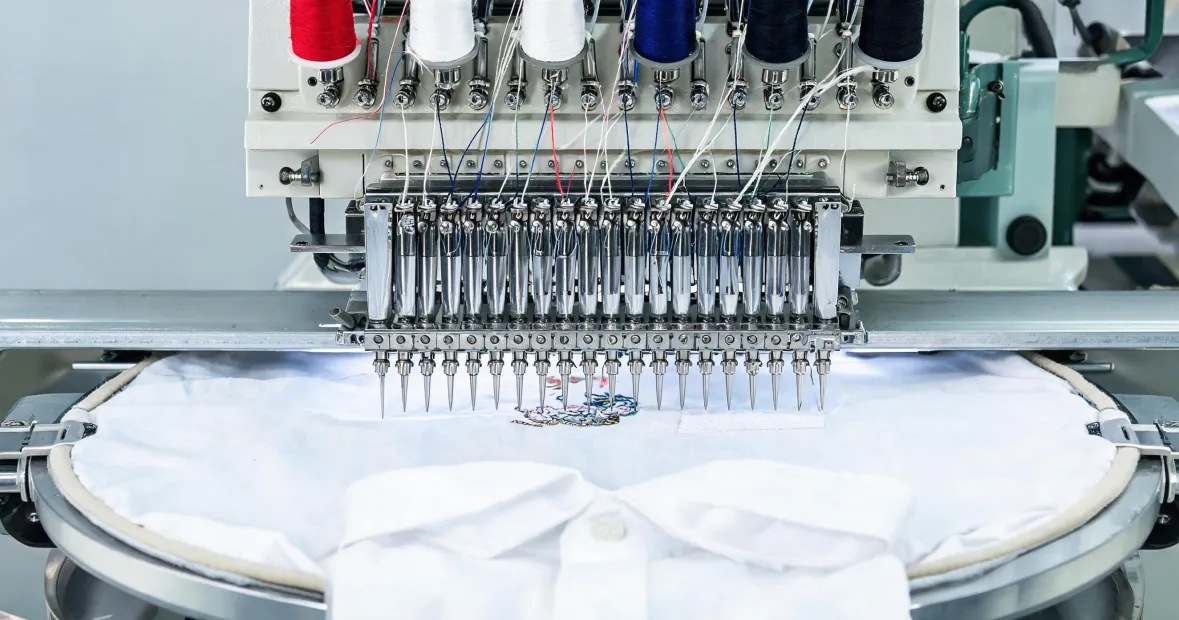
The two machines I get asked about most are the Tajima TFMX-C1501 and the Tajima SAI 8 needle embroidery machine. One has 15 needles. The other has 8. Both are single-head workstations that can handle sampling, custom jobs, and fairly small production runs. And both will happily embroider the strawberry machine embroidery designs that our retail clients ask for every spring. But choosing between them on sticker price alone is how people end up with an idle asset.
This is a comparison based on total cost, not the first quote. I'll also untangle a few search terms that aren't actual Tajima models—overdeck sewing machine and Bridgerton sewing machine are two that appear in our site analytics all the time.
What this comparison is—and what it isn't
Let's get one thing out of the way: this is not a multi-head machine comparison. If you need to produce 500 hats in a morning, you're going to need a different conversation. The TFMX-C1501 and the SAI 8 sit in the same practical lane: start-up shops, existing shops adding a sampling station, and decorators who need to test designs before committing to production.
I use three dimensions when I compare them: acquisition cost after every fee, color and thread capacity, and the cost of getting the machine productive. Each dimension has a winner, and neither machine wins all three.
Dimension 1: Real purchase price vs. line-item price
I'm not going to pretend that every regional quote is the same, because it isn't. Based on dealer quotes and public equipment listings I reviewed from October 2024 through January 2025, the Tajima TFMX-C1501 price in North America generally ran from the mid-$30,000s into the low-$50,000s. The Tajima SAI 8 needle embroidery machine generally ran several thousand lower, often from the high-$20,000s into the mid-$30,000s. Depending on the configuration, I've seen a gap of roughly $9,000 to $14,000 between similarly equipped quotes.
Take that range with a grain of salt. Current rates can shift, and a dealer who includes training, hoop packages, software setup, or installation in the quote will look more expensive until you compare the missing line items. I'm not 100% sure why some dealers advertise a clean base price and others list almost everything. My best guess is that a bare base price is easier to market, but it's not easier to budget.
In 2023, I compared quotes from eight equipment vendors using a simple total cost sheet. One vendor appeared to be about $4,800 cheaper on the base machine. That advantage disappeared once I added the $1,950 hoop package, the $1,150 setup charge, and the $750 freight charge that another vendor had already included. The “cheap” quote was actually $1,050 more expensive. My purchasing team now asks a different opening question.
Ask what is NOT included before you ask for the final price. The dealer who can answer that without hesitation is the dealer who is actually trying to be transparent.
Dimension 2: Needle capacity, thread colors, and the cost of stopping
An 8-needle machine doesn't have 8 slots for optional colors. It has eight threaded needles ready to go at once. A 15-needle machine gives you fifteen. The practical difference is not machine size; it's how often someone has to stop production and rethread.
Let's use a familiar example. Strawberry machine embroidery designs usually look simple—red fruit, green leaves, maybe yellow seeds and a white highlight. That might run in four or five colors. The SAI 8 handles that comfortably. But the moment a customer asks for a strawberry with soft shading, a darker red outline, and a name underneath, the color count climbs. When it climbs past eight, the SAI 8 requires a stopped machine, a rethreading process, and a new test stitch. That's labor time.
I once heard a production manager call a project a “Bridgerton sewing machine job,” because the client wanted Regency-style floral embroidery with lots of pastel and metallic shades. The phrase made us laugh, but the design itself was not funny. It used thirteen thread colors. On the TFMX-C1501, the operator could load the whole palette and avoid most mid-design thread changes. On the SAI 8, that same project would have required five or six stops per piece. In a small production run, those stops add up fast.
If most of your work stays under seven or eight colors, this dimension barely matters. If you have clients who want dense custom motifs, the 15-needle machine wins—not because it embroiders faster, but because it keeps the operator from babysitting color changes.
Dimension 3: Setup, training, and the costs you don't see until the second week
Every embroidery machine has hidden costs. I've never fully understood why capital budgets ignore them until closing time, but they are real: delivery and rigging, extra hoops, a proper chair, thread inventory, stabilizer, digitizing software, training time, and the electrical outlet that isn't where the technician expects it.
The two Tajima models differ here in one meaningful way. The SAI 8 is easier for a newer operator to learn because there are fewer tension points and fewer needles to set up. The C1501 has more potential complexity; fifteen needles means fifteen upper thread paths, more tension settings to check, and a longer warm-up every time the full head is stripped and rethreaded. If your shop doesn't already have a trained embroidery operator, the simpler machine can be worth more than the extra money it saves.
That's why I ask the dealer to write out what is in the crate. Is training included? Which hoops are included? Is the software configured? Are the thread stand and pre-tensioners set up for both cap and flat work, or only for flat? It sounds basic, but I've had dealer quotes leave out a hat hoop that was essential for our largest account.
What about “overdeck sewing machine” and “Bridgerton sewing machine”?
People find this article from all kinds of search phrases. Two that come up regularly are “overdeck sewing machine” and “Bridgerton sewing machine.” I understand why: both sound like they could be embroidery machine categories. They aren't.
“Bridgerton sewing machine” is a result-driven search phrase, not a model name. The machine behind those elaborate costume interiors is usually a commercial embroidery machine running ornate floral digitizing. If that's the look you want, pay attention to needle count and color capacity, not to a TV show name.
An overdeck sewing machine, on the other hand, is a different family altogether. Overdeck machines are built for procedures like seaming large panels and topstitching heavy materials—think upholstery, marine canvas, or bags. If your actual project is embroidered designs on fabric plus structural seaming, you are likely looking at two machines. I have seen this mistake happen when a budget owner assumes one Tajima machine does everything. It doesn't.
So which one should a buyer actually choose?
If you are starting fresh, running mostly one-off custom orders, and most of your design library sits below eight thread colors, I'd approve the Tajima SAI 8 needle embroidery machine. The lower acquisition cost gives the business room to buy decent digitizing software, extra hoops, and training before the money runs out. The machine is easier to keep busy.
If you already have an established customer base and losing color count is costing you time on almost every job, the TFMX-C1501 makes sense. The higher price is worth it when it removes rethreading stops from your recurring jobs. That's where the C1501 pays its way.
I went back and forth on this for our own last purchase. On paper, the SAI 8 was the safer budget move. But when I pulled the job history, a third of our orders used more than eight thread colors. The decision became obvious. We chose the C1501 and never regretted it, but only because our production mix supported the extra needles.
The honest bottom line
The Tajima TFMX-C1501 price depends on configuration, dealer, region, and the current cost of freight. No article should promise one magic number. What you can rely on is a comparison process: ask for itemized quotes, compare the two machines on total cost, and be honest about the number of thread colors your jobs really use.
And if you came to this page looking for strawberry machine embroidery designs, overdeck sewing machine, or Bridgerton sewing machine, I hope this saved you from a costly mismatch. The best Tajima machine is not the one with the better name or the bigger needle count. It's the one that fits the work you actually have.

Leave a reply