-
Are Tajima embroidery machine reviews trustworthy?
-
How should I compare the embroidery machine SE700 to a multi-head production machine?
-
Is the Tajima laser worth the extra cost?
-
What commercial embroidery machine for large business should I buy?
-
What 2025 embroidery machine news should buyers actually pay attention to?
-
Why do I keep saying TCO instead of price?
-
Should I buy the extended warranty on a new Tajima?
I'm a procurement manager at a 140-person apparel decorating company. I manage an embroidery equipment budget of about $180,000 a year, and I've tracked every purchase order, repair invoice, and training cost for the last six years. I've also negotiated with more than 30 vendors during that time.
When I first started buying commercial embroidery equipment, I assumed the smartest move was to take the lowest quote. Three budget overruns later, I learned to look at total cost of ownership instead of the sticker price. So this FAQ isn't a typical glowing review. It's the list I'd hand a buyer who wants an honest answer about Tajima machines, the SE700, and even the Tajima laser.
Here's what we'll cover:
- Are Tajima embroidery machine reviews trustworthy?
- How should I compare the embroidery machine SE700 to a multi-head production machine?
- Is the Tajima laser worth the extra money?
- What commercial embroidery machine for large business should I buy?
- What 2025 embroidery machine news matters?
- Why do I keep saying TCO instead of price?
- Should I buy the extended warranty?
Are Tajima embroidery machine reviews trustworthy?
Some are, but you have to separate experience from incentives.
Per FTC advertising guidelines (ftc.gov), endorsements must be truthful and not misleading, and material connections between endorsers and sellers must be disclosed.
This doesn't mean every affiliate review is bad. It means you can't treat a compensated post as independent advice. I do not mean all reviews are paid; I mean you should read the disclosure line before you trust the conclusion.
I trust a review when it mentions thread breaks per 1,000 stitches, tension consistency on stiff fabrics, and how long it took to get spare parts. I don't trust a review that only says amazing machine, 5 stars. The single most useful review I read before our last purchase was from a shop owner who sent me a two-page maintenance log. That told me more than a hundred five-star ratings. Put another way: use reviews to find edge cases, not to make the decision.
How should I compare the embroidery machine SE700 to a multi-head production machine?
Model designations like SE700 can vary by region, so I won't quote specs that might be outdated. Here's my process when a search keeps pulling up one model: ask what job you're going to run on it. A single-head SE700-type machine can be a good fit for sampling, small orders, and personalization. It is not a substitute for a multi-head production line if you have 500-piece orders with tight deadlines. For production, I ran a simple calculation: four single-head machines cost way more than one 4-head machine in maintenance, labor, and floor space.
Before you buy any used SE700, run a test on thick and stretchy fabric, and check color registration against a Pantone standard.
Industry standard color tolerance is Delta E < 2 for brand-critical colors. Reference: Pantone Color Matching System guidelines.
If a machine can't hold that tolerance across 1,000 pieces, the low price is not worth it.
Is the Tajima laser worth the extra cost?
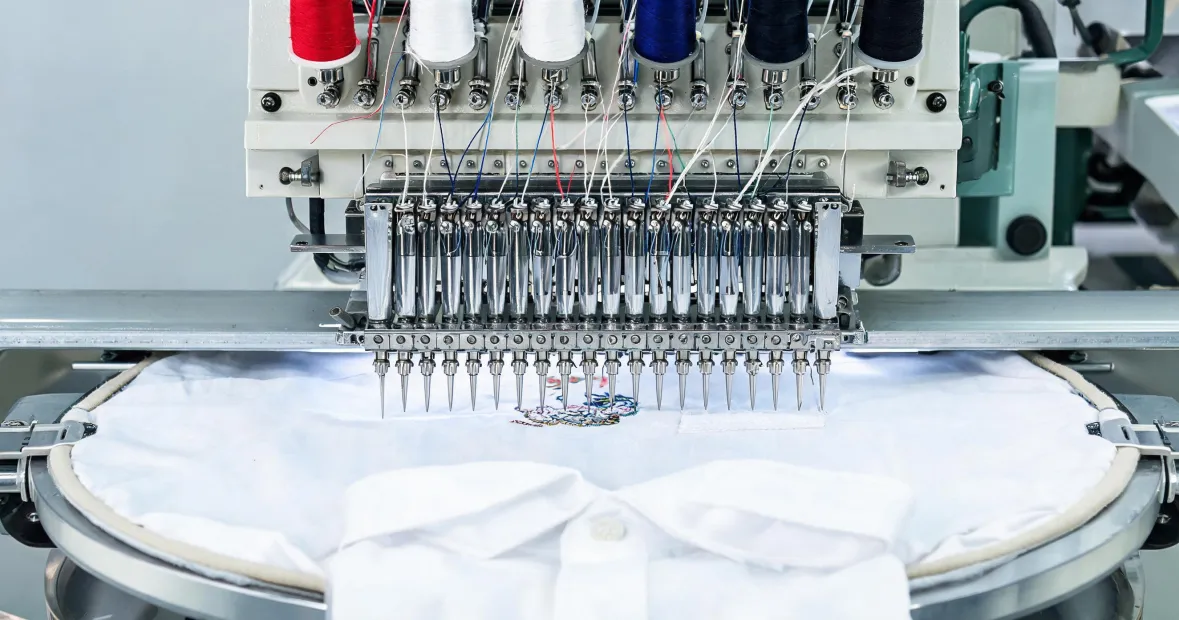
Only for the right product mix. A Tajima laser-combo machine can cut appliqué, twill, or heat-sealed patches before embroidery, and that removes an entire production step. But it adds a lot to the initial quote, plus ventilation, training, and higher maintenance. In Q2 2024, I compared a Tajima laser combo against a conventional multi-head plus a separate laser cutter. The combo won only if we ran at least 2,500 laser-cut pieces a month. Under that volume, it didn't pay back before our next upgrade cycle.
So if your shop does high-volume simple embroidery, I'd skip the laser. If you do custom appliqué and patch work all day, it's worth a serious look. Honest limitation: I recommend the Tajima laser for about 20% of the buyers I talk to. You don't hear that from a salesperson who just wants to move machines.
What commercial embroidery machine for large business should I buy?
Scale changes everything. When I buy for a 140-person company, I don't compare per-head price first. I compare service response time, spare parts availability, and training. A large business produces continuously, so an unscheduled day down costs more than any discount. The machine matters, but the dealer network matters more.
In 2025, I would not buy a commercial embroidery machine for large business without a written service response commitment and a spare parts plan. I'd also put training in the contract. Our last Tajima order came with two days of on-site training, and that saved us from a lot of operator-error calls in the first month. A machine you can't get fixed is just expensive floor space.
What 2025 embroidery machine news should buyers actually pay attention to?
The most useful embroidery machine news for me isn't press releases; it's what vendors are doing about reliability. I see more talk about remote diagnostics and cooler running heads, because heat causes tension drift and thread breaks. In January 2025, I added cooling system efficiency to my evaluation checklist. That wasn't a big feature in my older spreadsheets.
There's also more news about automated thread trimming and driverless operation on multi-head units. Those features reduce labor cost, which is often your biggest line item. I would not make a purchase based on a product announcement. Wait for field reports. If a vendor won't give you a reference customer who runs the same volume as you, treat that as a red flag.
Why do I keep saying TCO instead of price?
Because the lowest quote has burned me more than once. On one order, a lower-priced machine looked 12% cheaper on paper. Then I added shipping, installation, a transformer, extra training, and higher spare parts lead time. The TCO difference disappeared. Now I build a simple spreadsheet with these lines: base price, delivery, installation, training, expected maintenance in years two and three, and resale value. I also add one line for cost of one day of downtime. That number changed our decision more than any machine spec.
I've also learned to trust the uneasy feeling when numbers look too clean. One time every spreadsheet said go with the budget option, but something felt off about the support team. I chose the higher-cost vendor, and the lower-cost vendor's local service center closed six months later. I can't prove the two are connected, but I'm not willing to test that again.
Should I buy the extended warranty on a new Tajima?
This is the question nobody asks until they're signing the final quote. I used to skip extended warranties on everything. Then a $1,400 motor repair on that cheap machine changed my math. The warranty cost was $900, and it covered the repair plus a loaner head while the motor shipped from overseas. I now value loaner equipment as much as the repair coverage.
But I don't buy the warranty automatically. I buy it when the terms include response time and a loaner. If the extended warranty just extends the same repair process without extra support, the money is better spent on spare parts and a service contract. Had two hours to make the call once, before our annual capital deadline. I bought the warranty and never regretted it. That's not a general rule; it's what my cost tracking told me to do.

Leave a reply