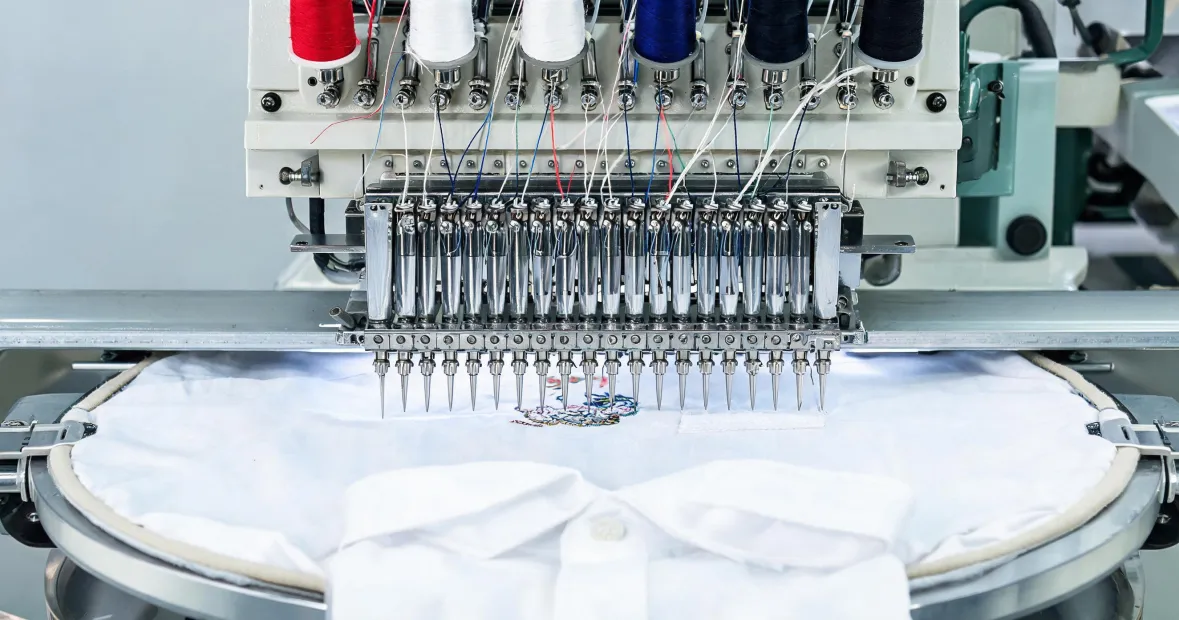
I don't sell embroidery machines. I buy them—usually in a hurry. In my role as production coordinator at a garment decoration company, I've handled more than 200 rush orders over the past decade, including same-week turnarounds for corporate clients. When a deadline is looming, I don't have time for marketing brochures. I need to know which machine will do the job.
Here's my opinion: Embroidery machine prices are not the problem. The problem is how we calculate price.
It's tempting to think you can just compare one machine's sticker price with another and pick the smaller number. That's an oversimplification. Identical specs on paper can perform completely differently on the shop floor. I've seen a $500 mini embroidery machine charm a first-time user, and I've seen a $40,000 multi-head machine sit idle for three days because the buyer skipped training. The machine was fine. The decision process wasn't.
The Real Price of a Machine Isn't the Sticker Price
In March 2024, a client called at 3 p.m. needing 350 embroidered hats for an event that started in 48 hours. Normal turnaround for that order is four or five days. We found a vendor with a Tajima Sai available, paid a rush fee on top of the rental, and made the deadline. The client's alternative was losing a six-figure annual contract. That experience didn't tell me Tajima is the only brand that can perform. It told me that reliability has a price, and in a crisis, I'll pay it without flinching.
Here's the thing: Tajima embroidery machine prices reflect more than metal and electronics. You're paying for engineering tolerances, thread path design, and a service ecosystem that keeps production running. If you're running one shift a day in a spare room, that premium may be overkill. If you're promising turnaround times to clients, it's insurance.
Based on our internal data from 200-plus rush jobs, the costliest machine we ever bought was the cheapest one. It broke down on a Friday, missed a deadline, and cost us a customer. I still kick myself for buying it without testing the manufacturer's support line first. If I'd made one phone call before signing, I'd have saved the contract.
In our shop, color accuracy is part of the reliability calculation. We check thread against Pantone references before a production run. According to Pantone's guidelines, a Delta E under 2 is the standard for brand-critical colors. On a tight deadline, you don't have time for a machine that drifts out of registration or breaks thread mid-color. That's where Tajima's engineered tension path matters.
'Tajima Sai for Sale': What I Actually Look For
When you search 'Tajima Sai for sale', you're probably a small shop owner looking for a compact machine that can handle real work. The Sai is the bridge between a home-style mini machine and a full production multi-head. I've recommended it to shops that have outgrown their first machine but aren't ready for a 15-head line.
If I remember correctly, the last Sai quote I saw was around $15,000 with a cap frame and installation—though I might be misremembering, and prices vary by dealer and region. (That was early 2025; verify current pricing.) The exact number isn't the point. The point is that a Sai pays for itself if it replaces missed deadlines and outsourcing fees.
I once assumed a 'Tajima Sai for sale' listing included a hoop set and training. It didn't. We discovered the mismatch when the machine arrived and nothing we had fit the cap frame. We all said 'ready to run' but meant different things. Now I ask for a written list of everything included. That lesson came from a rush order, the hard way.
Another mistake: I assumed a bargain-priced Sai was a good deal. Didn't verify. Turned out the machine had been run hard and needed a new hook assembly. The repair nearly wiped out the savings. If the price for a used Tajima Sai seems too good to be true, get a technician's opinion before you buy.
Mini Machines, FDZ, and the Temptation of 'Good Enough'
If you search 'embroidery machine mini', you'll find hundreds of models under $1,000. They're great for sampling and small logos. A mini machine has a place in my shop. But a mini machine is not a production machine. It's tempting to think the only difference is speed. It's not. The difference is duty cycle (meaning how long the machine can run continuously), frame stability, and what happens after hour three.
The FDZ Question
The FDZ embroidery machine has become a popular search term for price-conscious startups. I've tested one. It's a capable machine for low volume, and I understand why it attracts attention. But when I'm triaging a rush order, I've learned not to depend on a machine I can't get serviced quickly. With a Tajima, I know the technician's phone number. With an FDZ, I knew a distributor that returned calls within a week.
I don't say that to dismiss FDZ. It's a different tool for a different stage. If your orders are small and flexible, an FDZ might carry you through the first year. The FDZ wasn't bad—or rather, it wasn't bad for what it cost. Just don't confuse 'less expensive' with 'lower risk.'
In one test, I assumed the FDZ's advertised stitch speed would translate to throughput. It didn't. The machine needed constant babysitting, and the 'extra' speed evaporated. That's not a reason to hate the brand; it's a reason to test a machine under your own conditions before you rely on it.
The Sewing Machine Invention, the Industrial Revolution, and Why It Still Matters
People forget that the sewing machine invention during the Industrial Revolution was one of the most disruptive productivity leaps in history. Before then, every stitch was sewn by hand. After the industrial revolution, a single operator could out-sew a dozen hand sewers. The fundamentals haven't changed: a machine still forms a lock stitch by passing one thread through a loop created by a rotating hook. But the execution has transformed.
That's why I think in terms of industry evolution. What was best practice in 2020 may not be best practice in 2025. Five years ago, I would have told a startup to buy a used multi-head and fix it as they go. After three failed rush orders with discount vendors, I no longer do that. Now I tell them to buy a smaller, newer machine with solid support and trade up when revenue justifies it. The fundamentals—trust, support, reliability—haven't changed. The execution has.
What Should You Buy?
You might be thinking: 'Easy for you to say. You have a budget.' Fair. But my advice isn't 'spend more.' It's 'spend where the risk is.'
If you're doing hobby work, an embroidery machine mini will keep you running. Period. If you're starting a business and your orders are small and flexible, an FDZ or similar budget machine might be the right first step. But the first time a client says 'I need this by Friday,' ask yourself what it's worth to not miss that deadline. For me, that calculation is what makes Tajima embroidery machine prices acceptable.
Look, I'm not saying Tajima is the only brand that can produce good embroidery. I'm saying that when I have one shot at a deadline, I want the machine I've seen handle pressure. In the last decade of rush jobs, that's been a Tajima. At least, that's been my experience in garment production.
Prices as of January 2025; verify current rates with your local dealer.

Leave a reply