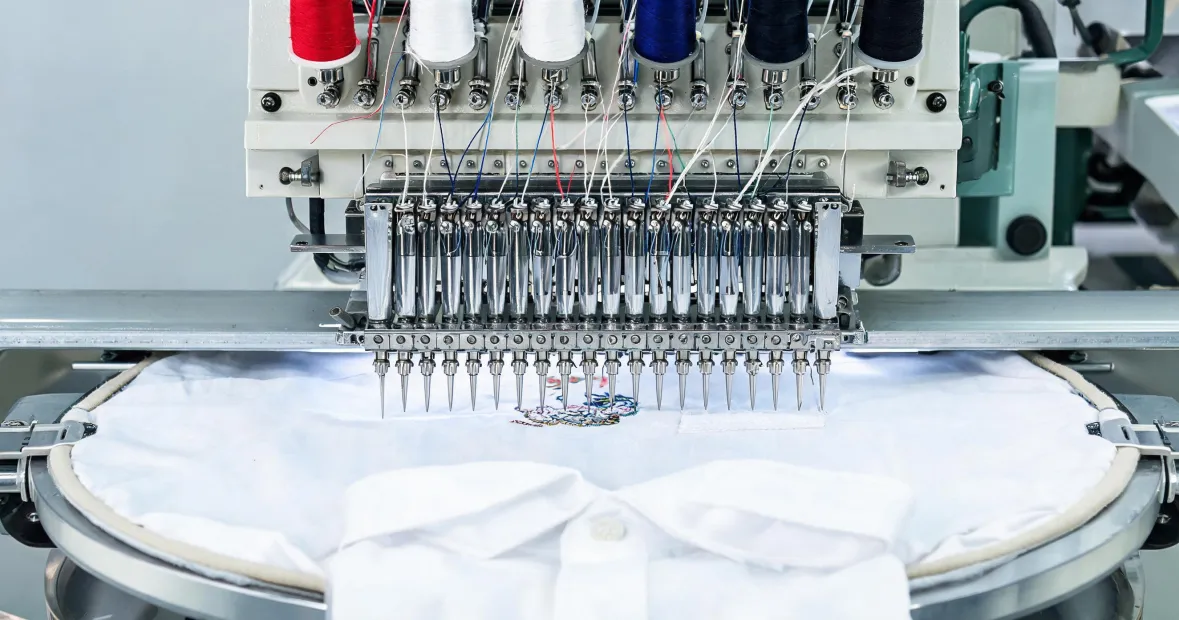
Stop asking what a Tajima DG17 costs. That's the wrong question.
In my opinion, the only number that matters is total cost of ownership. A machine that saves you $3,000 today can easily cost you $8,000 by year three—and that's before you count the damage to client relationships when output quality slips.
I say this as a procurement manager at a 46-person apparel decoration company. I've managed our equipment budget since 2019 (roughly $260,000 in cumulative machine-related spending), negotiated with 23 vendors, and tracked every invoice in our cost system. It took one expensive mistake to learn that the cheapest quote is rarely the cheapest machine.
The Used Tajima That Taught Me Everything
Everyone warned me about used embroidery equipment. I didn't listen.
In early 2022, I found a used tajima embroidery machine for sale at 35% below the comparable new price. Clean photos. Solid seller rating. My CFO was impressed with the "deal." The upside: $6,000 in immediate savings. The risk: hidden mechanical issues, no warranty, unknown maintenance history. I kept asking myself if the savings were worth potentially losing production days.
I approved the purchase. Then came the doubt. What if the machine was a lemon? What if we didn't have the right technician to service it? The 12-day shipping window felt like 12 weeks, and I didn't relax until the crate arrived.
It ran fine for three months. Then the encoder failed: $420 with labor. The touchscreen died at month five: $680. The needle bar bracket cracked under production load in month eight, shutting us down for two days—$1,150 in parts plus an estimated $3,600 in lost production.
Total extra cost in year one: roughly $5,850. That's more than the difference between the used price and a new one. And it doesn't include the stress (note to self: never skip a third-party inspection again).
To be fair, not every used Tajima story ends this way. Some shops sell well-maintained machines for legitimate reasons—upgrades, restructuring, product line shifts. But unless you have a third-party inspection report and a repair reserve, a used machine isn't a purchase. It's a gamble.
Your Machine's Output Is Your Brand
Here's the thing people forget during price negotiations: clients don't see your machine. They see the product.
In October 2023, we switched one product line from a budget import to a Tajima for a trial run. Same designs. Same thread. Same operator. The output was visibly different from the first batch: cleaner lettering, denser fills, fewer skipped stitches on curved edges.
A long-time client emailed after receiving samples. They assumed we'd bought new software. When I explained it was the machine, their response was, "Whatever it is, don't switch back." Their next order was 300% larger.
I don't have hard data on how much of that growth came from the machine alone—other changes happened in the same period. But based on the client feedback we logged in Q4 2023, my sense is the equipment played a major role.
The lesson: output quality is brand perception. A messy stitch on a jacket pocket isn't a "machine flaw" in your client's eyes. It reads as carelessness. No sales deck survives that first impression.
Sewing Machine Output: The Metric That Predicts Profitability
This is where businesses make the most expensive mistake. They compare maximum stitch speed from spec sheets. They don't compare sustainable throughput at the quality their customers will accept.
When I audit our production reports, budget-class machines consistently show 10–18% more rework than our Tajima units. The paper specs look similar, but effective output is far lower—because nobody accounts for re-hooping, re-stitching, and ripping out failed jobs.
Think of it like comparing an industrial sewing machine (a straight stitch model, say) with a home unit. Both stitch. Only one holds tolerances through eight-hour production days. Embroidery equipment follows the same logic. A machine that runs at 900 SPM with a 15% rework rate is slower than one running at 850 SPM clean.
The Home-Machine Alternative (When It Makes Sense)
I know some readers will point to consumer-level embroidery machines—the kind you see on sites like www.husqvarnaviking.com embroidery machine listings. They have their place: sampling, small runs, startups testing an idea. I'm not dismissing them. But when a client deadline is on the line and you're producing branded goods in volume, a home machine wasn't designed for continuous operation.
But Budget Is Real. I Get It.
I've sat in the CFO's office and heard, "We don't have room for new equipment." Sometimes that's true. In that case, a used Tajima is better than no Tajima—provided you inspect it, reserve funds for repairs, and set expectations.
My point isn't "never buy used." My point is: calculate honestly. Include these lines in any comparison:
- Independent inspection report: $300–800
- Realistic year-one repairs: $500–2,500
- Installation and setup: $600–1,500
- Downtime buffer: 5–10% of expected revenue from the machine
- Value of warranty coverage: up to $3,000 in avoided repair costs
Add those up, and the gap between a new Tajima DG17 and a used unit shrinks fast. The DG17 price varies meaningfully by region and configuration as of Q3 2024, so verify current numbers with an authorized dealer before you budget.
Six Years of Invoices, One Conclusion
If you're shopping today, I'm not telling you which machine to buy. I'm telling you to run the full calculation. The Tajima DG17 price might look high next to a used listing or a consumer machine—but the cost of rework, downtime, and reputation damage is higher.
Six years of invoice data taught me one thing: the cheapest number on a quote is rarely the cheapest number in reality. The machine you can count on is the one that pays for itself.

Leave a reply