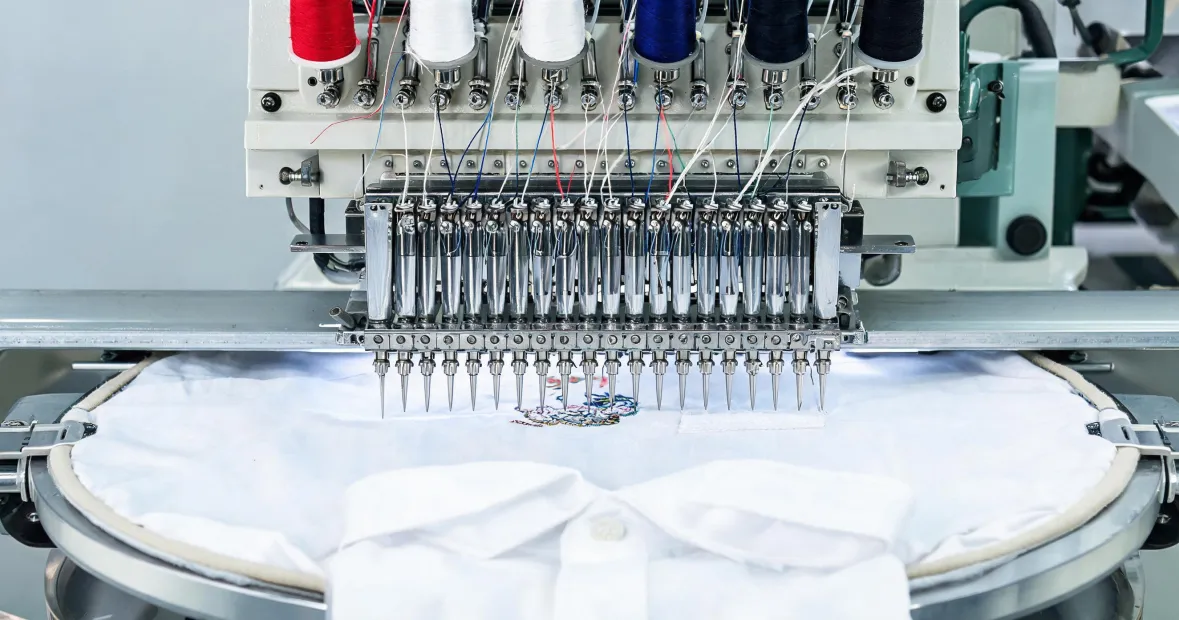
When I first started budgeting for embroidery equipment, I assumed the Tajima 2 head embroidery machine price was the only number worth negotiating. That was wrong. Three years and a few surprise invoices later, I compare machines the same way I compare vendors: by total cost, real output, and what happens when something breaks.
I manage procurement for a 32-person apparel decorating shop. I've handled a roughly $240,000 annual equipment and consumables budget for six years, and I've negotiated 19 machine purchases or upgrades since 2021. I'm not an engineer and I'm not a dealer. I'm the person who flags extra costs before the owner signs.
Quick clarification before the numbers: if overdeck sewing machine is the phrase you're searching for, put that quote in a separate column from the embroidery machine quote. The two are not the same category of machine, and mixing them will wreck any cost model.
What I'm Comparing and Why
I'm comparing one Tajima 4-head industrial embroidery machine against two Tajima 2-head machines. That's the A/B split that production managers actually go back and forth on. A 4-head looks like the obvious upgrade because it has twice the heads. In a real shop, it's not that simple.
Here's the comparison frame I use for capital equipment:
- Total cash price with everything included, not the teaser quote.
- Sewing machine output per operator, not maximum stitch speed.
- Labor cost for changeovers and small runs.
- Maintenance, spare parts, and downtime risk.
- Resale value when the next upgrade comes.
1. Tajima 2 Head Embroidery Machine Price vs. 4-Head Price
The Tajima 2 head embroidery machine price I saw on recent dealer quotes in Q4 2024 was roughly $19,000 to $27,000 for a new flat and cap setup, before hoops and installation. A comparable 4-head was around $28,000 to $42,000. Those are real quotes, not promises; verify current pricing because dealer inventory and trade-in allowances move around.
So the 4-head wins on price per head. That's exactly why I first leaned toward it. But the gap narrows quickly when you add what is actually needed to run two 2-head machines: two sets of cap frames, two sets of quick-change hoops, two spare parts kits. If you already own a 2-head and are adding a second, that side of the comparison gets cheaper. If you are starting from zero, the 4-head has the lower cash entry point.
Here's something dealer quotes won't always spell out: installation, training, rigging, and freight can add $1,500 to $4,000 to either configuration. I once chose a vendor because its machine quote was $1,850 lower. The full scope had no color thread stand, no tool kit, and delivery to the dock rather than my floor. The higher quote was actually 4% cheaper once I added the missing line items.
2. Sewing Machine Output: Where the Easy Assumption Falls Apart
From the outside, a 4-head looks like exactly two 2-heads in one frame. The reality is that usable output is closer to 1.5 to 1.7 times a 2-head in mixed production. The operator is the bottleneck: hooping, unhooping, thread breaks, color changes, and design checks take the same clock time whether the machine has two heads or four.
Spec sheets list maximum stitch speed. That number is useful, but the cost model should use usable output. That's the conclusion that surprised me when I first modeled it. Two 2-heads can have higher real sewing machine output than one 4-head if your work is short-run and design-heavy. One operator can keep both smaller machines moving if they are placed close together. When a 2-head finishes a job, the operator can start the next design on the other machine while the first waits for its changeover. On a single 4-head, you either run the whole job or stop the whole job.
3. Labor, Changeover, and Scheduling
A 4-head needs one experienced operator. Two 2-heads can also be handled by one operator if the workflow is set up properly. So labor is close to a tie, which is not what most buyers expect.
The real difference is changeover. On a 4-head, a design change means rehooping all four stations and risking a misalignment in any one of them. On two 2-heads, you can keep one station running while you set up the other. For a shop with 20- to 50-piece orders and multiple color changes per order, that flexibility is worth more than two extra heads on paper.
4. Maintenance, Spare Parts, and Downtime Risk
Prevention is cheaper than correction. That sounds like a line from a safety poster, but I've lived it. In 2023, I skipped a daily thread-path check during a rush week. A two-minute check would have caught a rough rotary hook. Instead, we lost four hours of production and paid $325 for a technician visit. I built a 12-point checklist after that mistake, and it has saved us an estimated $8,000 in potential rework.
With one 4-head, a breakdown stops the entire embroidery section. With two 2-heads, a breakdown cuts capacity in half. That redundancy is worth real money in a cost model. But you also carry two of every wear item, and you have to check both machines. The sewing machine foot quick lift adjustment, for example, is a small item that causes big problems when it starts sticking. It's on the same daily checklist as oil levels and thread path.
5. Resale and the Next Upgrade
I don't trust anyone who promises a machine will hold its value. But I can tell you what I see when I plan for the next upgrade: a clean Tajima industrial embroidery machine with documented maintenance sells faster than the same machine with no records. A 2-head tends to have a wider buyer pool because smaller shops are moving up from single-head units. A 4-head is harder to move locally, but it also carries a higher absolute price. Neither is a clear winner; don't skip this line in your model.
If you do decide two 2-heads are better, buy the spare parts kit with the second machine, not later. That $800 feels annoying at the time. It feels small after the first emergency visit.
Which One Should You Really Buy?
Stop asking about the Tajima 2 head embroidery machine price and start asking which configuration produces the most billable pieces per operator day. That question points to the answer faster than any spreadsheet.
- Choose a single 4-head if your average run is long, the design changeovers are predictable, floor space is tight, and one experienced operator is all you have.
- Choose two 2-heads if your work is mixed, your changeovers are frequent, or you need a backup while one machine is down.
- Choose one 2-head if you are moving up from a single-head shop and want the lowest responsible entry point into Tajima production equipment.
For our shop, two 2-heads won. The 4-head was better on price per head, but after I modeled labor, changeovers, spare parts, downtime, and resale, the two smaller machines saved us roughly $11,600 over three years. That calculation did not include the stress saved during a thread break on a deadline, but I'll take that as a bonus.
I started this comparison thinking a 4-head was the natural upgrade. I was wrong, and that's fine. The machine that looked better in a brochure didn't look better in our production schedule. Now I run the same checklist every time: total cash, output per operator, labor, spares, and resale. If the numbers agree, you'll know.
Prices above are as of January 2025. Verify current rates with a Tajima dealer before you build your budget.

Leave a reply