-
1. How Much Does a Tajima Embroidery Machine Cost?
-
2. Is a Used Tajima Embroidery Machine Worth Buying?
-
3. How Many Heads Do I Actually Need?
-
4. Do I Need a Tajima Chenille Machine?
-
5. Which Tajima Is the Best Embroidery Letters Machine?
-
6. What About the Brother PRS100 Single-Needle Embroidery Machine?
-
7. What Costs Do Buyers Forget When Buying an Embroidery Machine?
-
8. What Should I Ask Before Signing?
I've managed the embroidery side of an apparel decoration company since 2014. My title is production manager, but for the first few years I was also the person making equipment purchase calls. I've personally made (and documented) seven significant machine-buying mistakes, totaling roughly $31,000 in repairs, idle machines, and one very avoidable reconfiguration. This is the list I wish someone had handed me in 2017.
If you run a plant with dozens of machines, this guide is too basic for you. It's written for people making a first or second embroidery machine purchase, which is exactly where my expensive lessons happened. One more boundary: I'm based in the U.S. Southeast, and prices in my market can differ from yours. Treat these numbers as a starting point, not a quote.
Here are the questions I'll answer below:
- How much does a Tajima embroidery machine cost?
- Is a used Tajima embroidery machine worth buying?
- How many heads do I actually need?
- Do I need a Tajima chenille machine?
- Which Tajima is the best embroidery letters machine?
- What about the Brother PRS100 single-needle embroidery machine?
- What costs do buyers forget?
- What should I ask before signing?
1. How Much Does a Tajima Embroidery Machine Cost?
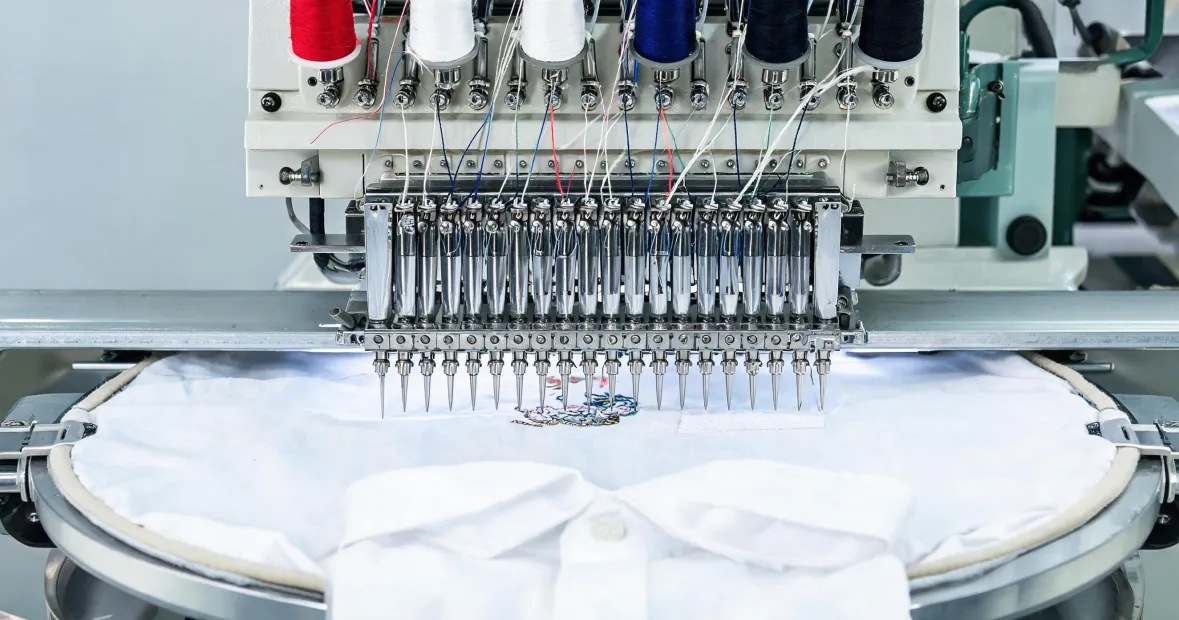
You want a number, so here is an honest one: at the end of 2024, the quotes we received on a new single-head Tajima clustered around $30,000. A six-head with a cap system was closer to $80,000. Maybe 82 or 83 depending on extras; I would have to pull the original quote (note to self: digitize all machine quotes). A 12-head package we priced for another project went into six figures. Those prices excluded tax, freight, installation, training, and software.
Here is the part online forums will not tell you: Tajima does not publish a consumer-style MSRP. The final price depends on head count, field size, cap option, regional dealer, and what else is in the package. If someone brags online about paying $45,000 for a six-head, they either bought used, bought an older model, or are only counting part of the invoice.
This pricing was accurate as of Q4 2024, and the market has shifted every year since 2020. Use it as a budgeting range, then get current quotes from at least two authorized Tajima dealers before making decisions.
2. Is a Used Tajima Embroidery Machine Worth Buying?
Sometimes, yes. I am not going to tell you used machines are a trap; our shop bought a used four-head in 2018 and it still runs orders today. What I will tell you is to inspect before you commit, because the used six-head I bought in 2017 was my most expensive mistake of that year.
The machine cost roughly half the price of a new model, and the seller ran a sample for me on video. It looked clean. I skipped a paid inspection because I was worried someone else would buy it first. Within two months, heads were dropping timing, production stopped twice in one week, and I spent around $8,500 on repairs. A proper inspection at the time would have cost maybe $450.
Our checklist now says: run a real multi-color production order, not a sample, at operating speed on every head. Then have a Tajima-trained technician open the heads and check hook timing, bearings, and oil leaks. If the seller will not allow that, that is your answer.
3. How Many Heads Do I Actually Need?
The question I hear from first-time buyers is which machine is fastest. That is the wrong question. A six-head Tajima does not stitch one garment faster than a single-head; it stitches six garments at the same time. The real question is how many identical placements you expect to sew in a week.
If your orders are mostly one-offs and 20-piece custom runs, a six-head means more hoops, more thread cones, more maintenance, and a bigger monthly payment. I would rather see a newer shop run a single-head at full capacity than own a six-head running at ten percent. If you have a signed order for 2,000 left-chest logos, a six-head can pay for itself quickly; that is the situation where the math changes.
While you are at it, ask about the practical field size. For uniform lettering and left-chest work, a smaller machine is fine. For back-of-jacket designs, you need a larger embroidery field. Both are Tajima machines; they just serve different orders.
4. Do I Need a Tajima Chenille Machine?
Chenille machines produce the looped yarn style used on letterman jackets, varsity letters, and team apparel. It is a specialty machine. If the request appears once, or comes from a friend of a friend asking if you can help, outsource the order rather than buying equipment for it.
I did the opposite in 2022. A school district said a jacket order was coming if we could produce chenille in-house. Every spreadsheet said the purchase only made sense if we landed the full contract, and we did not have a signed purchase order. My gut said the deal was basically done, so we bought a used Tajima chenille machine. The contract fell through when school budgets were reallocated at the end of that year. The machine sat idle for fourteen months before we sold it at a $3,400 loss, plus training costs we never earned back.
I am not anti-chenille. Varsity work is a profitable niche with steady orders. But in embroidery machine purchases, I have learned to weigh prospects against purchase orders. Prospects do not make loan payments.
5. Which Tajima Is the Best Embroidery Letters Machine?
That phrase gets searched often, and it is based on a misunderstanding: there is no separate Tajima model called an embroidery letters machine. The embroidery head does not care whether it is sewing a letter, a logo, or a small monogram. Lettering is mostly a software question.
For names and numbers, choose a Tajima paired with software that includes lettering functions, like Pulse. That software lets you pick fonts, set letter spacing, and create text designs without digitizing from scratch. The machine then stitches what the software sends to it. So when a buyer asks about a machine for text, I redirect: what hoop and field size do your orders need? Long back names and varsity lettering need space; left-chest and cap work do not. Pick the machine based on the largest field you expect to use, not because one model promises a magic letters feature.
The same logic applies to the chenille question above: buying a machine for a feature you might use occasionally is how budgets disappear.
6. What About the Brother PRS100 Single-Needle Embroidery Machine?
I want to be clear about my limits here. I have never operated the Brother PRS100 single-needle embroidery machine, and I am not going to pretend otherwise. What I can do is explain how the machine class changes production math.
The PRS100 is a single-needle machine. In a multi-needle commercial Tajima, multiple thread colors stay loaded and the machine selects them automatically. On a single-needle machine, someone has to change thread each time the design changes color. For one-color names or simple monograms in small quantities, that can be a smart fit. For a five-color logo on a 200-piece order, the manual color-change time starts to look very expensive.
Tajima does not make a single-needle machine; its single-head machines are multi-needle commercial units designed for production. The Brother PRS100 serves a different stage of business. If you want to test the embroidery market with low volume, it can be a rational place to start. If your goal is contract decoration with multi-color orders, buy for the cost per finished piece, and remember that labor is the biggest recurring cost. It deserves as much attention as the machine price.
7. What Costs Do Buyers Forget When Buying an Embroidery Machine?
On our first purchase, I compared machine prices and missed everything around the machine. Freight and rigging, electrical work, compressed air, hoops, backing, needles, bobbins, and training showed up later in separate invoices. In our case, first-year extras added roughly fifteen percent on top of the base price. Your percentage may be higher or lower, but plan for it.
Software is another cost, and it is not optional for serious lettering work. A Tajima stitches a design created in digitizing or lettering software. If the quote does not say a software package is included, ask what it costs before you sign.
In my experience, buyers usually ask what your best price is. They should ask what is included in that price.
8. What Should I Ask Before Signing?
After years of mistakes, I keep a short list of questions and ask for the answers in writing:
- Is installation included, and who coordinates rigging and electrical work?
- How many hours of training are included, and does it cover cleaning, tension, and common thread breaks?
- Does the price include the software, or is that a separate license?
- Who services this machine in my area, and what is a realistic response time?
- What is the expected finished-pieces-per-shift number for the type of work I plan to run?
That list came from the $31,000 worth of lessons mentioned at the top. A lot of that money was not machine failure; it was ambiguity about what we assumed was included and what was not. If a dealer hesitates to put answers in writing, treat that as a warning sign, and get a second quote before committing to an embroidery machine purchase.

Leave a reply