-
Step 1: Nail Down the Machine Category Before You Price Anything
-
Step 2: Calculate TCO, Not Sticker Price
-
Step 3: Model the New-vs-Used Decision Honestly
-
Step 4: Know the Difference Between Home and Commercial Machines
-
Step 5: Verify the Support Ecosystem Before Signing
-
Step 6: Get Every Claim in Writing
-
Step 7: Negotiate With the Spreadsheet, Not Your Gut
-
Five Mistakes That Will Cost You
-
The Bottom Line
Quick note before the checklist: “Tajima wagyu price” is about beef, not machines. Tajima cattle produce the beef behind Kobe and other premium wagyu. If that's what you're after, wrong page. But if you're a garment manufacturer, embroidery business, or apparel decorator researching a Tajima embroidery machine purchase—you're exactly where you need to be.
I'm a procurement manager at a 45-person apparel decoration company. Over 8 years, I've tracked $1.8M+ in equipment spending, compared quotes from more than a dozen dealers, and managed three Tajima machine acquisitions. This is the 7-step checklist I run before any major equipment spend. It would've saved me a lot of expensive mistakes if I'd had it earlier.
Step 1: Nail Down the Machine Category Before You Price Anything
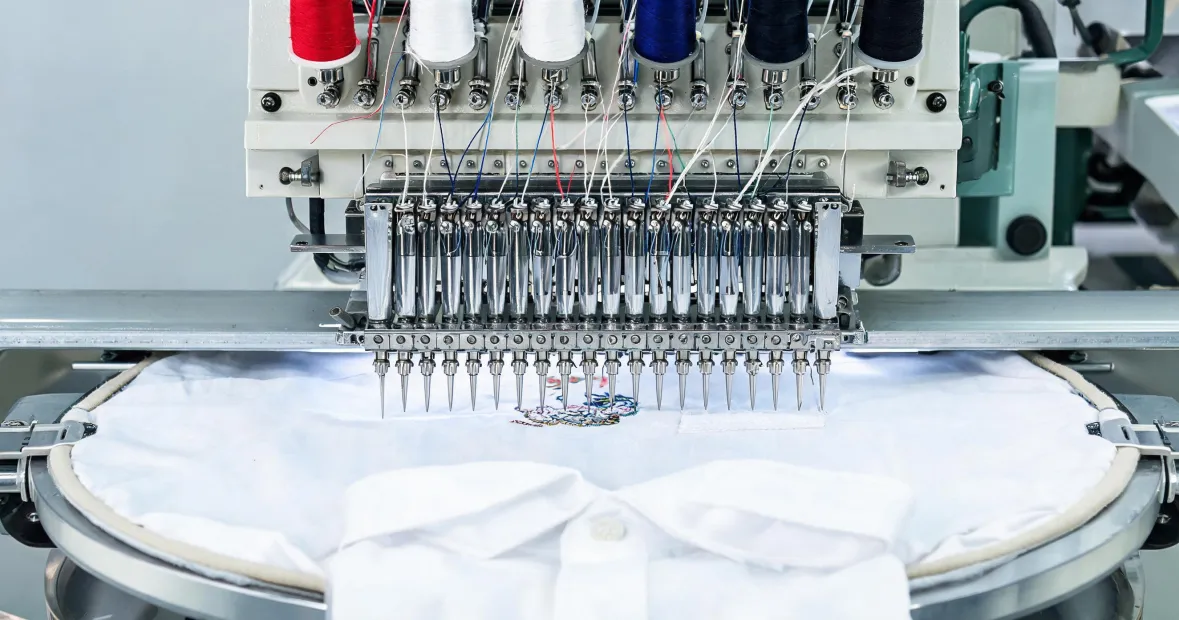
Tajima isn't one machine—it's a family of machines, and the price gap between categories is massive. You need to know which one you actually need before you react to a quote.
- Flatbed multi-heads—the workhorses for standard garments and flat panels
- Hat/cap machines—built around cap clamping systems and curved seams
- Chenille machines—for the looped pile look in letterman jackets, athletic throwbacks, and varsity designs. These are specialized machines, not an add-on to a standard flatbed
- Beaded embroidery setups—Tajima offers beading devices that integrate with select multi-head models, letting you stitch bead embroidery without a separate machine
Every week, I get messages from shops asking what a Tajima chenille machine costs or which model does beaded embroidery. My first question is always the same: what are you actually stitching for revenue 80% of the time? Thirty seconds of clarity on that question has saved me from the wrong machine purchase twice. Don't skip it.
Checkpoint: List your top 10 revenue products from the last 6 months. Which machine category covers most of them?
Step 2: Calculate TCO, Not Sticker Price
It took me 4 years and 30+ vendor quotes to understand that the sticker price on a Tajima is a starting point, not a truth. Total cost of ownership is what actually hits your P&L.
Here's what goes into a real comparison:
- Setup, installation, and rigging
- Operator training—Tajima has strong safety video and training resources, but confirm access is included in your deal
- Frames, hoops, and tooling
- Software licensing (like Pulse) and updates
- Preventive maintenance contracts
- The cost of downtime when the machine isn't running
In 2022, I almost signed with a dealer who was 12% cheaper than the next bid. Then I ran the TCO. The “cheap” quote didn't include setup, charged separately for training access, and required a third-party service tech. The real gap was $6,100 the other direction. The cheap option was the expensive one.
Checkpoint: Get every line item in writing before comparing quotes. Yes, including the needles.
Step 3: Model the New-vs-Used Decision Honestly
I went back and forth between a used Tajima and a new one for two weeks. The used one was 38% cheaper. The new one came with a warranty, installation, and a service contract. The used one came from a friend-of-a-friend with “no issues, just needs a tune-up.” You know how that story ends—the tune-up turned into a $4,200 repair when the timing needed replacing anyway. The savings disappeared in year one.
That's not a blanket “never buy used” statement. It's a “do the math” statement. Run a 3-year cost projection that includes purchase price, expected repairs, parts availability, and production downtime. If the used machine's fully loaded 3-year cost is within 15% of new, buy new. Every time.
Checkpoint: Put a dollar figure on every hour your machine is down. If you don't know that number, guess high.
Step 4: Know the Difference Between Home and Commercial Machines
This is where a lot of the “elecktrick sewing machine” searches come in—yes, with that spelling. It's one of the most common misspellings in our own search analytics, and it usually means someone is looking for a home electric sewing machine, not realizing a commercial Tajima is a completely different category.
Same logic applies when people compare Tajima against the Baby Lock Endurance 2. I get asked about this constantly: “should we start with a Baby Lock Endurance 2 instead of a multi-head Tajima?” The honest answer is that these aren't competitors in the same league. They're tools for different stages of business.
The Baby Lock is designed for home/hobby use and light production. It costs less, fits in a spare room, and is a legitimate entry point if you're testing an embroidery business. If you're stitching 10 pieces per design on weekends, it can make sense.
A commercial Tajima is engineered to run 8, 10, even 14 hours a day. If your orders run into the hundreds, a home machine will burn out—physically and financially. I know a shop owner who ran a home machine for six months until the motor gave up in the middle of a 200-piece order. The Tajima they bought afterward paid for itself in 14 months.
Neither machine is “bad.” They're built for different workloads. Don't let a lower price tag convince you to buy a tool that can't handle your order volume.
Checkpoint: Estimate your average weekly stitch hours. If you're over 20 hours a week, you need commercial-grade equipment. Period.
Step 5: Verify the Support Ecosystem Before Signing
Tajima machines are durable. They're not invincible. When something breaks, the support system determines how many days of revenue you lose.
Three things I verify on every equipment quote:
- Parts availability—is the model current, or are you buying parts for a discontinued line?
- Service proximity—how far is the nearest authorized tech? We learned this the hard way when our closest Tajima technician was five hours away in 2023.
- Training and documentation—are safety videos and operator training included, or are they a separate line item?
And a smaller point that matters more than it should: the way a dealer treats a $200 parts order tells you how they'll treat you when you're placing a $240,000 machine order. The vendors who took our small orders seriously in our early days are the ones I'm still loyal to today. Small doesn't mean unimportant—it means potential.
Checkpoint: Call their service line on a Saturday afternoon. Voicemail? Answering service? A human who can actually help? That call tells you more than any brochure.
Step 6: Get Every Claim in Writing
I've been burned enough by verbal promises—“don't worry, setup is included,” “we'll throw in the training,” “that's standard”—to have a simple rule now: if it's not in the quote, it doesn't exist.
I'm also skeptical of marketing claims by default. Per FTC guidelines (ftc.gov), advertising claims must be truthful and substantiated. That should give you confidence to ask any dealer to document specs, production speeds, and included services in writing. A reputable dealer won't flinch. If they do flinch, that flinch is data.
Checkpoint: Everything in the email. Nothing in the conversation. If they won't put it in writing, there's a reason.
Step 7: Negotiate With the Spreadsheet, Not Your Gut
By now you have a TCO model with real numbers. Use it at the table. When I negotiated our most recent machine purchase, the spreadsheet was open on my laptop. It turned the conversation from pressure into math.
Why does this matter? Because the difference between a good quote and a bad one is rarely the machine price. It's the $8,000 in accessories, service, and training hidden around it.
Three moves that have worked for me:
- Ask for a fully itemized quote. Every accessory, every fee, every line. It's amazing what becomes negotiable once it's visible.
- Ask what's bundled. Frames, hoops, cap drivers—you need these regardless. Bundling beats buying piecemeal.
- Get at least three quotes and compare them line by line, not as a total. That's how you spot the dealer charging $900 for training access that someone else includes free.
Checkpoint: Minimum 3 quotes from 3 different dealers, compared line by line. Spreadsheet open during the negotiation.
Five Mistakes That Will Cost You
1. Buying headroom you don't need. A 20-head machine looks impressive. If your average order is 120 pieces, it's expensive idle capacity. I made this mistake. Still embarrassing to think about.
2. Skipping the utility check. Commercial machines need commercial power and air supply. It cost us $800 in electrician fees for a circuit we assumed was fine. Assumptions are a recurring cost.
3. Ignoring consumables in the budget. Needles, bobbins, hoops, bobbin cases—they're not one-time purchases. As of January 2025, I price consumables into every project estimate. They add up.
4. Trusting “zero downtime” promises. No machine has zero downtime. We budget for 5–10% downtime in production scheduling, and we're never caught off guard when it happens.
5. Forgetting shipping costs on parts. We once paid $38 to ship a $12 needle plate because we didn't ask. For context, a one-ounce First-Class letter starts at $0.73 under USPS rates effective January 2025 (usps.com). If a part can ride in an envelope, don't pay air freight because you didn't ask.
The Bottom Line
There's something satisfying about watching a procurement process work exactly as designed. After all the spreadsheets, phone calls, TCO models, and anxious nights, when the machine is running smoothly and the upkeep cost is under budget—that's the payoff.
Is a Tajima worth it? For our shop, absolutely. The reliability, precision, and output justify the price. But it's worth it only because I ran the numbers, verified the support ecosystem, and treated the purchase as a business decision instead of a shiny new toy. Run this checklist with real numbers, not hopes, and you'll have a strong chance of saying the same.
And if you came here searching for Tajima wagyu price—good luck with dinner. But now you also have a clearer picture of what a commercial embroidery machine actually costs. That's not nothing.

Leave a reply