-
The comparison framework: price isn't cost
-
Dimension 1: Sticker price vs. total cost of ownership
-
Dimension 2: Downtime, production efficiency, and the hidden cost of time pressure
-
Dimension 3: Software, training, and changeover costs
- Which machine should you buy?
-
The industry is evolving—but the fundamentals haven't changed
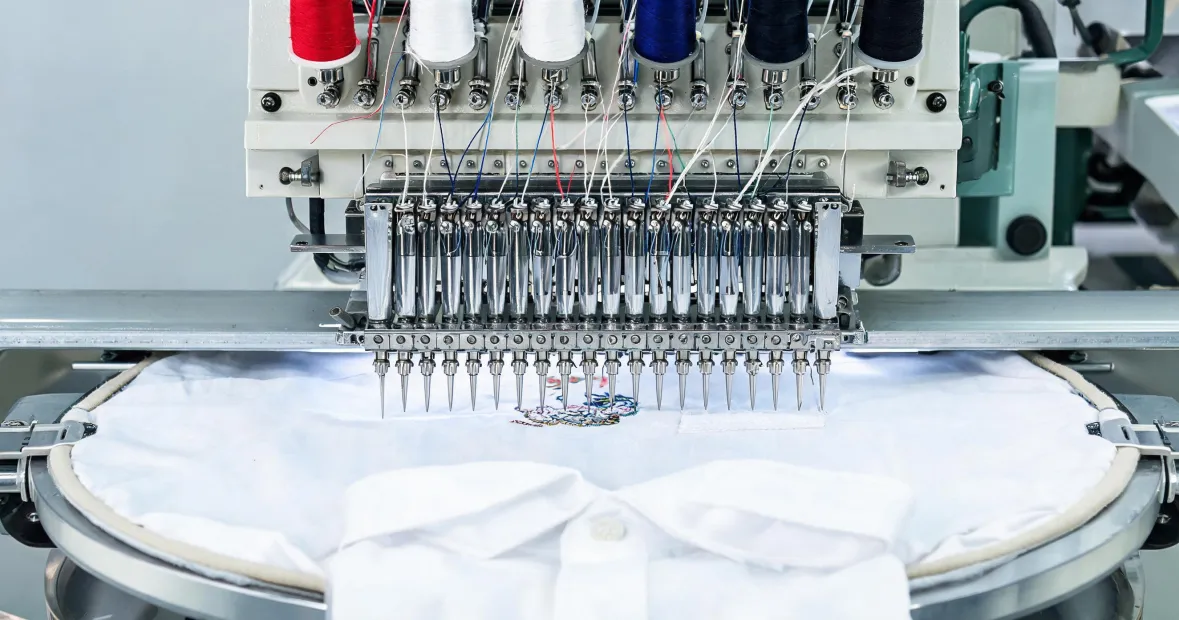
When I first started managing embroidery machine purchases, I assumed the lowest quoted price was the best deal. Three budget overruns later, I learned to track total cost of ownership (TCO) instead. That shift changed how I look at the Tajima multi head embroidery machine price, and why I now compare it against cheaper alternatives like the Pacesetter embroidery machine and the embroidery Dahao machine.
The comparison framework: price isn't cost
Let's be clear about what we're comparing. I'm not on a brand crusade. I've worked with Tajima machines, watched Pacesetter units run, and tracked Dahao machines in shops I've consulted for. All of them can sew logos. The difference appears over time, in the cost ledger.
The framework I use for every machine purchase includes:
- Purchase price – the sticker, including installation and setup
- Lifespan – how many years of production you actually get
- Resale value – what you recover when you upgrade
- Downtime cost – lost production, late penalties, overtime
- Maintenance and parts – both the price and how often you need them
That's the TCO lens. Let's apply it.
Dimension 1: Sticker price vs. total cost of ownership
People always ask about the Tajima DG17 price. In my records, a new Tajima multi head machine runs significantly higher than a comparable Pacesetter or Dahao. But that's only the opening number.
Here's a concrete example. In 2023, I was comparing quotes for a 6-head, 6-needle machine. One vendor offered a Dahao at about 60% of the Tajima's price. Another offered a Pacesetter at roughly 75%. I almost went with the Dahao—until I calculated what happens in year five.
On my spreadsheet (round numbers, from six years of purchase data):
- Dahao: Lower upfront, but estimated life of 4–6 years in a two-shift shop. Resale value near zero after year 3. Parts are cheap, but failure rate is higher.
- Pacesetter: Middle price. Better build than the budget end, but the used market isn't nearly as strong as Tajima's.
- Tajima: Highest upfront. A well-maintained machine can last 8–10 years. We sold a 5-year-old DG17 for about 45% of what we paid—that's an asset, not a dead cost.
The conclusion surprised me: over a 10-year horizon, the Tajima cost per production hour was actually lower. The cheaper machines either got replaced or racked up repair costs before year five.
The risk weighed on me, though. The upside of going with the cheaper bid was a quicker ROI on paper. The risk was a major failure during peak season. I kept asking myself: is a 40% upfront saving worth potentially missing a client's deadline? That's how TCO thinking starts.
Dimension 2: Downtime, production efficiency, and the hidden cost of time pressure
Downtime is the category most cost controllers underestimate. You don't just pay for the repair; you pay for every hour the machine isn't producing.
In our 2023 audit, I found that unscheduled maintenance on a lower-cost test machine caused 22 lost production shifts. That's roughly $4,500 in direct labor, not including the overtime we paid to catch up. The "cheap" machine ate up more money than the price gap.
One of my most uncomfortable decisions came in 2022, when we landed a rush order during the holiday season and had to add a machine fast. I had two hours to decide before the next pre-shipment cutoff. Normally I'd run a three-vendor TCO comparison, but there was no time. I went with a brand we already used—not the cheapest, but the one I trusted to run without surprises. In hindsight, I should have built that decision into our capacity plan earlier. With that constraint, I did the best I could with available info.
That experience taught me: when you buy under pressure, you default to what you know. So it's worth knowing your true cost-per-running-hour before you need it.
To be fair, Dahao machines have improved a lot. I've seen their newer units stitch well and handle complex patterns. But in my service logs, older models still fail more often than a Tajima of the same age. That's not an insult; it's an observation.
Here's the counter-intuitive part: having two cheap machines as backup isn't always better than one reliable multi head machine. With multi head units, a failure multiplies across heads. One solid machine will generally give you higher uptime than two mediocre ones that each need weekly attention.
Dimension 3: Software, training, and changeover costs
Software and training are the hidden costs most people forget about. Tajima's Pulse software has a steep learning curve, but once your digitizers get it, the workflow is fast and repeatable. Pacesetter and Dahao machines use their own or third-party systems, which might be familiar to some operators—but that doesn't mean you won't need training.
I once approved a $1,200 training package for a non-Tajima machine, only to discover that the training didn't cover the specific software upgrade we'd bought. (surprise, surprise.) We spent another $500 on a separate session.
Also, watch for the "free setup" myth. The quote said free installation, but our team spent two days configuring hoops and alignment—roughly $450 in labor that wasn't in the quote. That's not a unique story. I now always ask exactly what's included.
Which machine should you buy?
Let's be practical. There are scenarios where each machine makes sense.
When a Tajima multi head machine is worth the price
- You run two or three shifts, and downtime directly impacts deliveries.
- You plan to sell the machine in 3–5 years. Tajima's resale value is a real financial asset.
- You already have Tajima machines and a trained team. Staying in the same ecosystem saves training and changeover costs.
When a Pacesetter or Dahao machine is the smarter choice
- Your volume is low and intermittent, so downtime isn't catastrophic.
- Your budget is truly hard-capped, and the upfront gap is a dealbreaker.
- You're entering a new product line and want to test demand with a smaller investment.
But if you go this route, keep the TCO lens on. I've seen shops trade a high sticker price for a freight train of parts orders and lost shifts.
What about a single needle embroidery machine price?
For startups, the single needle embroidery machine price range is tempting: roughly $8,000 to $20,000 depending on brand and setup. A single head machine is a fine entry point for samples and small batches. But here's the trap: if you're already processing a few hundred pieces per month, a multi head machine pays for itself in labor savings.
When I started, I bought a single head to "keep costs low." Within a year, I was running overtime just to keep up. The next machine I bought was a multi head—and I should have done that first.
The industry is evolving—but the fundamentals haven't changed
Five years ago, I would have told you that budget embroidery machines were risky. That's no longer true. The technology has advanced. New Dahao units handle complex designs far better than I expected, and Pacesetter has found a groove in certain niches. The quality gap is narrower than it used to be.
But the fundamentals of total cost of ownership—lifespan, resale value, downtime, and hidden training costs—still separate a smart purchase from a cheap one. The best price is the one that stays cheap after five years of use.
The cheapest machine is the one that runs.
If you're in the middle of this decision, build your own cost spreadsheet. Include every factor I listed. Then decide.

Leave a reply