-
Function: Are these machines even competing?
-
Embroidery hoops for Tajima: a locating device, not just a clamp
-
Chenille machine embroidery is a setup, not a stitch style
-
Digitizing embroidery machine work: the hidden skill gap
-
Quality control: why the cheap option isn't always cheaper
-
Which should you buy? Scenario-based recommendations
The first time I saw a Tajima commercial embroidery machine and a Brother sewing industrial machine on the same capital request, I understood why the comparison keeps coming up. Both are serious pieces of equipment. Both sit in the same production room. But they solve different problems.
I'm a quality and brand compliance manager at a commercial embroidery company. Every setup and file has to pass through my inspection before it reaches a customer—roughly 200 unique machine builds a year. In 2024, I rejected about 7% of first deliveries because of avoidable quality issues: hoop misalignment, digitizing errors, or a setup that didn't match the fabric. This article is my perspective, not a brand brochure.
This isn't a simple 'which machine is better' argument. It's a comparison of workflows: what a Tajima commercial embroidery machine demands from you versus what a Brother industrial sewing machine demands. Let's look at the differences by function, hooping, chenille capability, digitizing, and quality control.
Function: Are these machines even competing?
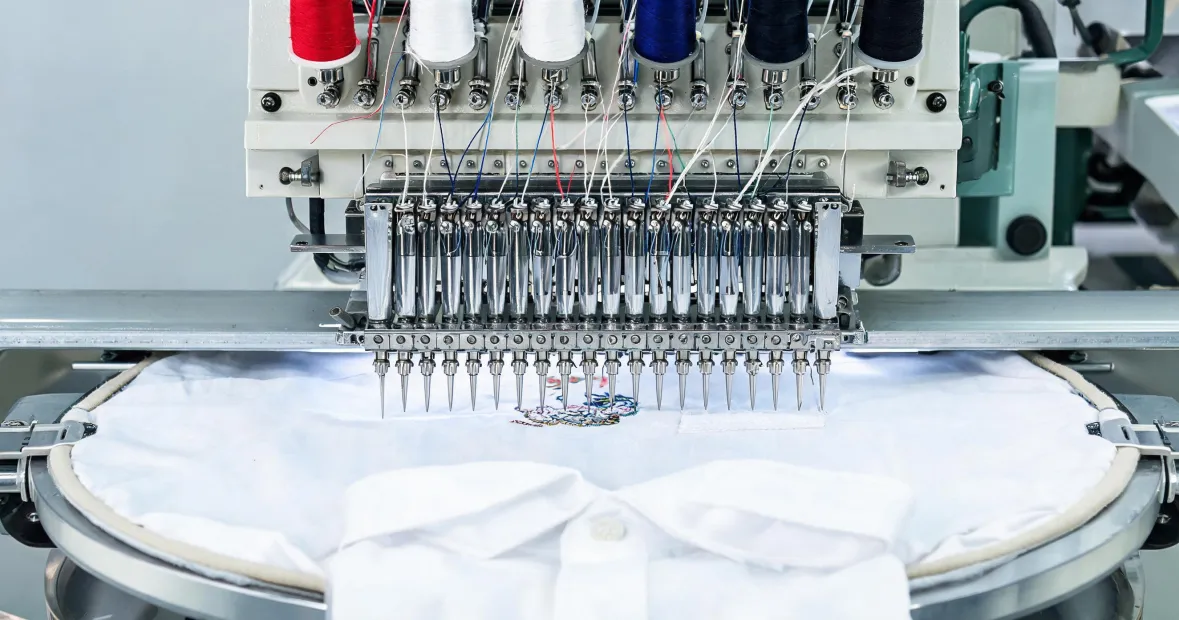
A Tajima commercial embroidery machine is a multi-head, multi-needle system for decorative stitching. It runs logos, sleeves, caps, flat goods, and chenille in volume, with registered color changes and consistent tension across long production runs.
A Brother industrial sewing machine is built for seam construction. It joins panels, sets zippers, and finishes hems. It doesn't replace an embroidery system, and it isn't meant to.
To be fair, Brother makes respected industrial sewing machines. When someone searches for Brother sewing industrial machine, they usually mean a reliable machine for garment assembly, not a logo machine. The distinction sounds simple, but in my inbox, it causes a lot of confused purchase requests.
What most people don't realize is that the confusion happens because both terms fall into the same 'apparel machinery' bucket in budget software. That's how a production manager can end up comparing two machines that do completely different jobs. The question shouldn't be 'Tajima or Brother.' It should be 'which bottleneck am I trying to solve?'
Embroidery hoops for Tajima: a locating device, not just a clamp
Let me get to one of my favorite quality arguments: embroidery hoops for Tajima. A Brother industrial sewing machine doesn't use hoops; it uses presser feet, throat plates, and feed dogs. When someone moves from sewing to embroidery, the first surprise is how much the hoop affects quality. On the surface, a hoop is a frame that keeps fabric flat. In reality, it is part of the machine's registration system. If the hoop flexes or drifts, every stitch after the first pull compensation lands slightly off.
I've tested aftermarket hoops where the dimensions were close but not exact. On a small logo, the difference was barely visible. On a 50,000-stitch design, it showed as edge distortion and rotation. The cheap hoop saved maybe $14. The rework cost a few hundred dollars and a customer deadline.
Why does this matter? Because hoop tension is part of registration. If you ask me, a hoop is a locating device as much as a clamp. It has to keep the fabric in the same position for every needle pass. A millimeter of flex can be the difference between a clean 10,000-piece run and a reject pile at the end of the day.
Here's something vendors don't often say: hoop tolerances aren't governed by a universal standard. The dimensions are specific to the machine manufacturer. When you buy original Tajima hoops, you're paying for verification against the machine's alignment criteria. Aftermarket hoops can work, but they need to be checked on the actual machine before a paid order. A five-minute verification beats a five-hour redo.
After we standardized on original Tajima hoops, I kept second-guessing the budget. What if a tested aftermarket hoop would have been fine? The first month of tight-registration orders answered that question. Prevention is the cheaper option.
Chenille machine embroidery is a setup, not a stitch style
If you're searching for chenille machine embroidery, you might assume any commercial embroidery machine can produce it by selecting 'chenille' in the file. A Brother sewing industrial machine isn't the platform for chenille; a properly configured Tajima machine with a chenille attachment is. But even the right platform needs the right package. Chenille uses a chain-stitch mechanism and a thick loop filler thread, usually acrylic. A machine with the right head construction can be equipped with a chenille attachment, yarn stand, and modified tensions. That's how many Tajima machines handle it. It is not a default feature; it's a package. Ask what the package includes, because 'can do chenille' is too vague to trust.
I get why owners want to flex 'we offer chenille' before the setup is proven. But the fastest way to lose a letterman jacket order is to accept it before the chenille module has been tested. Prevention over cure, again.
Digitizing embroidery machine work: the hidden skill gap
The phrase digitizing embroidery machine can be misleading. The digitizing happens in software, not on the machine. A sewing machine runs on a mechanical setup; an embroidery machine runs on a file. That's a bigger shift than many production managers expect.
Digitizing is the process of converting artwork into stitch data: stitch type, density, underlay, pull compensation, color order, and path sequence. It is not the same as pressing 'export' from a vector program. The Tajima .dst file format is widely used across embroidery systems, which makes file sharing easier. But easy sharing doesn't mean easy making.
The most frustrating part of digitizing errors is that they're usually preventable. A file digitized for stretchy knit fabric can fail on stiff canvas. A file without enough underlay can let the fabric chatter. A file with too-high density can break needles and damage goods. You'd think the warning signs would be obvious. They show up only when the machine runs.
For color approval, I use Pantone references and a physical thread card. Pantone's color matching guidelines set the common tolerance at Delta E < 2 for brand-critical colors; a difference above 4 is visible to most people. Thread doesn't reproduce color the way ink does, so the physical card is the final check. The written standard is the starting point.
Before any digitized design goes into production, I approve a test sew on the exact fabric. That's the same logic as hoop inspection. It feels like a delay until the day it catches a 30,000-piece mistake.
Quality control: why the cheap option isn't always cheaper
I've rejected 7% of first deliveries this year, and most of them were caught by checking the same things: hoop tension, registration consistency, stitch density, and thread tension. None of these are complicated to check. They just need to be checked before production instead of after. On a sewing machine, quality shows up as seam strength and straight stitching. On an embroidery machine, quality shows up as registration across thousands of stitches.
Earlier this year I ran a blind test with our production team: same design, same fabric, same machine, but one sample used a standard Tajima hoop and one used a low-cost aftermarket hoop. Most of the team picked the standard-hoop sample as visibly cleaner. The extra cost per hoop was small. On a 12-head machine, that small difference multiplies quickly.
5 minutes of verification beats 5 days of correction.
That's not a poster. It's the rule I use for every setup.
Which should you buy? Scenario-based recommendations
No single answer fits every shop. But after years of reviewing machine setups, paperwork, and samples, here is the closest thing to a practical rule:
- If embroidery is your main income, invest in the Tajima commercial embroidery machine. The right hoops, files, and digitizing workflow determine your output quality more than the machine's paint color.
- If you assemble garments or sewn products, the Brother sewing industrial machine is the production tool you need. It handles seam construction; it doesn't replace an embroidery line. Buy it where your assembly bottleneck is, and treat embroidery as a separate capability.
- If you're a small shop starting out, buy the machine that matches your first revenue job. Some shops start with a smaller Brother multi-needle embroidery model and keep sewing outsourced. Others buy a used single-head Tajima and build from there. The brand matters less than the process around the machine.
The counterintuitive conclusion: the machine is rarely the weak link. I've seen a used machine with careful hooping and professional digitizing out-produce a new machine running badly converted files. The difference wasn't the brand plate. It was preparation.
If you're still torn, run a test job. Put the same design on both machines, at the same speed, with the same fabric. Compare the backs of the samples, not just the fronts. That test will tell you more than any spec sheet.

Leave a reply