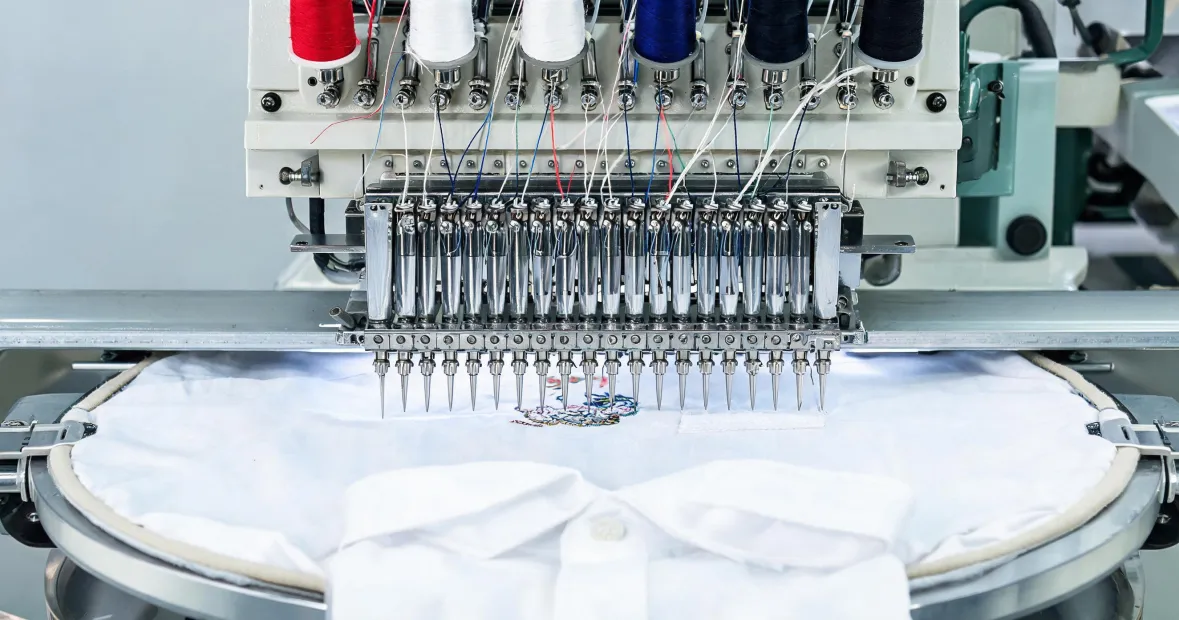
Stop chasing price tags on old equipment.
I don't think most businesses should buy used Tajima embroidery machines anymore. That's not a popular opinion, especially in the embroidery world where used machines are seen as a smart entry point. But after watching my team burn through $4,800 in repairs, downtime, and lost orders on a single used unit over 14 months, I've changed my stance completely.
In my opinion, the gap between a well-maintained used machine and a new one has become a trap, not a deal.
My $4,800 Education on Used Equipment
Back in early 2020, I was managing production for a mid-size apparel decorator. We were scaling fast, and the owner wanted to add capacity without the sticker shock of new commercial equipment. So we bought a used Tajima multi-head machine. Looked clean. Ran okay in the demo. Seemed like a solid move.
It took me about 8 months and roughly $2,300 in unexpected repairs to understand that the purchase price of a used machine is the least relevant number in the equation. By month 14, the total was $4,800. That's not counting the opportunity cost of lost production time.
What I learned: people assume a used machine is just a cheaper version of a new one. The reality is it's often a different product entirely, with a hidden history of wear, maintenance gaps, and component fatigue that you can't detect in a 30-minute demo. From the outside, it looks like a bargain. The reality is you're inheriting someone else's deferred maintenance.
Three Reasons the "Deal" Falls Apart
After that experience, I started tracking our equipment costs more carefully. I've also talked with three other production managers who went through similar cycles. Here's what the data says, at least from my sample of about 15 used machine evaluations and 4 actual purchases across our network.
1. The hidden cost of recovery is brutal
Let's say you find a used Tajima machine for $8,000. A comparable new unit might be $22,000. That's a $14,000 difference, right?
Not really. Here's what I've seen happen to three different teams:
- Immediate repairs: Expect $500-$1,500 in the first 90 days. Things like tension assemblies, worn hook assemblies, or sensor replacements that the seller "just hasn't gotten around to."
- Calibration drift: Used machines, especially those moved from a different facility, often need full re-calibration. That's $400-$800 in service calls and setup time.
- Software incompatibility: Older machines may not run the latest Pulse software smoothly. We hit this wall hard. The upgrade path cost us $900.
- Cylinder and valve wear: Pneumatic systems on high-hour machines are ticking time bombs. One rebuild cost us $1,200.
Add that up and your "$8,000 deal" is now a $12,000 machine within a year, and you still have an older machine with higher failure risk. 5 minutes of verification on a used machine's service history beats 5 days of correction when it breaks on a deadline.
2. The assumption that all Tajima machines are the same
This one took me a while to figure out. People assume a Tajima machine is a Tajima machine. From the outside, that's true. The brand has legendary consistency. But after several years of managing equipment, I've come to believe that the age and generation of the machine matter far more than people admit.
- Older models run slower and have narrower thread path tolerances. They're less forgiving of modern polyester threads with lower tensile strength.
- Support for discontinued models becomes a real issue. Parts availability shrinks. Technicians who know the older electronics retire.
- Energy efficiency is significantly worse on machines built before 2015. On a multi-head running 40 hours a week, that's real money.
Granted, some used machines are gems. I've seen a 2017 model that ran flawlessly for four more years. But my experience is based on about 15 evaluations and 4 purchases over 5 years. If you're buying from a reputable dealer who offers a 6-month warranty and can prove service records, your odds improve dramatically. If you're buying from an auction or a private seller, your mileage will almost certainly vary.
My experience is limited to mid-size production environments doing 500-2,000 pieces a week. If you're a small shop doing 50 pieces a week, the calculus might be different. I can't speak to that situation with confidence.
3. The productivity gap nobody talks about
To be fair, a used machine can still produce quality embroidery. But the question isn't can it work, it's how efficiently does it work over time.
- Changeover speed is slower on older models. Newer Tajima machines have faster frame movement and quicker setup. Over 250 changeovers a year, that adds up.
- Stitch quality consistency degrades as components wear. You'll lose a few percentage points of first-pass yield. On high-volume orders, that's rejects and re-dos.
- Safety and training is harder with older machines. Newer models have features that reduce operator fatigue and injury risk. I'm fairly certain that some of our productivity gains came from newer safety features, not just newer technology.
In my opinion, the real cost of a used machine isn't the price you pay. It's the production you leave on the table.
What I'd Do Differently
I get why people go for used machines — budgets are real, and starting a business is expensive. But if I were starting over today, here's my checklist:
- If you can afford new, buy new. The total cost of ownership over 3 years is often lower, especially if you factor in the resale value of a new Tajima machine after 3-4 years.
- If you must buy used, get a certified pre-owned unit from an authorized dealer. Pay for the warranty. It's not a markup; it's insurance.
- Demand service records. I once ordered a used machine sight unseen based on photos. We caught the worn tension assembly during setup. $450 wasted plus a 1-week delay. Lesson learned: inspect in person or get video evidence of the machine running at production speed.
- Budget 20% of the purchase price for immediate maintenance. If you don't spend it, great. But if you do, you're prepared.
I know some folks will read this and say, "But I got a great used machine and saved $5,000." I believe you. I really do. I've seen it happen. But I've also seen the other side of that coin more often than I'd like.
My perspective is based on managing a production floor where every hour of downtime costs real money. If you're a hobbyist or a micro-shop, your risk profile is different. But if you're running a commercial operation, I'd argue that the cheapest path to profitability isn't a bargain on an old machine. It's a reliable machine with a predictable cost structure.
So yeah, I stopped shopping for used Tajima machines. And I'd recommend you think hard before you do. Sometimes the real bargain is paying full price.

Leave a reply