In my role coordinating production at a mid-size embroidery shop, I’ve dealt with my share of rush orders. But one Thursday afternoon in March 2024 still stands out—because it taught me that quality isn’t just about the stitches; it’s about how you handle the unthinkable.
The Setup: 36 Hours to a Client’s Biggest Event
It was 3:00 PM on a Thursday. A client we’d worked with for three years called, voice tight. Their largest trade show was Saturday morning, and their marketing director had just realized the embroidered uniforms—200 pieces—were missing a critical detail: the new company tagline. They needed all 200 pieces re-done with the corrected design, and they needed them by noon Saturday.
Normal turnaround for 200 pieces is three business days. They were asking for 44 hours, including overnight shipping from our shop in Ohio to their event in Chicago. The base order value was about $4,500, but the client made it clear: missing this deadline meant a $12,000 penalty clause in their sponsorship contract.
I’d been through enough emergencies to know the first question isn’t “Can we do it?” It’s “What could go wrong?”
The First Hurdle: Design File Issues
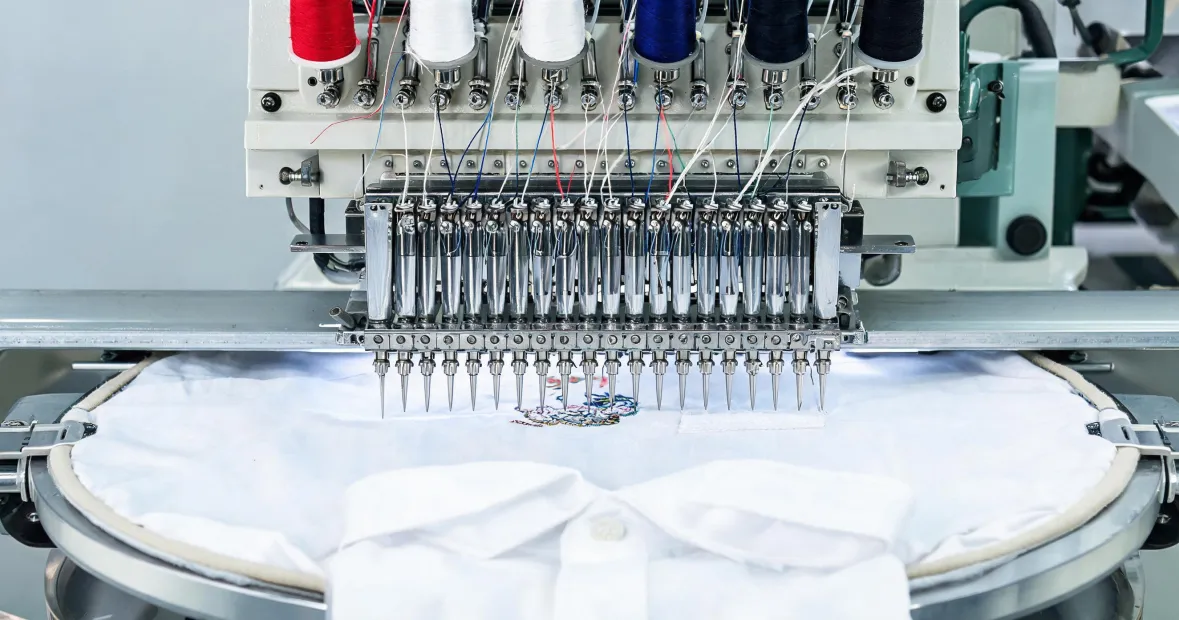
The client’s graphic designer had sent the wrong file format. By the time we got a usable .DST output, it was 5:30 PM. My digitizer (bless his patience) cleaned up the pathing in 45 minutes. We loaded the design onto our Tajima B500 multi-head machine, ran a test sew on scrap fabric, and it looked perfect.
Then the machine stopped. Mid-stitch.
Error code E-07. Thread break sensor? I cleared it, restarted. Same error. Then the screen froze.
I’ll be honest: my stomach dropped.
The Turning Point: A Reset That Could Have Been a Disaster
Now, I’m not a hardware engineer—I can’t tell you the exact electronics inside a Tajima control board. What I can tell you from a production manager’s perspective is that when a machine stops on Friday evening, with a Saturday noon deadline, every second counts.
I knew we had a reset procedure in the Tajima Pulse software manual. But I’d never actually used it in a real emergency. I’d thought, “What are the odds?” Well, the odds caught up with me.
The standard advice from the support hotline (I called them at 7:05 PM) was to power-cycle and run a hardware diagnostic. That cleared the error temporarily, but ten minutes later it came back. Then the technician said, “You might need to do a factory reset of the machine’s parameter settings. Without it, the head alignment could drift.”
Factory reset? That erases all custom calibration. If we did it wrong, we’d lose the entire night’s run. But if we didn’t do it, the machine might keep stalling. I had to decide.
Here’s the thing: I’d watched a Tajima training video about parameter resets six months earlier. I remembered the sequence: navigate to Machine Settings → Maintenance → Factory Default → confirm. Then re-enter the head offsets from the calibration card taped to the machine. It took about 12 minutes.
So glad I paid attention in that training. Almost skipped it to save an hour that day.
The reset worked. We ran a test stitch—registration was within 0.1 mm. The B500 hummed through the first 50 pieces without a hitch. At 11:30 PM we switched to the hat frames for the 30 caps in the order. (Tajima’s hat frame attachment is a lifesaver, by the way—zero adjustments needed.)
The Result: On Time, On Quality, On Brand
By 6:00 AM Saturday, all 200 pieces were finished, inspected, and packed. We lost one piece to a thread tension issue—that’s a 99.5% yield, which is actually above our internal target of 98%. The client’s alternative was scrambling at 7 AM to find a local shop that could do a rush job of 200 pieces with a 3-hour turnaround. Not happening.
We shipped via overnight air, and the client received the boxes at 10:30 AM. They called at 11:00 AM, relieved and grateful. “You saved our brand’s image,” the marketing director said. I won’t lie—that felt good.
But the real lesson hit me later: the quality of our output was the client’s brand. Those uniforms with the perfect tagline placement, consistent color, no loose threads—that’s what their trade show attendees saw. If we’d delivered late or with poor registration, the client’s brand would have looked sloppy. And they would have associated that with us.
What I Learned (and What You Should Know About Your Tajima)
This experience changed how we approach emergency orders. Here’s the breakdown:
- Know the reset procedure before you need it. The Tajima Pulse software and hardware manuals are not optional reading. If I hadn’t remembered that factory reset sequence, we would have lost hours waiting for a remote support session. I keep a printed cheat-sheet taped to the machine now.
- Quality isn’t just the final product—it’s the process. Spending an hour on proper machine maintenance and calibration directly affects how clients perceive you. The $50 difference between a budget thread and Tajima’s recommended thread translates to noticeably fewer breaks and better stitch quality.
- Total cost of ownership matters. The client paid $800 extra in rush fees (on top of the $4,500 base cost). But they saved a $12,000 penalty and protected their brand reputation. The lowest quoted price at a discount shop would have been cheaper, but could they have pulled off a 44-hour turnaround with machine issues? Unlikely. The certainty of a reliable machine and trained staff is worth more than a lower hourly rate.
Oh, and one more thing: I checked the Janome Memory Craft 400E price online that same weekend just out of curiosity—retail around $1,200, but it’s a home machine, not built for production volumes of 200 pieces. A machine like the Tajima B500 is a different category entirely. Know your equipment’s limits.
A Final Word on Resetting Your Tajima
If you ever need to reset a Tajima embroidery machine, here’s the quick version (based on my experience—but check your manual for your exact model):
- Back up your custom parameters before doing a factory reset.
- Always run a test sew on scrap after reset, checking registration and tension.
- Keep your machine’s calibration card somewhere visible.
- Don’t assume a power cycle fixes everything—sometimes you need a full reset.
Look, I’m not saying Tajima machines are infallible. They’re not. But the difference between a nightmare weekend and a hero story is often just knowing what to do when the unexpected happens. Invest in that knowledge—it shows in every seam.
Dodged a bullet that night. But we earned it.

Leave a reply