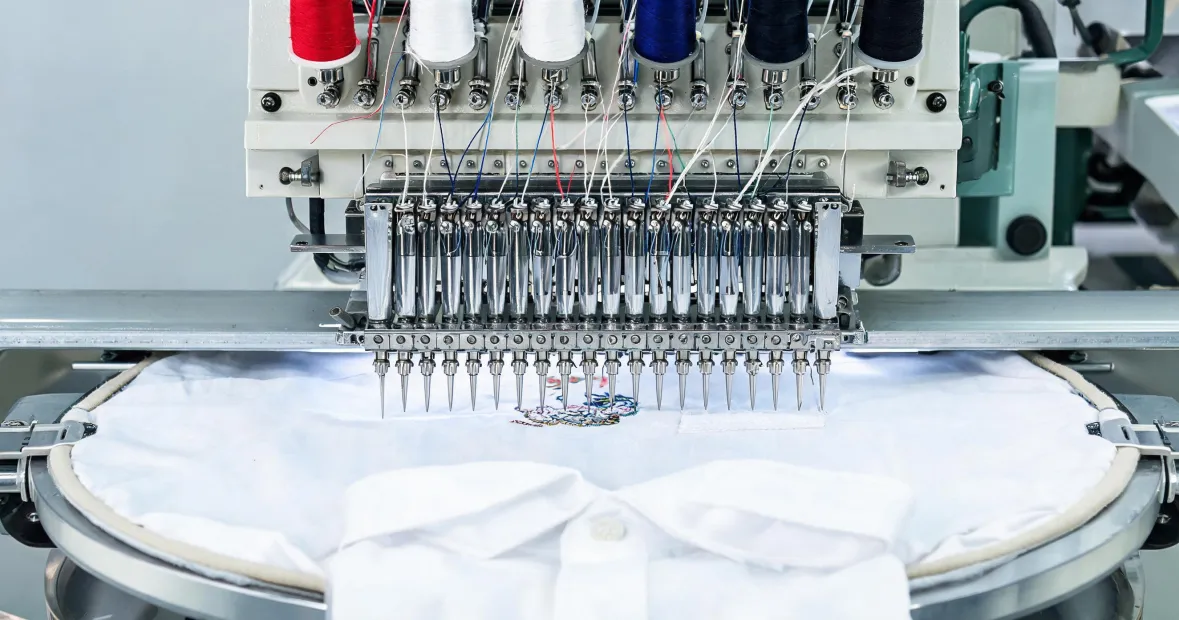
An 8-head Tajima embroidery machine will cost you somewhere between $45,000 and $120,000 depending on configuration—but the machine itself is the cheapest part of the purchase. I've tracked every dollar our shop spent on embroidery equipment for the past 6 years, and when I audited our 2023 spending, the pattern was unmistakable: almost a third of what we spent on "embroidery" went to things other than the machine. Training. Stoppage. Repairs. Wrong file formats. Rushed re-runs. The machine was just the entry fee.
I'm the procurement manager at a 14-person garment decoration company. I've managed our equipment budget ($180,000 over 6 years), negotiated with 9 different vendors, and documented every order in a cost tracking spreadsheet that has become my professional pride and, honestly, my obsession.
Here's what I want you to know before you buy—or skip—that Tajima, whatever size you're looking at.
Stop Shopping by Price Per Head
Everyone asks "what does an 8-head Tajima cost?" It's the wrong first question. I almost bought a different brand once because the quote was 23% lower. What saved me was building a total cost of ownership (TCO) spreadsheet and forcing myself to fill in every line, not just the sticker price.
Hidden costs that show up after the invoice:
- Training. A multi-head machine isn'tearned in a weekend. If you're new to commercial embroidery, budget for formal training. Tajima offers training videos and safety resources—use them.
- Hoops and backings. Each hat size. Each flat order. It adds up shockingly fast.
- Needle breaks and stoppage time. This is the big one. A machine that runs 70% efficiency vs. 85% is the difference between profitable and not. That difference doesn't show up on the quote.
- Software. Pulse software is powerful. It also costs money. Make sure you're budgeting for it—and for someone who actually knows how to use it.
- Maintenance. Not just replacement parts. The hours you lose when a machine goes down mid-order.
To be fair, Tajima machines are known for reliability—that's part of why the brand has staying power. But reliable still means maintenance, and maintenance means cost.
The Safety Video That Saved Us Thousands
This is the part where I sound like I'm exaggerating. I'm not.
When I first considered Tajima's safety training videos, I thought they were a formality. Something compliance requires. I dismissed them as "for the newbies." Then we had an incident that cost us $1,200 in repairs plus three days of downtime—all because an operator didn't know how to properly thread tension during a specific hat run. Was it painful? Yes. Did it change my mind? Absolutely.
I only believed in the value of safety documentation after skipping it and paying that price. The "tajima embroidery safety video" resources cover a lot more than emergency stop buttons. There's needle handling, bobbin case maintenance, thread path verification, hooping techniques, and error code explanations. That last one alone—error codes—has probably saved us $3,000 in unnecessary service calls.
A 12-point checklist I created after that incident has saved us an estimated $8,000 in potential rework since. Five minutes of verification beats five days of correction. Every time.
Makerspace Machines: A Totally Different Category
Now, "makerspace embroidery machine" is a phrase that gets lumped into the same Google search as commercial machines. That's a mistake if you're trying to compare them apples to apples.
There's a reason something like the PE545 embroidery machine goes for a few hundred dollars while a commercial Tajima goes for tens of thousands. They're not the same kind of tool. The PE545 is a single-needle home machine. It's excellent for crafters, small-batch personalization, and maybe a makerspace that does workshops. If you're thinking about a makerspace that offers occasional embroidery classes, a PE545 might legitimately be the smart purchase—even at retail price.
But if you're taking production orders, the math doesn't work. A home machine can't handle 8-hour shifts. It doesn't have the speed, the thread capacity, or the durability. A PE545 is a wonderful tool—for what it is. It's not a commercial workhorse.
I've seen makerspaces buy commercial machines when they really needed educational-grade equipment. I've also seen the reverse: small businesses buy consumer machines and wonder why production costs are eating them alive. Wrong machine for the wrong context is a cost that hides in plain sight.
So when people search for "makerspace embroidery machine," I think the genuinely useful answer is: it depends on what the makerspace is trying to do. If it's hands-on classes, the PE545's interface is friendlier for beginners. If it's a shared workspace for small business pilot runs, a used single-head commercial machine might serve better.
The File Format Thing Nobody Warns You About
Searching "what file type for brother embroidery machine" and getting confused? I get it. The file format question is a universal headache, and it's relevant to Tajima users too.
The most common embroidery file formats are machine-specific. Tajima uses .DST (which is actually a widely accepted industry standard). Brother machines accept .PES. Very few machines read all formats natively.
Here's the kicker—most people don't start on a Tajima. They start on a Brother, they build designs in .PES, and then they upgrade to a commercial Tajima and discover the files don't just "open." Converting between formats isn't hard, but it's an extra step, and it's one more place where something can go wrong.
The smart procurement move? Decide on your file format strategy at the beginning. If your long-term plan involves a commercial Tajima, learn .DST early. It'll save you hours of re-digitizing later.
And if you're wondering why a Brother-specific search leads you to a Tajima article, it's because embroidery file formats are a shared pain across every brand. We're all in the same hoop.
When NOT to Buy an 8-Head
I know this sounds odd coming from someone who wrote a whole article about commercial machines, but I want to be straight: an 8-head Tajima isn't the best choice for everyone.
If you're a small shop doing less than 20,000 stitches per week, an 8-head will sit idle—and an idle machine makes you no money. A 2-head or even a reliable single-head might serve you better while you build volume.
And if you're completely new to commercial embroidery, the absolute worst thing you can do is finance a fully-loaded 8-head and then try to learn on it. Production pressure plus a learning curve equals expensive mistakes. I've seen it happen twice. Both businesses ended up using the machine as a very expensive shelf.
Actually, the better rule of thumb I've landed on after all these years: never let a machine be the reason you take on more work. The machine should follow the work, not the other way around.
Where the Budget Really Breaks Down
Here's a realistic breakdown of where the actual money goes over the first 12 months of owning a commercial embroidery machine, based on my cost tracking:
- Machine purchase: ~65%
- Installation, setup, training: ~10%
- Software (Pulse or similar) and dongles: ~8%
- Hooping system and backings inventory: ~7%
- Maintenance and repairs: ~6%
- Unplanned rework and waste: ~4%
The last line is the one people forget. It's also the one most within your control. The "cheap" moment of skipping a training video can turn into an expensive rework line item faster than you think.
That said, I don't want to overstate the risk. Tajima machines are well-built and long-lasting. A $4,200 annual maintenance budget is not unreasonable for an 8-head being run regularly. But it needs to be in the plan.
Bottom Line
Buying a Tajima embroidery machine is more than a purchase—it's a commitment to a system. The brand's reputation for precision and innovation is earned. The machine range covers everything from hats to chenille. But the machine only works as well as the people, training, file management, and maintenance system around it.
I've been telling myself the same thing for 6 years: the best equipment investment isn't the most expensive machine you can justify. It's the combination of machine, training, and processes that lets you run at 85%+ efficiency within the first 6 months.
Price per head matters. Nobody's saying it doesn't. But getting the whole system right matters a whole lot more.

Leave a reply