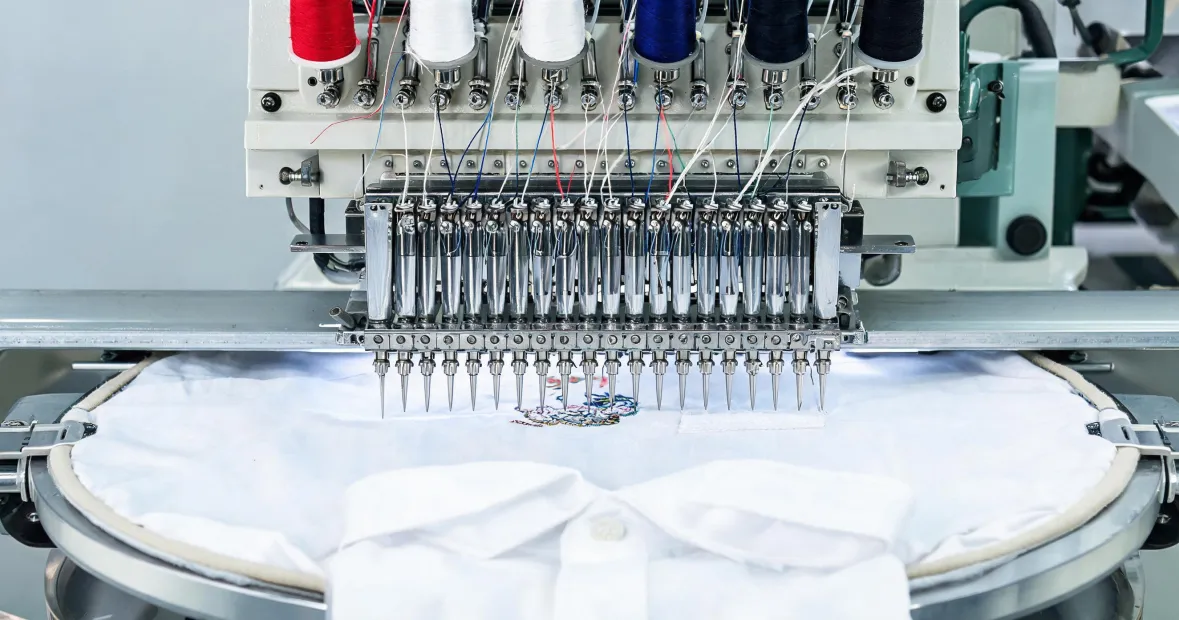
- The Surface Problem: "Why Is My Cheap Machine Costing Me Money?"
- Deeper Cause #1: Precision & Tolerance Aren't Negotiable
-
Deeper Cause #2: Capability Gaps You Don't See Until You Need Them
-
Deeper Cause #3: Thread Management & Color Matching Chaos
-
The Real Cost of 'Cheap'
-
So What Changed? (The Solution, Briefly)
When I first started my embroidery business in 2019, I was convinced the smart play was to buy a budget machine—something like a Vevor or a generic multi-needle. I figured all embroidery machines did the same thing: punch thread into fabric. My first machine cost $2,800. It looked fine on the website. The reviews were okay. I hit 'buy' and thought I'd saved a bundle.
Eighteen months later, I'd spent over $4,200 on repairs, wasted $1,100 worth of thread on failed runs, and lost a $3,200 order because the machine couldn't handle dense designs. That's when I finally swallowed my pride and ordered a Tajima single head machine. And I realized I'd been wrong about almost everything.
The Surface Problem: "Why Is My Cheap Machine Costing Me Money?"
At first, I blamed the supplier. Then I blamed the thread. Then I blamed the design software. But the real problem wasn't any one thing—it was the machine itself, and my assumption that all embroidery machines were basically the same.
My cheap machine (a single-head, 6-needle from a brand I won't name, but you can guess) did work—for about four months. Then the tension system started drifting. The hook timing went off. The thread path had burrs that shredded polyester thread. Every fix cost $200–$400 and took a week. Meanwhile, I had orders stacking up.
What I Thought I Was Saving
Upfront cost: $2,800 vs. $8,500 for a Tajima single head (this was 2020, prices may have changed). That's a $5,700 difference. I told myself I'd use that savings for thread and hoops. Instead, I used it on repairs and lost revenue.
Here's the reality: a budget machine can make decent embroideries—if your designs are simple, thread is cotton, and production volume is low. But as soon as you push it (small letters, dense fills, cap embroidery, chenille), the limits show up fast.
Deeper Cause #1: Precision & Tolerance Aren't Negotiable
I didn't realize that a commercial embroidery machine's real value is in its mechanical precision—the hook timing, the rotary hook clearance, the needle bar stability. Tajima machines (even their single head models) use hardened steel components, sealed bearings, and automated lubrication. My cheap machine used cast aluminum frames and bushings that wore down after 200,000 stitches.
I once ordered 500 hats with a small logo (1.5 inches wide). The cheap machine sewed it fine for the first 50 hats, then the hook timing drifted, and the next 150 hats had skipped stitches. I didn't catch it until the client called. $890 in redo plus a 1-week delay. That's when I learned about hook timing maintenance. (Circa late 2020.)
Why Precision Matters More Than You Think
Industry standard tolerance for hook-to-needle timing is ±0.1 mm. Cheap machines often ship with ±0.5 mm tolerance and drift further. On a 1-inch letter, that's the difference between a clean satin stitch and a messy, loose loop. And when you're doing high-volume orders (say, 2000 pieces), that drift compounds—the first 500 pieces look fine, the last 500 look sloppy.
Deeper Cause #2: Capability Gaps You Don't See Until You Need Them
I bought my cheap machine thinking I'd only do flat goods. Then a client asked for hats. Then another wanted chenille letters for a letterman jacket. The cheap machine couldn't handle the cap frame (it didn't have the clearance), and chenille requires a separate attachment that my machine didn't support.
That's when I started looking at Tajima's range: they make dedicated hat machines, flatbed machines, and chenille machines (including the Tajima chenille machine with the loop attachment). I ended up buying a used Tajima single head chenille combo—and it paid for itself within a year on chenille orders alone.
At the time (2021), I kept thinking, 'I don't need all those features now.' But the industry doesn't wait. A year later, I was turning down work because my machine couldn't do it. That's a hidden cost that doesn't appear on a price comparison spreadsheet.
Deeper Cause #3: Thread Management & Color Matching Chaos
This one embarrassed me the most. I didn't keep a proper thread chart—I just grabbed cones from a bin. Cheap machines are picky about thread quality; they'll break on any slight variation in twist or thickness. I wasted hours rethreading and adjusting tension.
Once I upgraded to a Tajima, the tension control was so consistent that thread issues dropped by 90%. But I still needed a reliable thread reference—enter the machine embroidery thread chart. I started using the Tajima thread color chart (which cross‑references to Pantone and brand names) and created a digital version for my team. That one document saved me roughly $450 in wasted thread and reruns in the first six months.
In September 2022, I submitted a 300-piece order with a color that 'looked close' on the screen. The result? Not even close—the thread was a different shade of blue. 300 items, $720, straight to the trash. Now I check every color against the thread chart (as of January 2025, it's still the same protocol).
The Real Cost of 'Cheap'
Let me put numbers on it. Over two years with the budget machine:
- Machine cost: $2,800
- Repairs (including one motor replacement): $2,100
- Lost orders due to downtime/quality: ~$4,500
- Thread waste: ~$1,100
- Time spent troubleshooting: easily 200 hours (I don't bill that but it's time I could have spent selling)
Total: $10,500+ in real costs. Meanwhile, a Tajima single head would have cost $8,500 new (maybe $6,000 used) and needed maybe $300 in annual service. The cheap machine was more expensive in the long run—by a lot.
So What Changed? (The Solution, Briefly)
I'm not saying Tajima is the only option. But after my mistake, I made a checklist:
- Don't buy blind. Visit a dealer, run a test sew with your own designs.
- Check for chenille/hat capability if you think you'll ever need them. Even if you don't need them now, the market will ask.
- Use a thread chart from day one. Tajima's is free online—or any brand's will do, but standardize across your shop.
- Factor total cost of ownership, not just upfront price. Include repairs, downtime, lost orders.
I'm glad I made the switch when I did. Almost bought another budget machine after the first one died—dodged a bullet when a friend loaned me his old Tajima for a weekend. After that experience, I couldn't go back.
The industry's moved on since 2019. Budget machines are better now, sure. But the fundamentals haven't changed: precision, reliability, and capability are expensive to engineer. If you're planning to run real orders with real deadlines, a proper commercial machine (like Tajima's single head or chenille models) isn't a luxury—it's the cheapest option in the long run.

Leave a reply