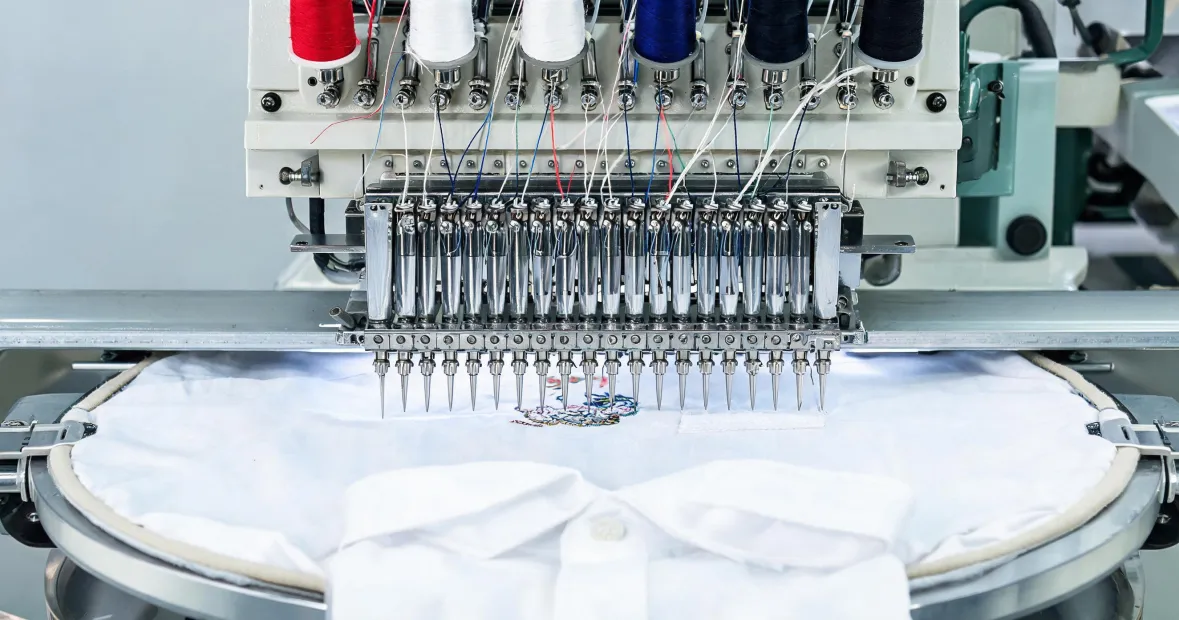
- New vs. Used Tajima Embroidery Machines – The Real Difference (That Cost Me $3,200 to Learn)
-
1. Upfront Cost: The Obvious Winner is… Used
-
2. Long-Term Reliability: Where Cheap Gets Expensive
-
3. Support & Training: The Hidden Benefit You Don't Think About
-
4. Performance & Features: The New Machine Edge
-
When Should You Buy Used?
-
Final Takeaway
New vs. Used Tajima Embroidery Machines – The Real Difference (That Cost Me $3,200 to Learn)
I've been running an embroidery shop since 2017. In my first year, I made the classic mistake: bought a used Tajima 1501 because it was cheap. Looked fine on the listing. Seller had decent reviews. Price? $4,500 compared to $18,000 for a new one. I thought I was clever.
That decision cost me $3,200 in repairs and lost production over the next 18 months. The surprise wasn't the machine breaking down — it was how much hidden cost came with that 'deal'.
So let's compare new vs. used Tajima machines honestly. I'm not here to sell you anything. I'm here to help you avoid the same pitfall.
Why This Comparison Matters
If you're searching "how much is a Tajima embroidery machine?" you're probably torn between budget and quality. The question isn't just about the sticker price. It's about total cost of ownership, reliability, and whether a few thousand dollars now is worth the risk of downtime later.
Here's what I'll compare across four dimensions: upfront cost, long-term reliability, support & training, and performance features. Let's go.
1. Upfront Cost: The Obvious Winner is… Used
A new Tajima machine — say a 6-head model — runs around $18,000 to $25,000 depending on options. A used one from the same era (2015-2018) can be $4,000 to $8,000. That's a big gap.
But here's the catch: that $8,000 used machine might need $2,000 in repairs within the first year. I've seen it happen. The seller's photos hide worn hook assemblies, loose tensioners, and tired motors. You're not saving $10,000 — you're deferring the cost.
My take: If you have $8,000 and must start a shop, a used machine can work — if you're comfortable with risk. But don't fool yourself that it's cheaper in the long run. I'd rather put that $8,000 as a down payment on a new machine with financing.
2. Long-Term Reliability: Where Cheap Gets Expensive
I bought that used 1501 in February 2018. By June, the main motor bearing failed. $450 repair. In September, the thread trimmer arm snapped. $320. In Q1 2019, the LCD control panel started flickering — $680. I'm not even counting the production delays: three days lost each time.
Meanwhile, my friend bought a new Tajima SE Series in 2017 with the Tajima Seiryo Jacket Cooling System. That cooling system keeps the internal electronics at optimal temperature, extending component life. He's had zero unplanned downtime in 5 years.
The difference? New machines have modern thermal management, improved sensors, and tighter tolerances. The used market is full of machines that ran 12-hour shifts for years. Components wear out.
Real talk: I'm not saying every used Tajima is a lemon. But the odds are stacked against you. If you factor in expected repairs over 3 years, the total cost of a used machine often surpasses the new one's price.
"That $4,000 saving turned into a $3,200 problem — plus credibility damage with my first big client."
3. Support & Training: The Hidden Benefit You Don't Think About
When you buy new from an authorized Tajima dealer, you get:
- On-site installation and calibration
- Access to official safety training videos (I've watched them — they save time)
- Technical support via phone/chat
- Warranty (typically 1-2 years parts/labor)
- Software updates for Pulse software
With a used machine, you're on your own. The seller might give you a 30-day warranty if you're lucky. After that, you're calling third-party repair techs at $150/hour plus travel.
I have mixed feelings about this. Part of me thinks "I can fix it myself and save money." Another part knows that every hour I spend troubleshooting is an hour not producing. For me, the value of a support contract is worth at least $2,000 per year in peace of mind alone.
4. Performance & Features: The New Machine Edge
Let's talk about the best computer embroidery machine for production. New Tajima models (like the TMBP-SE or the 1501-C series) offer:
- Higher stitching speed (up to 1,200 SPM vs 800-1,000 on older models)
- Larger color capacity (15 needles vs 6-12 on older models)
- Better automatic tension adjustment
- Integrated cooling system (Seiryo Jacket) for consistent quality
- WiFi connectivity for design transfer
A used 1501 from 2010? It's a workhorse, but lacks those refinements. You'll spend more time adjusting tension, dealing with thread breaks, and waiting for files to transfer via USB. In a production environment, those minutes add up to hours of lost capacity.
Never expected the cooling system to matter so much. Turns out consistent temperature means consistent thread tension. I saw the difference when I visited a shop running new Tajimas — their operator barely touched the machine.
When Should You Buy Used?
I'll be honest — there are scenarios where used makes sense:
- You have a backup machine. If your main machine breaks, you can still run.
- You're mechanically savvy. You can diagnose and repair common issues yourself.
- You need a second machine for low-volume or sample work.
- Your budget is below $10,000 with no financing options.
But if you're starting a business, or if this is your primary production machine, buy new. The difference in total cost of ownership is smaller than you think. The lowest quote isn't the cheapest.
One more thing: If you're comparing Tajima to other brands (like Brother, Barudan, or even a watt sewing machine for other garment finishing), the same principle applies. Always factor in support lifespan and parts availability. Tajima has a massive dealer network — that counts for something.
Final Takeaway
I'm not saying new is always right. I'm saying run the numbers on total cost, not just the purchase price. Calculate expected repairs, downtime costs, and lost opportunity. For my shop, buying new was the right call after my second machine. I wish I'd done it from the start.
This worked for me as a mid-size embroidery shop with 4 full-time operators. Your mileage may vary if you're a hobbyist or running a high-volume production line. But I hope my mistakes save you a few thousand dollars — and a lot of frustration.

Leave a reply