Before I get into machine comparisons, let me clean up one search. If you typed “Tajima Wagyu price,” you are probably seeing Japanese beef prices, not sewing machine prices. Tajima-gyu is one of those famous Wagyu bloodlines from Japan. The Tajima that makes embroidery machines is a different thing entirely. If your search was really about steak, no problem. If it was really about commercial embroidery, the model to price is more likely a Tajima TMEZ-SC.
For context, I run a small production embroidery shop. I am not a dealer and I am not a reviewer. I'm the person who pays the repair invoices and then updates a checklist so the same mistake does not happen twice. In 2018, I bought a used multi-head because the list price made me feel smart. The quote did not include installation, electrical work, or a technician visit. The delivery driver left the crate in my parking lot. By the time the machine was level, wired, and timed, I had spent roughly 28% more than the original purchase price. That machine is gone now, but the lesson stays.
What the “Tajima vs Brother” comparison is really about
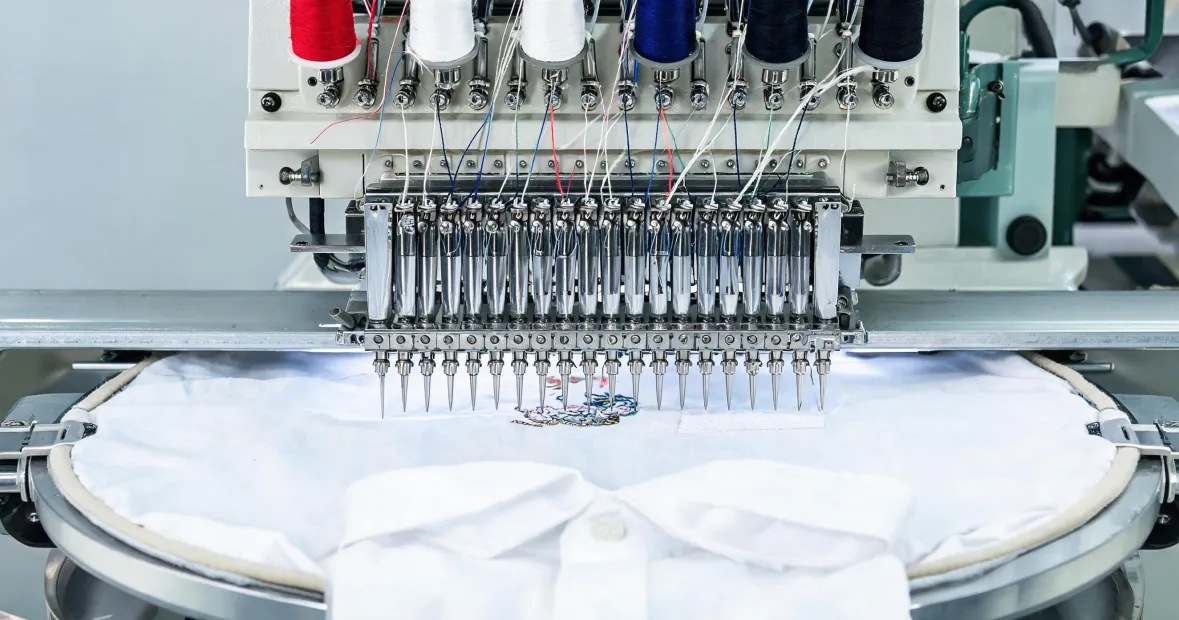
The Tajima TMEZ-SC and the Brother 1060 embroidery machine are not in the same product category. The Brother 1060 is a powerful 10-needle single-head machine. It is designed for flexibility: small batches, custom orders, samples, and businesses where one operator needs to do a bit of everything. The Tajima TMEZ-SC is an industrial multi-head embroidery system. It is designed for repeat production: the same logo, the same cap, the same back panel, over and over again.
This matters because a lot of embroidery machine reviews compare them as if they were two versions of the same thing. They aren't. Comparing them by price alone is like comparing a cargo van with a delivery truck. The van is cheaper, easier to park, and the right choice for many jobs. But if you need to move 400 identical parcels every day, the van will be the expensive option in the end.
1. The Tajima TMEZ-SC price is a quote, not a shelf price
A Brother 1060 has a published price, even though dealers run promotions and bundles. A Tajima TMEZ-SC price is completely different. You cannot just add it to a cart. The price changes with head count, cap frames, flat hoops, training, installation, and the dealer's support package.
If you ask two authorized dealers for “the Tajima TMEZ-SC price,” you will probably get two different numbers. That is not necessarily a trap. It means one quote includes training and the other does not. One includes the electrician's visit; the other does not. One dealer assumes you already have a compressor; the other dealer includes it.
So the first rule is simple: compare line items, not monthly payments. If a quote looks low, ask what happens when you switch from caps to flat goods. Ask what happens when the operator needs training. Ask which spare parts are included. The base machine is only the beginning.
2. Production speed: flexibility vs repetition
If your typical order is 12 hats with individual names, a single-head machine is genuinely efficient. The setup is simple, the schedule is flexible, and you are not paying someone to babysit twelve heads while only one is useful.
If your typical order is 400 left-chest polo shirts with the same logo, the math changes. A Tajima TMEZ-SC can run multiple heads at the same time. The same design that takes a single-head machine all day can be finished in a fraction of the time—if you have the order volume to justify it.
The uncomfortable part is that many shop owners buy a multi-head because they imagine volume will appear after the machine arrives. Sometimes it does. Sometimes it doesn't. Look at your last 20 orders before you make that bet. If most of them are under 20 pieces, a multi-head Tajima might be a luxury, not a business decision. If most of them are 100 pieces or more, a single-head Brother will eventually feel like a bottleneck.
3. The hidden costs nobody mentions
Most embroidery machine reviews focus on stitch quality and ease of use. They rarely mention the parts that actually break a budget: stabilizers, thread, needles, bobbins, hoops, cap drivers, training hours, and downtime.
I remember one 900-piece order where the machine should have done the work in two days. It took eight. The problem was not the brand. The problem was that I had not budgeted for the time it would take to make the machine fully reliable. I paid for that mistake with late fees and rushed hourly labour.
If you are comparing a Brother 1060 and a Tajima TMEZ-SC, ask yourself: what is the cost per finished piece after six months, not just the cost per machine? A cheaper machine can become very expensive if it is the wrong capacity for your orders.
4. The sewing machine synchronizer question
One phrase that does not appear in most embroidery machine reviews is “sewing machine synchronizer.” It should.
The sewing machine synchronizer keeps the needle and rotary hook in proper timing. On a single-head machine, timing problems are annoying but contained. On a multi-head machine, a synchronizer issue can affect every head, which turns a small service visit into a production disaster.
I learned this after buying a used machine that looked fine on a video call. It sewed well for ten minutes, and then the hook timing drifted. The technician who came out asked when the sewing machine synchronizer had last been checked. I did not even know the phrase. That repair, including lost production, cost me about $1,875. I still have the invoice in a folder called “lessons.”
This is not a brand-specific warning. Brother machines can need timing adjustments too. Tajima machines can need them as well. The real question is who will service the machine after you buy it. If the nearest technician is a six-hour drive away, a high-speed industrial machine can quickly become an expensive storage shelf.
So which one should you buy?
Choose the Brother 1060 embroidery machine if you are the main operator, your orders are mixed and custom, and you need a machine that is more approachable for a small shop. It is a serious piece of equipment, and it will do real production work. But it is still a single-head machine.
Choose a Tajima TMEZ-SC if you have steady repeat volume, a plan for installation and training, and enough operator knowledge to keep multi-head production organized. The Tajima TMEZ-SC price can look scary next to a Brother 1060, but on the right production schedule, the cost per stitched piece is what matters.
In my opinion, the right machine is the one that matches your actual workflow. Efficiency is the real competitive advantage. If the machine fits the work, the payment is easier to justify. If the work does not fill the machine, every extra head is just another part that can need maintenance.
Since I started keeping a purchase checklist in 2022, I have caught 47 potential errors in quotes. One missed the training days. One missed a required electrical upgrade. Those small details are exactly where the Tajima TMEZ-SC price comparison gets complicated.
Prices, configurations, and dealer programs change. This comparison is based on what I have seen through Q4 2024, so verify current specifications and pricing with an authorized dealer before you commit.

Leave a reply