-
Who This Checklist Is For
-
Before You Start: Time Certainty
-
Step 1: Define Your Production Mix
-
Step 2: Separate Machine Price from Installed Cost
-
Step 3: Test the HD Embroidery Machine Claim
-
Step 4: Specify for a Makerspace Embroidery Machine
-
Step 5: Price the Embroidery Machine Value Pack Starter Kit
-
Step 6: Lock Training and Safety Before Signing
-
Step 7: Run a Blind Sample Test
-
Step 8: Contract Delivery and Acceptance Criteria
-
Common Mistakes to Avoid
Who This Checklist Is For
I'm a quality and brand compliance manager at a contract apparel decoration company. I review every machine spec and first-article sample before it reaches production—roughly 200+ items annually. In 2024, we rejected 18% of first deliveries because the specs didn't match what was quoted. That's not a supplier problem alone. It's a specification problem.
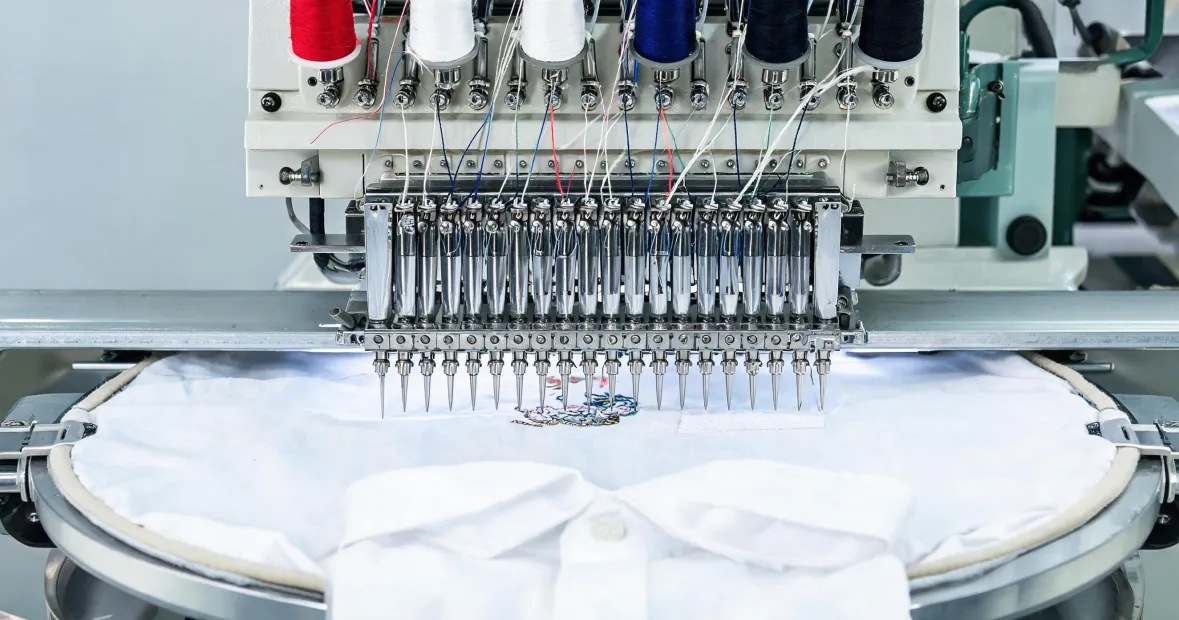
Use this checklist if you're buying a Tajima embroidery machine, upgrading to an HD embroidery machine, setting up a makerspace embroidery machine, or pricing an embroidery machine value pack starter kit. If you searched for tajima wagyu price, wrong Tajima—this is embroidery equipment, not Japanese beef. (I keep telling our SEO team to disambiguate that.)
There are eight steps. The order matters because price is step two, not step one.
Before You Start: Time Certainty
In March 2024, we paid $400 extra for a rush delivery on a 6,000-piece patch run. The alternative was missing a $15,000 event order. The rush fee was cheap. After getting burned twice by 'probably on time' promises, we now budget for guaranteed delivery. The same logic applies to machine installation: an uncertain cheap install can cost more than a confirmed premium slot.
Step 1: Define Your Production Mix
Don't look at Tajima embroidery machine cost until you know what you're asking the machine to do. Head count, field size, cap attachment, chenille device, and software all change the quote.
Checkpoint: list every job type you ran in the last 12 months.
- Flat goods only, or caps too?
- Average stitch count per piece?
- Largest design width and height?
- Do you need chenille, sequin, or mixed-media?
If more than 30% of your work is caps, prioritize a cap-capable machine over a flatbed-only bargain. If you're a makerspace, count your operators, not just your machines.
Step 2: Separate Machine Price from Installed Cost
A Tajima embroidery machine cost can range from around $10,000 for a used single-head to $80,000+ for a multi-head configured for caps and chenille. Based on publicly listed equipment prices, January 2025. Verify current quotes; freight, training, and software are often separate.
Build the full budget:
- Machine and heads
- Cap device, chenille attachment, or specialty frames
- Freight and rigging
- Installation and commissioning
- Pulse software and training
- Cooling system or compressed air
- First 90 days of consumables
That last line is where most buyers get surprised. I went back and forth between a 4-head and a 6-head Tajima for two weeks. The 4-head was $18,000 less. The 6-head had throughput. Ultimately chose the 6-head because our deadline-heavy season couldn't absorb the slower cycle time. That decision cost more upfront and saved us from a $22,000 redo after outsourcing overflow.
Step 3: Test the HD Embroidery Machine Claim
HD embroidery machine is a marketing phrase until you define it. For us, HD means small lettering, fine outlines, and dense logos without puckering. Ask for a sample file that matches your worst-case job.
Run a 5,000-stitch test with:
- 1.5 mm text
- 0.5 mm outline
- A gradient or shading area
- Your actual garment, not the vendor's ideal blank
Check for thread breaks, registration drift, and birdnesting. If the sample uses a different backing or needle than your production setup, the result is not your result.
Color matching matters too. Industry standard color tolerance is Delta E < 2 for brand-critical colors. Delta E of 2-4 is noticeable to trained observers; above 4 is visible to most people. Reference: Pantone Color Matching System guidelines. If your client's brand blue is Pantone 286 C, a close-enough thread is not close enough.
Step 4: Specify for a Makerspace Embroidery Machine
A makerspace embroidery machine has a different risk profile. You may have five operators on Monday and a first-timer on Saturday. The machine needs to survive inconsistent hooping, variable training, and shared access.
Checkpoint: count rotating operators. If more than five people use the machine weekly, prioritize:
- Auto thread trim and easy color change
- Network or USB file transfer with version control
- On-screen tutorials and safety lockouts
- Remote monitoring or usage logs
Don't buy a production-speed machine for a teaching shop unless you also budget for training. A fast machine with poor training produces expensive mistakes faster.
Step 5: Price the Embroidery Machine Value Pack Starter Kit
An embroidery machine value pack starter kit is not free stuff. It's a bundled spec. Verify what's actually included:
- Needles—check size range and quantity
- Bobbins—plastic vs. metal, pre-wound or self-wound
- Backing and stabilizer—cut-away, tear-away, water-soluble
- Thread—polyester vs. rayon, color count, brand
- Hoop sizes—small, medium, large, cap frame
- Tool kit—scissors, tweezers, screwdrivers, oil
- Software—Pulse or equivalent, licenses, training seats
- Training—hours, format, refresher access
The starter kit often uses lower-grade thread. Fine for samples. Not fine for a 5,000-piece retail run. I made that mistake once. The defect ruined 800 units in storage because the thread bled after a humid summer. Now every contract includes thread brand and lot requirements.
Step 6: Lock Training and Safety Before Signing
Every operator should know the emergency stop, needle guard, and lockout procedure. Tajima's safety training videos are a starting point, not a substitute for hands-on sign-off.
Checkpoint: create a 10-point safety checklist. No operator runs the machine unsupervised until they pass it. In our Q1 2024 quality audit, 3 of 11 incidents traced back to skipped training, not machine failure. The fix was boring: a sign-off sheet and a 20-minute weekly refresher.
Step 7: Run a Blind Sample Test
This is the step most buyers skip. I ran a blind test with our production team: same logo, same garment, one sample with standard backing and one with a premium backing. 68% identified the premium sample as 'more professional' without knowing the difference. The cost increase was $0.35 per piece. On a 10,000-unit run, that's $3,500 for measurably better perception.
The upside was better client retention. The risk was paying for a spec the client wouldn't notice. I kept asking myself: is $3,500 worth potentially losing a $60,000 account? The expected value said yes. The downside felt manageable. We now run blind tests before every major spec change.
Step 8: Contract Delivery and Acceptance Criteria
Put the spec in writing. Head count, field size, cap device, chenille capability, voltage, software version, training hours, installation date, and acceptance test. Include tolerance windows.
I'll never forget the batch of 200 jackets where the left-chest logo was 3 mm off against our 1.5 mm tolerance. The vendor claimed it was 'within industry standard.' We rejected the batch. They redid it at their cost. Now every contract includes placement tolerance and a first-article approval step.
For timing, get a guaranteed install date with a written remedy. A vague 'probably week 12' is not a schedule. The certainty premium is worth it when a missed launch costs more than the machine payment.
Common Mistakes to Avoid
- Buying on machine price only—installed cost is the real number.
- Assuming HD embroidery machine means high detail. Test it.
- Using starter-kit thread for production. It's sample-grade.
- Skipping training because the machine is 'easy.' Easy for whom?
- Accepting 'within industry standard' without a written tolerance.
- Choosing the cheapest install slot when your launch date is fixed.
- Forgetting power, air, floor load, and humidity requirements.
One more note: if you arrived searching for tajima wagyu price, this checklist won't help you buy beef. But if you're specifying a Tajima embroidery machine, the same principle applies to both dinner reservations and production deadlines: certainty has a price, and it's usually cheaper than the alternative.

Leave a reply