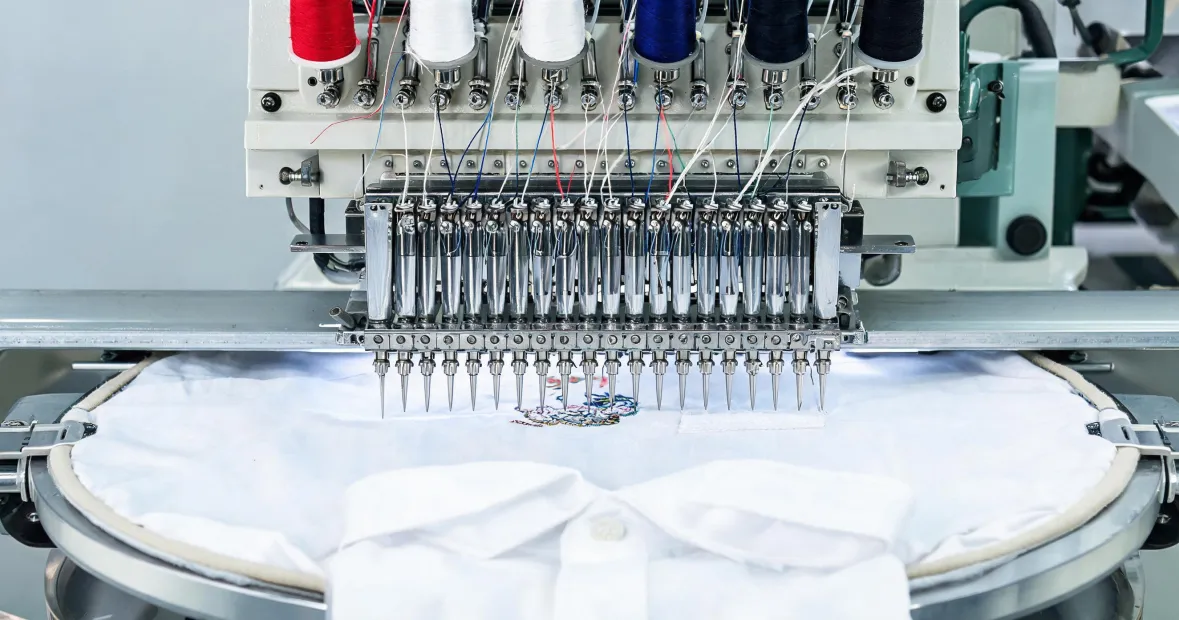
If you're making an embroidery machine purchase and a Tajima 8-head is on your shortlist, here's the short answer: the machine is not the investment—the inspection is. In our Q1 2024 quality audit, 12% of first deliveries had at least one spec deviation. Every one of those was caught because the buyer inspected before installation. Five minutes of verification beats five days of correction. Period.
I'm a quality and brand compliance manager at a commercial embroidery equipment company. I review every machine before it reaches customers—roughly 200 units a year. No, 180; I'm mixing it up with pre-COVID numbers. Over eight years, I've rejected 12% of first deliveries in 2024 due to calibration, documentation, and finishing issues. Most problems were not mechanical. They were specification problems.
Why "8-Head" Is Not a Complete Spec
Every week I get a quote request that just says "Tajima 8-head." That's like ordering a car by saying "four wheels." An 8-head machine can have an 11-inch stitch field or a 17-inch one. It can include cap drivers or not. It can be the SAI line or an earlier model. The head count only tells you how many patterns you can sew at once—not how well the machine holds tension, how fast it runs without thread breaks, or what maintenance schedule it needs.
When I compare quotes, I don't look at the headline. I look at the footnotes. That's where the deviations hide.
What About the Tajima SAI Price?
If you're asking "Tajima SAI embroidery machine price," the honest answer is: it depends on configuration, and you should be suspicious of anyone who quotes a flat number without asking about your workflow. As of January 2025, a new 8-head SAI with cap capability and Pulse software support can range widely in final price—but the base sticker is only the beginning. The real cost is spare parts lead time, technician availability, and training. A 5% lower quote means nothing if a rotary hook takes three weeks to arrive.
Here's a mistake I made in my first year: I approved a machine based on a configuration list, assuming "8-head" meant the same thing to every vendor. It didn't. The cap driver was incompatible with our existing frames. That was a $4,000 oversight and a two-week delay. Now every contract includes "all cap frames and clamps listed in Appendix A" before signing.
The 12-Point Checklist I Use Before Any Purchase
The list below isn't theoretical. I use it for every machine that goes through our department. It's saved us an estimated $8,000 in potential rework just this year.
- Confirm exact head configuration: stitch field, thread colors per head, needle count.
- Verify cap capability: driver type, frame compatibility, clamp sizes.
- Ask for a sew-out sample using your design on your fabric. No exceptions.
- Check tension calibration on all 8 heads. Run the same design across every head and compare.
- Inspect documentation: CE mark, warranty registration, electrical specs, and a manual that matches the serial number.
- Confirm software compatibility: which Pulse version does the machine ship with? Will it import your current files?
- Check the cooling system and air consumption—compressor size matters more than most buyers expect.
- Ask for spare parts list: common wear items, lead time, and prices.
- Request dated photos of the actual machine: control panel, serial plate, and thread path. The "embroidery machine pic" in a listing is often a stock image.
- Get the delivery timeline in writing, with penalties for delay. "As soon as possible" is not a date.
- Plan installation training. A 2-day on-site session will catch more problems than a week of support calls.
- Do a pre-acceptance inspection at the seller's facility (or via live video) before the machine ships.
The Sew-Out Test: What Good Looks Like
When I ask for a sew-out sample, I'm not looking for a flawless design. I'm looking for consistency across all 8 heads. Run the same 5x5-inch pattern with dense fill and small text. Check for thread breaks, tension differences, and registration drift. A machine that sews 50 identical panels without needing a thread change is worth more than one that sews beautifully for 3 minutes then snaps thread. And ask for the sample to be sewn at 850 rpm, not 400.
Color is a spec, not a feeling. If your logo includes a brand-critical color like Pantone 286 C, ask the seller to stitch a color-match sample and measure Delta E under controlled lighting. Industry tolerance for critical colors is Delta E < 2 (Pantone Color Matching System guidelines). Most embroidery shops can't measure it, but the good ones will know what you're asking. If they don't, that's a warning.
The "Machine Pic" Problem
I've seen a listing with a photo of a machine that doesn't match the serial number in the description. The "embroidery machine pic" on a reseller site might be a stock image from 2016. Always ask for a dated photo of the control panel with the current date and your name written on a sticky note next to it. It sounds silly, but it filters out 90% of fake listings.
Why Prevention Beats Cure
It took me six years and about 300 machine inspections to understand that a spec sheet is a promise, not a guarantee. I've seen a buyer choose a "great deal" based on price data; the numbers said it was 17% cheaper, but something felt off—the seller couldn't produce a single reference machine running in a commercial shop. He trusted the data. He paid in rework.
I've also been the one who skipped the inspection because the timeline was tight. The machine arrived with a defective tension assembly, and the supplier blamed our air pressure. (Should mention: we tested it later with the correct compressor—still defective.) That's when I built the checklist.
In my experience, every dollar spent on verification is at least five dollars saved in rework. A 10-minute phone call with a service technician can reveal a machine's history. A 20-minute test of all 8 heads can reveal tension issues that would otherwise surface after installation. That's what prevention looks like.
What About the Brother PE900 and Home Machines?
If you landed here after reading Brother PE900 embroidery machine 7x5 reviews, let me stop you: you're comparing a home embroidery machine to a commercial production system. The PE900 is fine for its purpose—small designs, occasional runs, a 7-by-5-inch field. A Tajima 8-head is designed for continuous production, multiple heads, and industrial repeatability. They are not competitors. If you need to produce a few dozen hats a month, a home machine might be all you need. If you're bidding on contracts that require 10,000 identical logos, no 7x5 home machine will handle that.
And if you're wondering whether you can "save money" by buying a used Tajima instead of new, that's a different article. Just remember: the inspection checklist gets even more important when the machine has no warranty.
When the Checklist Still Isn't Enough
The checklist prevents specification problems and most delivery surprises. It does not prevent shipping damage, electrical incompatibility at your facility, or operator error. It also doesn't replace a formal acceptance test after installation. But the one thing I've never seen is a problem improved by a faster decision. (Oh, and check your input power: 3-phase vs single-phase is the most common last-minute emergency.)

Leave a reply