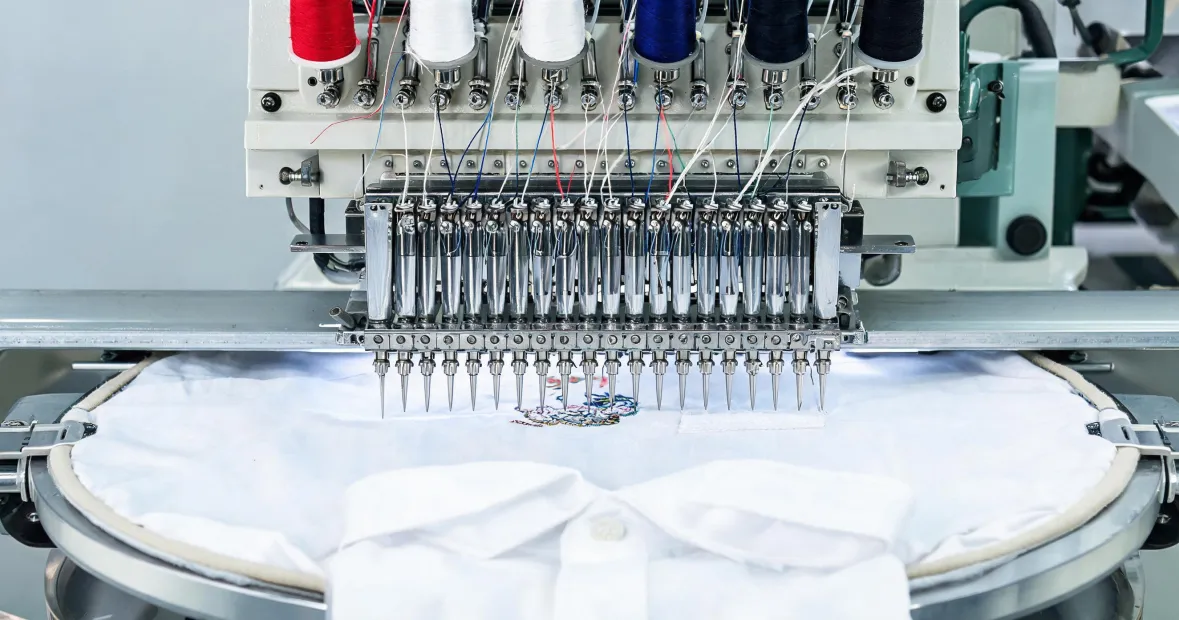
If you're searching for Tajima 4 head embroidery machine price, you probably want a number. Here's the honest answer: there's no single number. Not because the manufacturer is hiding anything, but because the machine is a system.
I'm the quality/compliance manager at an embroidery company. I review every machine and configuration before it reaches our production floor—roughly 40 packages a year. I've rejected 6% of first installments in 2024 because of tension calibration, missing documentation, or a safety guard that wasn't aligned. I've also watched buyers choose by sticker price and pay for it later.
So before we talk about price, let's talk about which situation you're actually in. This is a scenario question.
The Three Scenarios That Change the Price
There are three common buyers I meet:
- Scenario 1: A small shop moving up from a senior sewing machine or a single-head machine.
- Scenario 2: A production house running consistent batch orders.
- Scenario 3: A brand or studio that already uses Tajima Celeste and wants to scale.
These three buyers can search for the same phrase, but the right machine and the right price are different for each.
Scenario 1: Small Shop Moving Up
If you're coming from a senior sewing machine or a basic flat machine, do not assume your maintenance habits transfer. A 4-head embroidery machine has a rotary hook, frame drives, and thread path tension. It's a different animal.
I went back and forth between a 2-head and a 4-head for two weeks. A 2-head made sense on paper. My gut said 4-head. Ultimately I chose the 4-head because we had contract volume. If I were starting today with uncertain orders, I'd choose the 2-head and invest the difference in training. A 4-head is not a no-brainer for everyone.
For this scenario, the ballpark price is real but less important than the package. The price has to include installation, a spare parts kit, and operator training. Ask your dealer for the official Tajima embroidery machine safety training video and make it mandatory before anyone touches the machine. It sounds boring. It isn't. In our Q1 2024 audit, I found three out of eight operators had skipped the emergency-stop and thread-safe sections. All three had a near miss within two months. We made the video a condition of machine access.
Price anchor: Per Tajima's official specification sheets and authorized dealer asking prices accessed January 10, 2025, new Tajima 4-head configurations ranged from roughly $30,000 to $60,000 depending on field size, cap capability, and software. Asking price, not final price. Shipping and installation are still on top.
Scenario 2: Production House With Batch Orders
If you're running hats or flat goods in batches, a 4-head is a workhorse. This is where Tajima 4 head embroidery machine price starts to make sense because you can calculate cost per piece. But here's the thing: more heads do not automatically mean more output. A 4-head machine with a bad frame setup will give you three hours of stopping, not four heads of production.
I learned this with an assumption failure. I assumed the phrase production-ready meant identical results across two vendors. Didn't verify. Turned out each vendor had a slightly different interpretation. We were using the same words but meaning different things—discovered when the machine arrived and the cap frame didn't fit our existing toppers. That mistake cost us a $22,000 redo and delayed a launch by three weeks.
So for production, frame compatibility, field size, and software/hardware integration should all be on the quote. If you already use Tajima Celeste for digitizing and editing, make sure the machine side is compatible. And if you're comparing the price of an industrial sewing machine with a 4-head embroidery machine, stop. An industrial sewing machine price might be a fraction of the embroidery machine, but it also cannot stitch a logo. It's not a competitor; it's a different tool.
When someone types price industrial sewing machine into a search engine, they're usually looking for a single number. That's understandable. But a 4-head embroidery machine is not that number.
Good suppliers have a boundary. If a salesperson tells you an embroidery machine will also do everything your sewing machines do, that's a red flag. It won't. Buy the right tool for the job.
Scenario 3: Brand or Studio Scaling Up With Celeste
When people search for the phrase Celeste embroidery machine, I understand what they mean, but I always clarify: Celeste is the embroidery software that works with Tajima machines. It handles lettering, editing, and some digitizing tasks. It is not the machine body. That distinction matters because software licenses and machine costs are separate.
If you already have a Tajima workflow, your 4-head purchase is less about the price of one machine and more about capacity planning. The machine is usually an addition to an existing line, not a first machine. The price should include network integration, workstation setup, and software training. If you're adding a 4-head to a line with an existing Celeste license, you may not need another license. Verify it. That's a more common mistake than you would think.
I'd rather work with a specialist who knows their limits than a generalist who overpromises. That's true for suppliers, and it's true for machines.
How to Tell Which Scenario You're In
- If you're doing fewer than 500 pieces a week and don't have a dedicated digitizer, you're Scenario 1. Buy a package that includes training, not the one with the most options.
- If you're running batch orders and need consistent output, you're Scenario 2. Make frame compatibility, spare parts, and the Tajima embroidery machine safety training video part of the contract.
- If you already use Tajima Celeste or other Tajima software, you're Scenario 3. The machine price is only part of capacity planning. Verify software licenses, network setup, and operator skill.
Here's the thing: the price of a Tajima 4-head is a number on a quote, but the machine's real cost includes your training, your frame compatibility, and how it fits the rest of your shop. A quality inspector cares about what the machine looks like three months after installation. That's where a lower quote often isn't the best deal.

Leave a reply