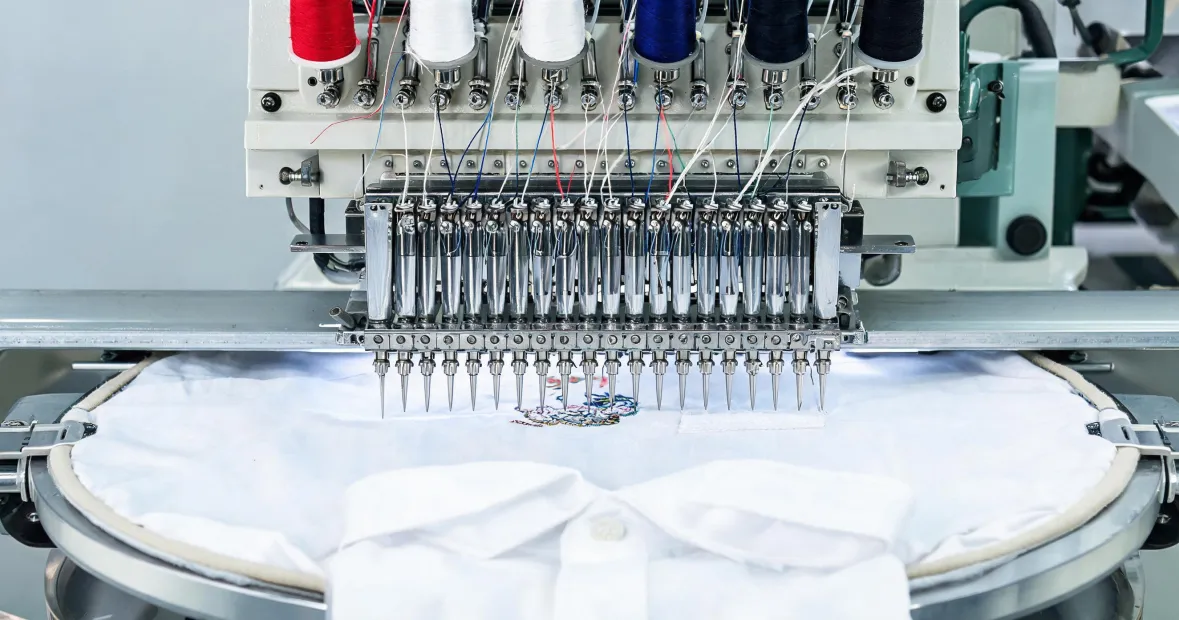
If you're shopping for a used Tajima embroidery machine for sale, you already know the appeal: a real commercial machine at a price that fits a growing shop's budget. The downside is what nobody puts on the spec sheet. A machine can look great in photos and still burn through your production time and repair budget in the first three months.
This checklist is for the person who has to make the purchase work — an owner, a production manager, or someone like me who handles equipment buying for a shop. I've been doing that since 2020, and I've made some expensive mistakes. I'm not a technician, and I won't pretend to be. I can't rebuild a rotary hook or tune a tension assembly. What I can tell you is the process I run before our shop commits money to a used machine — and where the money leaks out of a deal.
Seven checks, in the order I run them. Do all of them before you sign.
The 7-Point Checklist
1. Vet the seller before you inspect the machine
This sounds obvious, but it's the most skipped step. The machine is only as honest as the person selling it.
Ask for references. Actually call them. Ask where the machine has been living — ideally, it's coming out of an active embroidery machine workshop where it's been maintained and run daily. A machine being sold because a shop upgraded is a different animal from a machine that's sat in storage for a year.
Ask for the paper trail: original invoice, service records, and whether it was bought new. Also ask why it's being sold. If the answer is “upgrading to more heads,” fine. If it's “we don't do embroidery anymore,” that's fine too — but ask how long it's been idle. Machines that sit develop problems that running machines don't.
Checkpoint: Two references who actually answer the phone. Photos of the machine in its current working position, not a glamour shot. A straight answer about idle time.
2. Run your own design, on your own fabric
Demo files are chosen to make the machine look good. That's not a conspiracy, it's marketing. Bring a USB drive with a design you actually produce, and a piece of the fabric you run most often.
Run it for 15 minutes. Watch the color changes, watch the needles at speed, watch the tension — especially if your fabric is heavier or stretchier than the demo material. I don't pretend to diagnose what I see. I record it on my phone and send it to a tech before I make any decision.
A machine that runs the seller's sample perfectly can still struggle on your dense cap designs. The test takes about 15 minutes. The alternative is discovering the problem after delivery, when the machine is on your floor and your money has already moved.
Checkpoint: The machine runs your file without constant thread breaks or misregistration, and you've got video proof to show a technician.
3. Ask about oiling — most buyers don't
Here's the thing: a commercial embroidery machine is basically a set of industrial sewing heads working together. And like any industrial sewing machine, it needs oil — on a schedule, with the right oil, in the right places. Knowing how to oil industrial sewing machine parts properly is maintenance 101, but plenty of shop owners treat it as an afterthought.
Ask the seller three questions:
- When was it last oiled, and by whom?
- What oil do they use?
- Can you show me the maintenance log?
Then look at the oil reservoir yourself. Clean oil should be visible at a proper level. If you see sludge, or the answer is “I think the tech handled that last year,” consider that a warning sign. The moving parts have been running without proper lubrication, and that wear doesn't show up in photos. It shows up in your repair bills.
This is the check people overlook because it's not exciting. It's also the one that tells you the most about how the machine was treated.
Checkpoint: Clean oil at the right level, a clear answer on the oiling schedule, and a log you can actually look at.
4. Verify the stitch count
Used machine pricing is driven heavily by stitch count, so make sure you're looking at the real number.
“Ask for the hour meter and the electronic readout. If they don't match, there's a story there you need to hear before you buy.” — the technician who services our machines, every time I mention a used machine.
Most Tajima machines have electronic and mechanical counters. Ask to see both. They should be close. If the electronic counter says 40 million stitches and the mechanical says 25 million, ask why. There's usually an explanation — a replaced board, a reset — but you want to hear it before you pay, not after.
Also ask whether major parts have been replaced: hook assemblies, bearings, the main motor. A high-mileage machine with a documented rebuild can be a better buy than a low-hour machine that's been abused.
Checkpoint: The two counters match, and you understand the machine's actual history.
5. Price the total cost, not the sticker
Let's talk money, because this is where most of the money leaks out.
As of late 2024, based on listings we tracked and quotes we collected, a used Tajima 4-head embroidery machine price typically lands around $20,000–$45,000, depending on age, stitch count, accessories, and whether it's been professionally serviced. If you're comparing a Tajima Capella embroidery machine — a newer line in Tajima's range — the same inspection steps apply, and the pricing needs the same total-cost treatment. These are rough figures, and the used market moves fast, so verify current asking prices in your region before you budget.
Whatever the sticker price, it's not the full cost. Add:
- Delivery, rigging, and installation. Moving a multi-head machine through doorways and getting it leveled is not a same-day job.
- Tooling: needles, hooks, bobbins, plus the spare parts you'll want on hand from day one.
- The first service visit. Budget for a tech to go through the machine a few weeks after install, even if it's running clean.
- Lost production if the machine needs repairs before it's reliable.
One example from our own history: we looked at a used 6-head machine priced at $30,000 that would have needed about $6,000 in parts and three weeks of downtime before it was production-ready. The savings vanished. To be fair, we've also bought as-is machines that turned out great. But we budgeted for the risk either way.
Checkpoint: A written estimate for delivery, install, and a first-year maintenance buffer — and you know what a week of downtime costs your shop.
6. Check parts and tech support before you fall in love
This is the step that saves me from myself. Before any purchase, I call a technician who works on Tajima machines and ask two questions: Are parts for this model easy to get? How long would you wait on a main board?
In our experience, Tajima's support for older models is better than most. But “generally supported” isn't the same as “this exact part is on the shelf today.” For some older multi-head machines — and for newer lines like the Capella embroidery machine — you want to know if routine wear parts are stocked locally or need to ship across the country. A machine is only as productive as the parts supply behind it.
It also tells you whether there's a local tech who knows the machine. “We have the same model, come look at our setup” is a very good sign. “You'll be on your own if something breaks” is a different conversation.
Checkpoint: A technician confirms parts availability, and you know who will service the machine when something breaks.
7. Get the timeline in writing
This is the one I care about most now, because I learned it the expensive way.
If you're buying a used machine because you have work coming — a seasonal order, a contract with a start date, anything with a deadline — the seller's “should be ready by then” is not a delivery date. Ask for a date in writing, with installation included if you're paying for it. Then ask what happens if they miss it.
In March 2024, I had about two days to make the call. We paid $900 extra for guaranteed delivery and installation on a machine we needed for an order starting the following week. The alternative was rolling the dice on a slightly cheaper machine that “should be” ready in time. I'd make that call again without hesitating. Missing the order would have cost us more than the machine itself. Not every purchase needs that level of certainty, but when a deadline is real, uncertain delivery is the most expensive discount you can take.
Checkpoint: A written delivery date, a written installation date, and a clear answer on what happens if the seller misses either one.
Common Mistakes I've Seen (and Made)
Judging a machine that isn't warmed up. A machine that's been sitting for hours handles differently than one at operating temperature. Ask the seller to run it for a bit before you start your test.
Trusting “low hours” that can't be verified. Low hours without a matching electronic counter aren't low hours. They're a maybe.
Forgetting the cost of downtime. If the machine isn't reliable by your deadline, every day it sits broken is money leaving the shop. That's why the timeline check comes before the purchase, not after.
Skipping the oiling question. I get it — it feels like a small thing. It's not. The oil history is the closest thing you'll get to a medical record for the machine. Ask.
Buying a used Tajima embroidery machine can be a genuinely smart move for a shop that needs commercial capability without a new-machine price tag. The 4-head models are a sweet spot for many small and mid-size shops, and the Capella line is worth adding to your comparison list. Just work the checklist before you commit, and get the timeline in writing.
The deal that looks best in the moment isn't always the best deal. A machine that arrives on time, oiled properly, and ready to run your work — that's the one that pays for itself.

Leave a reply