Start With the Problem, Not the Machine
Every quarter somebody asks me the same question wearing a different costume. Should we buy new? Should we buy used? Should we add a station? I run equipment procurement at a 45-person apparel decoration shop, with an equipment and maintenance budget of roughly $210,000 a year. I've stopped giving a single answer, because there isn't one.
What decides it is which of three problems you actually have.
Capacity. Orders are stacking up faster than you can clear them. Yield. You're clearing the queue fine, but too much of the output gets rejected or reworked. Coverage. You're paying an outside shop for a step you could bring in-house.
Three problems. Three different purchases. And in all three cases, the purchase price is the worst number to decide on. Here's how each scenario plays out.
Scenario 1: Capacity Problem, Tight Cash
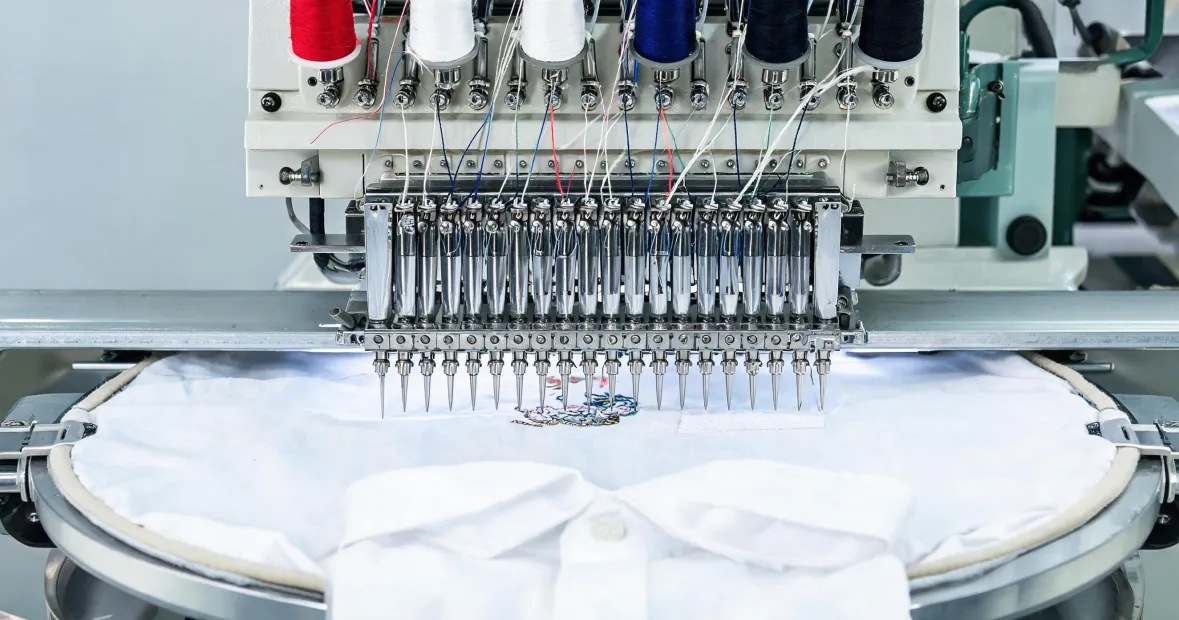
This is where used Tajima embroidery machines for sale become the obvious first stop. And I want to be clear before I go further: I'm not against the used market. Two of our six heads came from it. What I'm against is pricing a used machine on its purchase price alone.
When I audited our 2022 equipment spending, I pulled the numbers on one specific purchase. A 6-head used unit listed at $21,500. A new comparable machine quoted at $38,000 (quotes collected March 2022, so treat that as a snapshot, not a current rate). We took the used one and congratulated ourselves on saving $16,500.
Then we added up what actually left the account over the first eight months:
- Freight and rigging: $900
- Install, leveling, and operator retraining: $600
- Two drive replacements: $3,400
- Consumables above forecast (needles, bobbin cases, thread breakage during setup): $1,100
- Six days of reduced throughput while the machine was down: roughly $7,200 in delayed shipments
That's $13,200 on top of the $21,500. The real gap against new wasn't $16,500. It was $3,300. We nearly made a six-figure decision on a $3,300 difference.
Here's the part that flips the conventional wisdom. Our next used purchase, in 2023, cost more than the cheapest comparable listing I could find — about $3,000 more — because I insisted on a unit with a documented maintenance log and a seller willing to let our tech inspect it before payment. Eighteen months in, zero unplanned downtime. Everything I'd read about used equipment said "negotiate hard on price." In practice, paying a premium for documentation was the single highest-return decision we made that year.
So for this scenario: buy used, but budget the freight, install, first-year repair risk, and downtime into your comparison before you sign. If the used machine's all-in number isn't at least 25% below new, walk. That threshold is mine, not an industry standard — it's roughly where I've seen the math hold up across our last four purchases.
Scenario 2: Yield Problem — Your Rework Rate Is Eating the Margin
This scenario is the one people misdiagnose most often. They think they need more heads. They actually need fewer rejects.
Our rework rate in 2021 sat around 6% on logo-heavy work. I didn't have a single clean number for what that cost — we weren't tracking it that way — but when I went back through production tickets, the pattern was obvious: most of it came from placement drift and color mismatch on multi-color logos. Not machine failure. Placement.
This is where a Tajima laser setup stops being a toy. A laser projector throws the actual stitch outline onto the garment so the operator positions to a line instead of a paper template. Sounds minor. It isn't, when your reject rate is the thing killing your margin.
Color is the other half, and it's worth knowing the standard you're being measured against:
Industry color tolerance for brand-critical work is Delta E < 2. Between 2 and 4, trained observers will notice a difference. Above 4, most people will. (Reference: Pantone Color Matching System guidelines.)
If your shop is eyeballing thread against a customer's Pantone chip under whatever lighting happens to be in the room, you are going to fail that tolerance eventually. Not maybe. Eventually.
Run the math on one rejection. A rejected hoodie at our shop is roughly 40 minutes of unpicking, plus rehooping, plus the redo run, plus — sometimes — a garment you can't reuse. Call it $38 in labor and materials, and that's before the customer relationship cost. At 60 rejects a month, you're burning about $27,000 a year. That's a machine. That's the whole point.
Short version: if your rework rate is above 3%, fix the yield before you buy capacity. Adding heads to a broken process just multiplies the waste.
Scenario 3: Coverage Problem — Bringing Sewing In-House
Third scenario: you're outsourcing finishing. Binding, edge work, structural seams. You price a used overdeck sewing machine or a couple of what our operators call the "senior" machines — the heavy-duty, high-speed units nobody wants to give up — and the purchase price looks manageable. Then you find out what the electricity and the electrical work cost.
Industrial sewing machine power consumption in watts is where most people guess and guess wrong. Let me give you the framework instead of a fake precise number.
Motor nameplate ratings are the starting point: a single-needle industrial lockstitch head typically runs 400–750W. An overdeck or edge-finishing unit lands in a similar band, often 550–750W. A multi-head embroidery machine is a different animal entirely — 2–4kW depending on head count and motor type. Those are nameplate figures, meaning maximum draw. Real consumption runs lower because the motor isn't at full load every second, but for budgeting you should assume nameplate.
Then the formula, which is the only part that matters:
kWh = (watts ÷ 1000) × hours run × days per month
One lockstitch head, 8 hours a day, 22 days: 0.55 kW × 8 × 22 = 96.8 kWh. At our rate of $0.14/kWh (that's our utility's commercial rate as of January 2025 — yours will differ), that's about $13.50 a month. Add a second station, you're at $27. Run a 3kW embroidery head for 10 hours instead, and you're at 660 kWh, or roughly $92 a month.
Notice what just happened. The power is not the expensive part.
What actually shows up on the invoice in this scenario is everything around the machine: a dedicated circuit or subpanel, possibly a transformer if you're running imported 200V equipment on a different supply, compressed air if you're adding anything pneumatic, and lighting upgrades so people can actually see the seam. I wish I had tracked our electrical upgrade costs from the start as a separate line item. What I can say anecdotally is that on our last two station additions, the electrical work ran somewhere between 15% and 40% of the machine's purchase price — and it hit the books before the machine ever ran a stitch.
Add to that the recruiting cost of a finisher who can actually operate a senior-grade machine at production speed. That skill is not abundant, and it is not cheap.
Which Scenario Are You?
Three questions. Answer them honestly, and you'll know which way to go.
- How much work did you turn down or delay last month? If it's more than about 5% of your order volume, you have a capacity problem. Go used, and price the TCO, not the sticker.
- What's your rejection or rework rate? If it's above 3%, you have a yield problem. Laser and color management before another head. Every time.
- What percentage of your cost of goods is going to subcontractors for finishing steps? If it's above 15% and stable, you have a coverage problem. Run the electrical quote first — get that number before you fall in love with a machine listing.
And if you're in two categories at once? Fix yield first. Always. Capacity bought on top of a bad process is just a more expensive way to make rejects.

Leave a reply